Why is my smoke alarm beeping?

Key Takeaways

  • A continuous alarm may mean smoke, dust, dirt, damage or an alarm that’s passed its 10 year lifespan.
  • Intermittent beeping or chirping usually signals a low battery, and this is more common at night when temperatures drop.
  • Mains powered smoke alarms have backup batteries that can chirp when they run low.
  • You should replace smoke alarms every 10 years because the sensors deteriorate over time.
  • Placing your alarm in the wrong spot (near kitchens, bathrooms or draughty areas) can trigger false alarms.
  • We offer replacement options for discontinued models, often without needing an electrician.

Is your smoke alarm beeping in the night and keeping you awake? Or perhaps it’s disturbing your day? Whether you’ve got mains powered interlinked smoke alarms or battery powered ones, follow our guidance below to troubleshoot the beeping and get some peace back.

What Type of Sound Is Your Smoke Alarm Making?

Before you start troubleshooting, work out what type of sound your smoke alarm is making. This’ll help you pinpoint the cause and find the right fix.

Note: Beep patterns vary by manufacturer and model. Always check your alarm’s user manual for the specific meanings of different sounds.  

Sound Type Pattern Likely Cause Urgency
Continuous loud alarm Non-stop sounding Smoke or fire detected, dust or fault High: check for fire straight away
Intermittent chirping Single beep every 30 to 60 seconds Low battery Medium: replace battery soon
Rapid beeping Multiple quick beeps End of life warning or malfunction Medium: replace alarm
Sound Type
Continuous loud alarm
Pattern
Non-stop sounding
Likely Cause
Smoke or fire detected, dust or fault
Urgency
High: check for fire straight away
Sound Type
Intermittent chirping
Pattern
Single beep every 30 to 60 seconds
Likely Cause
Low battery
Urgency
Medium: replace battery soon
Sound Type
Rapid beeping
Pattern
Multiple quick beeps
Likely Cause
End of life warning or malfunction
Urgency
Medium: replace alarm
Image

Why Is My Smoke Alarm Sounding Continuously?

A smoke alarm that won’t stop sounding needs your attention straight away. Follow these steps to work out what’s going on.

First, check there’s no smoke or fire in your property.

If there’s no fire, look into these common causes:

Could it be another alarm? Make sure the beeping is definitely coming from your smoke alarm. Other alarms in your home, such as a carbon monoxide alarm or burglar alarm, could be making the noise.

Is dust or dirt setting it off? Give the alarm a clean if it’s dusty or dirty. Vacuum around the alarm or use a hairdryer on a cool setting to blow out any dust from the sensor chamber.

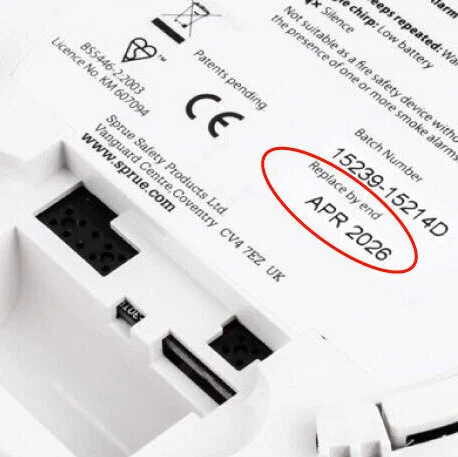
Has your smoke alarm reached its expiry date? Check the “replace by” or manufacture date on the back of your alarm. Smoke alarms last a maximum of 10 years. If the manufacturing date is approaching or past 10 years, it’s time for a new one. The sensors inside deteriorate after this point, making the alarm less effective at detecting fires.

Is your alarm in the wrong spot? Different sensor types work best in different locations. An optical smoke alarm in a kitchen, for example, may go off from cooking fumes.

Could the alarm be damaged or faulty? Water, fire, grease and certain paints can all cause faults. If you think there’s damage, replace your smoke alarm straight away to keep your home and family safe.  

Why Is My Battery Smoke Alarm Chirping Intermittently?

An intermittent chirp or beep (typically once every 30 to 60 seconds) almost always means a low battery. Here’s what to do.

Replace the battery. Make sure you’re using the right battery type and inserting it the right way round. A low battery is more likely to sound at night because a drop in room temperature reduces its ability to power the alarm.

Check how old your alarm is. Smoke alarms last a maximum of 10 years. If the manufacturing date on yours is approaching or past 10 years, it’s time for a replacement. Even with a fresh battery, an old alarm may chirp because the sensors are wearing out.

Look for signs of damage. Water, fire, grease and certain paints can cause faults. If you suspect a problem, replace your smoke alarm straight away.  

Smoke Alarm Battery Types and Lifespan
Battery Type Typical Lifespan When To Replace
Alkaline 9V (PP3) 12 to 18 months We recommend annually, or every 6 months for maximum safety
Alkaline AA 12 to 18 months We recommend annually
Lithium 9V Up to 5 years When it starts chirping
Sealed lithium (10 year) 10 years Replace the entire alarm
Battery Type
Alkaline 9V (PP3)
Typical Lifespan
12 to 18 months
When To Replace
We recommend annually, or every 6 months for maximum safety
Battery Type
Alkaline AA
Typical Lifespan
12 to 18 months
When To Replace
We recommend annually
Battery Type
Lithium 9V
Typical Lifespan
Up to 5 years
When To Replace
When it starts chirping
Battery Type
Sealed lithium (10 year)
Typical Lifespan
10 years
When To Replace
Replace the entire alarm

Buy replacement smoke alarm batteries so your family gets alerted if there’s ever a fire in your home.

Why Is My Mains Powered Smoke Alarm Chirping Intermittently?

All new or recently extended homes should have mains powered interlinked alarms fitted. These also contain a backup battery to keep you protected during power cuts. Some makes/models contain replaceable batteries, whereas some have sealed batteries which cannot be replaced. Please check your user manual for more information.

The most common cause of chirping in mains powered alarms is a low backup battery.

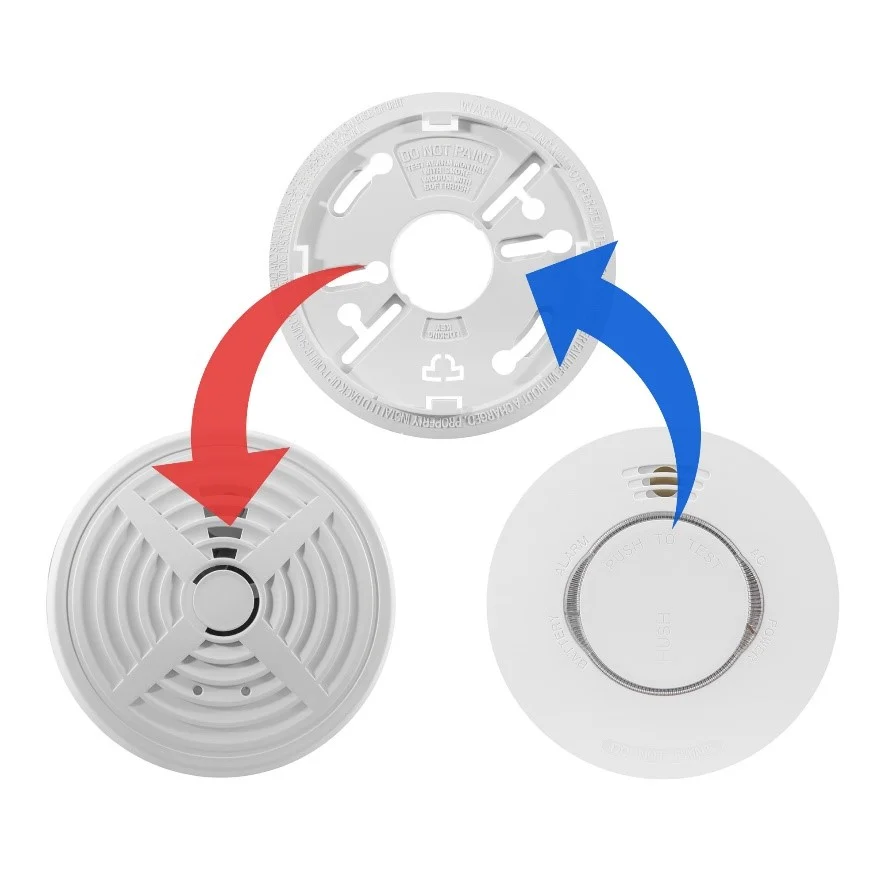
Even though your alarm connects to the mains electricity, you’ll still need to replace the backup battery from time to time. Here’s how to stop the chirping:

  • Locate the battery compartment (usually by twisting the alarm off its base)
  • Replace the backup battery with the correct type for your alarm
  • Press the test button to check it’s working

If your alarm keeps chirping after you’ve replaced the backup battery, it may have reached the end of its 10 year lifespan and need replacing altogether.
Image

What Replacement Batteries Do Smoke Alarms Need?

Smoke alarms typically need one of these battery types:

  • Alkaline AA batteries (usually two)
  • Alkaline 9V battery (PP3)
  • Lithium 9V battery (lasts longer)

Check the label on your smoke alarm or look in the user manual to confirm the right type. Using the wrong battery can cause problems or void your warranty.

How Do I Replace a Mains Powered Smoke Alarm?

You should replace smoke alarms after 10 years, whether they’re mains powered or battery powered. The sensors deteriorate over time. Battery alarms are easy to swap out, but what about mains powered ones?

Good news: you can replace most mains powered alarms without calling an electrician if you buy the exact same model (if it’s still available) or an Easichange® replacement.

Learn why you should replace smoke alarms after 10 years.  

What If My Smoke Alarm Model Has Been Discontinued?

Need a replacement but can’t find your model anymore? We offer a dedicated collection of replacement smoke and heat alarms. We’ve chosen these specifically to be the simplest, most direct replacements, and you can often fit them without needing an electrician.

How Can I Prevent False Alarms?

The sensor type in your alarm determines where you should put it. False alarms often happen because the wrong alarm type is too close to a steamy, dusty or smoky area.

Where Should Different Smoke Alarm Types Go?
Alarm Type Best Locations Keep Away From
Heat alarms Kitchens, garages, dusty workshops Bedrooms, hallways (use smoke alarms there instead)
Optical smoke alarms Bedrooms, living rooms, hallways Kitchens, bathrooms, garages
Ionisation smoke alarms (discontinued) Landings, hallways Areas near kitchens or bathrooms
Alarm Type
Heat alarms
Best Locations
Kitchens, garages, dusty workshops
Keep Away From
Bedrooms, hallways (use smoke alarms there instead)
Alarm Type
Optical smoke alarms
Best Locations
Bedrooms, living rooms, hallways
Keep Away From
Kitchens, bathrooms, garages
Alarm Type
Ionisation smoke alarms (discontinued)
Best Locations
Landings, hallways
Keep Away From
Areas near kitchens or bathrooms

Spots to Avoid When Fitting Smoke Alarms

To prevent false alarms or poor performance, don’t fit alarms in these spots:

  • Next to doors, windows, air vents or fans that create a draught
  • Outside or in unheated spaces
  • Anywhere curtains or furniture would block the airflow
  • Steamy or humid rooms like shower rooms
  • In kitchens (use a heat alarm instead of a smoke alarm)

Find out which smoke alarm works best in each room.  

Quick Troubleshooting Summary
Problem What To Do
Continuous alarm with no fire Clean the alarm, check its position or replace it if it’s over 10 years old
Intermittent chirping (battery alarm) Replace the battery straight away
Intermittent chirping (mains alarm) Replace the backup battery – if your unit has a replaceable battery inside.
Alarm over 10 years old Replace the whole unit
Frequent false alarms Check where it’s positioned and consider a different alarm type
Discontinued alarm needs replacing Use an Easichange® or compatible replacement
Problem
Continuous alarm with no fire
What To Do
Clean the alarm, check its position or replace it if it’s over 10 years old
Problem
Intermittent chirping (battery alarm)
What To Do
Replace the battery straight away
Problem
Intermittent chirping (mains alarm)
What To Do
Replace the backup battery – if your unit has a replaceable battery inside.
Problem
Alarm over 10 years old
What To Do
Replace the whole unit
Problem
Frequent false alarms
What To Do
Check where it’s positioned and consider a different alarm type
Problem
Discontinued alarm needs replacing
What To Do
Use an Easichange® or compatible replacement

Don’t wait to change or replace a faulty smoke alarm. It’s one of the most important things you can do to keep your home and family safe. If you need any help, call our customer service team on 0800 612 6537 or email us.

Mel Saunders

Head of Marketing

With over 20 years of experience in content writing, design and marketing, Mel now heads up the Content & Marketing Team at Safelincs. Having been in the fire safety industry for over 5 years, Mel has now developed a deep understanding of some of the critical issues facing the industry. Alongside her team, she aims to support the public with resources and information to help them improve fire safety at home, in the workplace or in 3rd sector organisations.

Latest Posts by Mel Saunders

What Is A Class D Fire?14th May 2026
What Is A Class F Fire?13th May 2026
Ionisation Smoke Alarms Buyers Guide12th May 2026

Emergency Lighting Requirements

What you need to know about emergency lighting

Why is emergency lighting necessary?

There are different types of emergency lights; some function as a normal light and others only as an emergency light. You should know what type of emergency light you need to install. For example; do you want a maintained emergency light (stays on constantly) or a non-maintained emergency light? For more information read our blog on maintained or non-maintained lighting.

As the responsible person it is your legal obligation to ensure that emergency lighting is installed. Covering all the escape routes and exits from every area of the building with a minimum backup duration of up to 3 hours.Emergency lighting is essential to light escapes routes for emergency evacuations when normal mains-power failure. Power outages are likely in a fire / flood due to electrical damage.

Emergency lighting lights the way to guide occupants to the nearest exit


Read more about emergency lighting legislation

Where to install emergency lights and signs

When installing emergency lights, take into account any hazards along the evacuation route, such as corners, stairways or uneven flooring. You must also ensure that fire alarm call points and equipment used for firefighting, such as extinguishers or fire blankets, are adequately illuminated to be easily seen or located. Some areas will require continued operation (e.g. a chemical processing room, operating theatre etc); higher continued lighting requirements must be considered in these areas.

Jalite photoluminescent fire exit signs

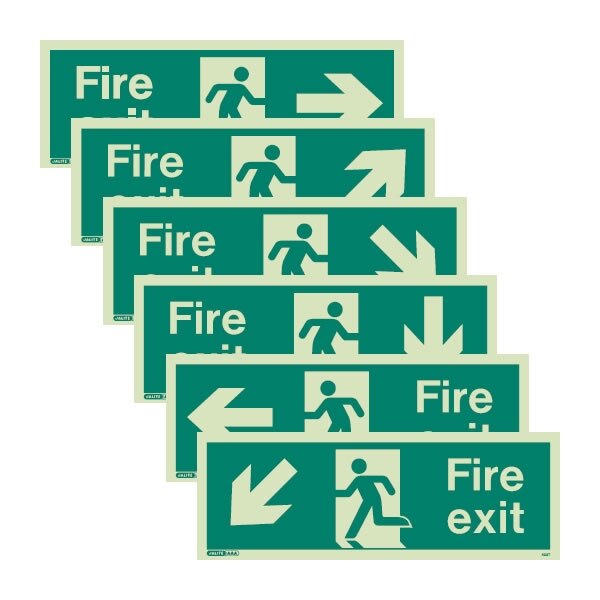
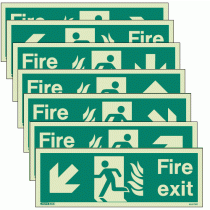
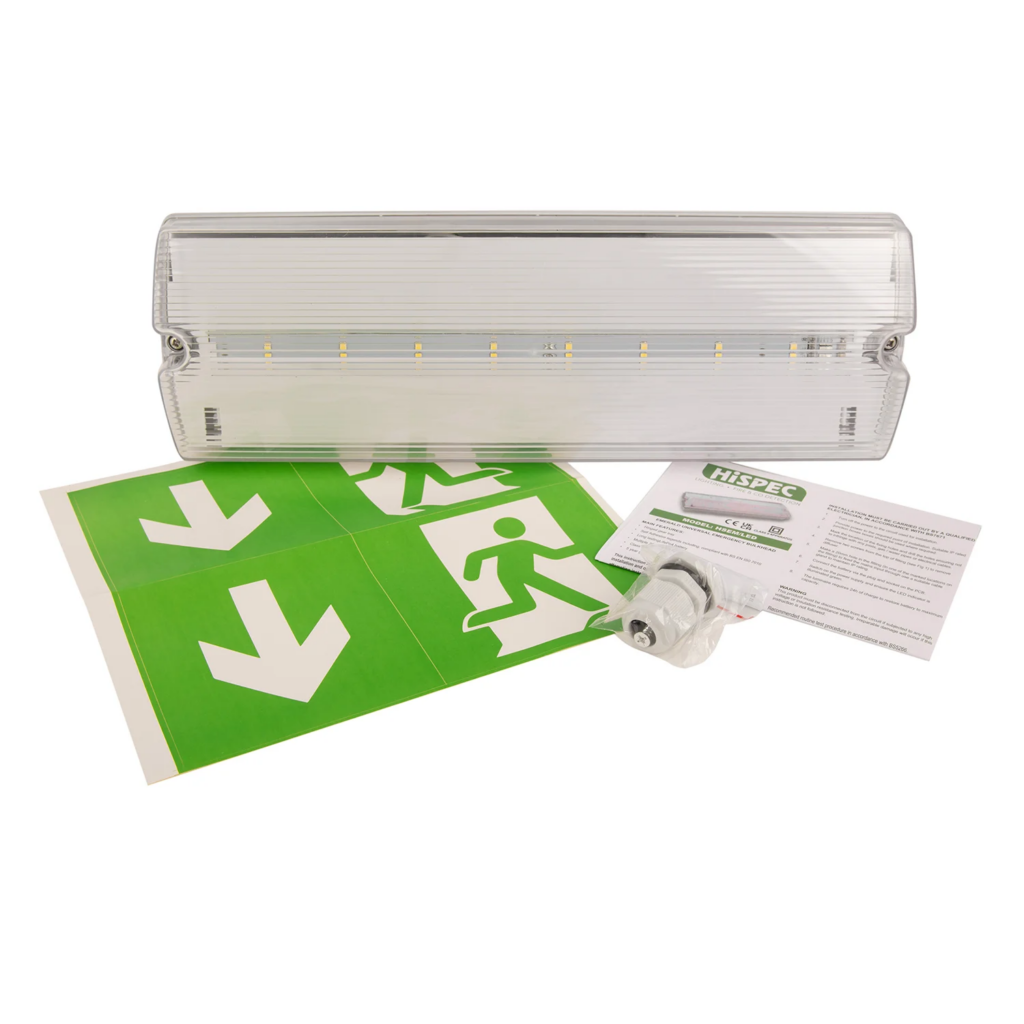
A sub-category of emergency lighting is fire exit signs, which are green ‘running man’ signs with arrows that guide people towards the nearest exits. These are either internally lit or if sufficient other lighting is available, they can be photoluminescent. These ‘glow-in-the-dark’ signs store energy from either natural or artificial light and releases this stored energy when the light source is no longer there, emitting a yellow / green glow to illuminate the text on the sign.

You should refer to your fire risk assessment to ensure that you have covered all the essential fire escape routes and addressed any hazards on your site that were highlighted in this assessment. It is a legal requirement to carry out a fire risk assessment and you should refresh this assessment if the activities within your premises change or if significant changes to the layout are made. You can find authoritative guidance in the government's fire risk assessment guides.

Buy emergency lights

Visit our emergency lights and signs section to view our full range of emergency lighting products.

Testing and maintenance

As with all fire safety equipment, regular testing of your emergency lights must be carried out to ensure that it is working correctly. You should test that the lights are triggered when the mains supply is cut, and also that all the lights are illuminated as they should be. This can be done with the use of a fish key.

You will need to test your lighting once a month and ensure that a full discharge test is carried once a year. Log the results as any other fire safety equipment tests in your fire safety logbook.

If you would like to know more about emergency lighting our emergency lighting guides can provide you with useful information.

Free reminder service

Sign up to our free reminder service to receive text or email reminders to regularly test your emergency lighting.

More information

Angie Dewick-Eisele

Director

Angie Dewick-Eisele is co-founder of Safelincs Ltd, one of the leading fire safety providers in the UK. Angie was Marketing Manager for many years and as Director is these days responsible for Content Management.

Latest Posts by Angie Dewick-Eisele

Emergency Lighting Requirements1st August 2024
What to do if my Carbon Monoxide alarm goes off?19th March 2024
What is BAFE certification?28th March 2023

Maintained or Non-Maintained Emergency Lighting?

The installation of maintained or non-maintained emergency lighting should be decided based upon building type, its occupants and its usage.

What is the difference between maintained and non-maintained emergency lights?

Maintained Lights

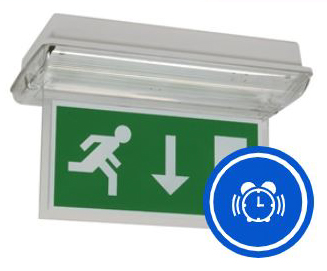
Maintained emergency lighting is on at all times. These lights are mains powered and used as part of the normal room lighting system. However, should the mains power fail, it will stay lit for a specific duration powered by a back-up battery.

Maintained lighting could include lit fire exit signs, bulkhead lighting or recessed downlights.

This type of emergency lighting is generally used in non-residential places of public assembly such as leisure centres, cinemas, shopping centres etc. In public venues where the normal lighting is often dimmed e.g. cinemas, theatres or bars, maintained luminaries are always required.

Non-maintained Lights

Non-maintained lighting only comes on for a specific duration when the power supply to normal artificial lighting fails. These light fittings are powered by a battery that is charged from a constant trickle of mains power. This battery should have enough charge to remain lit for a duration of 3 hours if the mains power fails. Regular testing of emergency lighting is required to ensure that it is working and will be effective in an emergency. Read more about testing and maintenance.

Non-maintained emergency lights are normally suitable for buildings which are usually lit when occupied, for example, workplaces, offices, and schools.

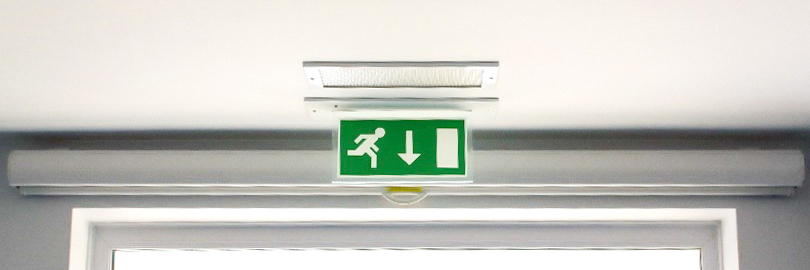
Illuminated fire exit sign next to a door

Can an emergency light fitting be both maintained AND non-maintained?

Yes. Maintained emergency light fittings or signs used as part of a normal room lighting system can also be wired to perform as a non-maintained fitting if required. This especially useful if your property has multiple uses, where you have a mix of maintained and non-maintained lighting requirements, only one type of light needs to be purchased. Many maintained fittings are available as switchable units, meaning they can be switched between maintained and non-maintained modes using an ordinary light switch. However, non-maintained light fittings cannot be wired for use in maintained operation.

If you are unsure which emergency lighting is best for your environment, it is best practice to conduct a fire risk assessment. This must be conducted by a ‘competent person’. A specialist risk assessor will advise the most suitable option in line with the current regulations if your organisation cannot complete this in house.

Fire Risk Assessments
  • On-site fire risk assessment (FRA)
  • Expert advice from our qualified fire risk assessors
  • Comprehensive report with clear indications of areas for improvement
  • Quick and easy booking
  • 10% discount on most fire safety products
  • FREE online fire safety management portal
£315.00 ex VAT
£378.00 inc VAT
Buy Now

Watch our video to learn the difference between maintained and non-maintained emergency lighting

Which type of emergency lighting do I need?

British Standards guidelines 5266-1:2011 requires emergency lighting to be installed in all high occupancy residential, public or commercial buildings. It outlines the duties of the ‘Responsible Person‘ and focuses on emergency lighting fixtures ensuring escape routes are illuminated when the mains power fails. There are often more specific requirements given by local authorities in each area; check your local government website for more information.


Whether maintained or non-maintained emergency lighting is needed is largely a question for fire risk assessors based on each individual property. If non-maintained lighting is deemed sufficient, it is also worth considering the reduced environmental impact and lower energy cost of using non-maintained lighting over time.

Help guides

More information about all aspects of emergency lighting can be found in our emergency lighting guides.

British Standards

There are various British Standards that set out the regulations for emergency lighting where further guidance can be sought:

  • BS5266-1 Code of practice for emergency lighting of premises sets out general guidance on what emergency lighting should be provided in each environment
  • BS EN 50172 / BS 5266-8 Emergency escape lighting systems details minimum emergency lighting provision and testing for each type of environment

Mel Saunders

Head of Marketing

With over 20 years of experience in content writing, design and marketing, Mel now heads up the Content & Marketing Team at Safelincs. Having been in the fire safety industry for over 5 years, Mel has now developed a deep understanding of some of the critical issues facing the industry. Alongside her team, she aims to support the public with resources and information to help them improve fire safety at home, in the workplace or in 3rd sector organisations.

Latest Posts by Mel Saunders

What Is A Class D Fire?14th May 2026
What Is A Class F Fire?13th May 2026
Ionisation Smoke Alarms Buyers Guide12th May 2026

Office Fire Safety

Fire safety in offices

Who is responsible for fire safety in my office?

If you are the owner, landlord, employer or occupier of a business premises, including offices, you are responsible for fire safety under the Regulatory Reform (Fire Safety) Order 2005, and are known as the ‘responsible person’.  Accordingly, as the responsible person in your office, you must:

  • Carry out a fire risk assessment and review it regularly
  • Identify risks from the fire risk assessment, and put measures in place to reduce or manage them
  • Inform staff of the risks ,and of their responsibilities to ensure good fire safety is achieved
  • Ensure adequate fire safety measures have been put in place and maintain them
  • Have an appropriate fire safety procedure and communicate this to staff and visitors
  • Provide training to staff to ensure they know what to do in the event of a fire

Office Fire Risk Assessments

Fire risk assessment being carried out
Office fire safety depends upon a comprehensive risk assessment

Fire risk assessments are mandatory for all offices. This must be followed up with the mitigation of identified risks and a comprehensive evacuation plan for the premises. Because risks can change, the FRA should be reviewed frequently and documented and reconducted if there is a change of use of the premises, or a fire safety incident occurs.

Fire risk assessments are important for the safety of employees and property. They provide a detailed review of your office space to identify fire risks and provide recommendations to either mitigate, reduce, or manage them.

A competent person can use our free fire risk assessment form to carry out a fire risk assessment if they have the required skills and knowledge to do so. This must be carried out in conjunction with the appropriate official fire risk assessment guide for offices.

Alternatively, you could instead, you can book a professional fire risk assessment for your office. Following this, you will receive a comprehensive fire risk assessment and detailed guidance should any recommendations for improvement be required.

For more information about fire risk assessments, visit out help guide.

What fire safety measures are required in an office?

To ensure that you are meeting all your legal obligations you will need to look at the following areas:

  • Are your emergency evacuation routes and exits clear from hazards and well signposted?
  • Do you have adequate means to detect a fire and warn others?
  • Do you have appropriate fire fighting equipment and is it in the right place?
  • Are any dangerous substances stored correctly?
  • Think about the people who are in your office (both staff and visitors), particularly those with mobility issues
  • Provide fire safety information and training

Evacuation and exit signage in offices

Fire exit signs
Photoluminescent fire escape route signs

Staff escaping a building must be visually directed to the safest and fastest route leading to the nearest fire exit., hence emergency lighting, is mandatory. Likewise, installing photo-luminescent (glow in the dark) fire escape route signs helps to ensure that the exit route is clearly visible. This ensures that even if the mains power fails, all escape route signs, stairs, and uneven floors are lit sufficiently for safe escape.

More information:

Conducting fire drills in an office

Carrying out regular fire drills in an office helps to ensure that all staff know what to do if the fire alarm goes off. Ensure that you also include practising alternative routes, so that staff are prepared in the event that their nearest fire escape is blocked by fire. Every member of staff must be made aware of where the nearest fire exits are and which routes to take when exiting the building. The induction of new staff members should therefore include a ‘fire walk’. This enables you to show staff all the fire escape routes and where firefighting equipment is located.

Further to this, your evacuation plan should include guidance for the evacuation of staff and visitors with reduced mobility. This could be due to a long-term condition such as low-sight or wheelchair use, or a temporary illness or injury. Evacuation chairs offer a safe and easy solution to ensure that everyone can escape safely in the event of a fire. Because these are considered to be medical equipment, staff who would be expected to operate this device in an emergency must recieve specialist training.

Unsure if your office needs an evacuation chair? Find out who needs an evacuation chair.

What fire extinguisher is best for offices

Choosing the right type of extinguisher

Fire extinguishers installed in officed can be used to prevent small fires from becoming catastrophic, or to assist in safe escape from a building on fire. Staff should be encouraged to use these fire extinguishers only if they have been trained, and only if does not put them in any danger.

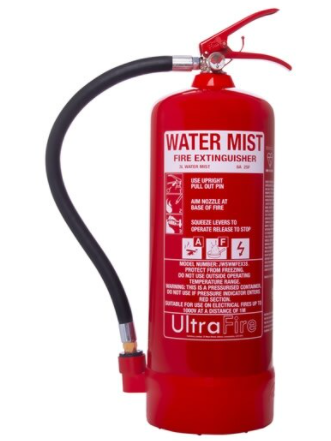
Water Mist Fire extinguisher
Water Mist fire extinguishers are safe for use on live electrical fires

It is paramount that you have the correct type of fire extinguisher or extinguishers to tackle every type of fire that could occur in your office. The types of combustible material that your office requires cover for will be identified by the fire risk assessment. If you are still unsure of which type of fire extinguisher you need in your office you can book a fire extinguisher site survey

For more information about fire classes or types of fire extinguisher visit our help guides. Fire extinguisher types guide.

In most office settings, only type A (solid combustibles) are a risk. Where this is the case, Water Mist Fire Extinguishers, which are suitable for use on fires involving electrical equipment, are a versatile solution. These units use deionised water to fight fires, meaning that they are non-toxic and safe for use indoors, while having just one type of extinguisher improves the confidence of staff to use the equipment in an emergency – they don’t have to make a decision about what type of extinguisher to use.

Installing extinguishers in offices

Ensure that your extinguishers are commissioned and installed by a service engineer at your premises. You will also need the correct signage and to ensure that they are hung in the correct location.

Fire Extinguisher maintenance

All extinguishers must have a monthly visual check to ensure that there is no visible damage to the unit:

  • Are there any signs of damage to the exterior?
  • Are there any blockages in the hose?
  • Are there any signs the extinguisher has been tampered with?
  • Is the extinguisher pressurised?

If you have steel extinguishers installed, you must also ensure that an annual service is carried out by a trained engineer in accordance with the British Standards.

By installing P50 Service Free Water Mist extinguishers in your office when your steel extinguishers reach the end of their life, this annual service is not required.

Instead, a yearly visual inspection by a competent member of staff is sufficient. This must be documented in your fire safety log book. Service-Free extinguishers therefore reduce costs and administrative work associated with booking servicing, as well as the carbon footprint of your organisation, because an external engineer is not required to travel to your site.

Fire alarms and manual call points in offices

The responsible person must ensure that there is an adequate fire detection system in place. The size, configuration and use of your office will define what sort of fire alarm system you require.

Ensure that employees know to activate the nearest manual call point if they discover a fire. This activates the alarm system, which alerts all staff to the fire. New staff must be shown the call points during their induction period.

Generally, where multiple organisations share the same building, this has implications for fire safety. Therefore, you should ensure that there is a system in place to notify all building occupants to a fire.

Free fire safety log book for offices

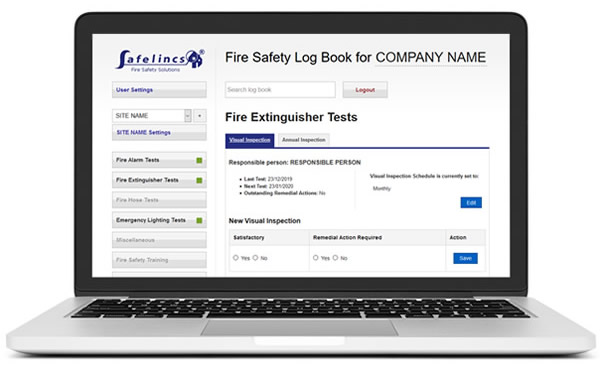
We offer a free online log book, with custom reminders. Keeping an online log book will ensure that it is protected in the event of a fire. It is essential that you keep a record of all your fire safety checks and fire drills in a fire safety log book.

What to do if my Carbon Monoxide alarm goes off?

CO detectors, or carbon monoxide alarms, are essential for the detection of a deadly gas, carbon monoxide (CO). This gas cannot be seen, tasted or smelt and is only detected with the use of co detectors. It is produced through the incomplete combustion of fuel, such as gas, wood, coal and oil. If your carbon monoxide alarm is going off, do not assume it is a false alarm.

What to do when your carbon monoxide alarm is going off

You should assume that there is CO present and should follow these steps to ensure your safety.

  • Stay calm, open doors and windows to increase ventilation
  • Where safe to do so, turn off any fuel-burning appliance
  • Leave the premises and notify other occupants of the potential carbon monoxide leak (you should also notify any occupant of premises adjoined to your home as CO can seep through walls and floors
  • Call Gas Emergency Services 0800 111 999 or a local Gas Safe Registered Engineer to check for the source of carbon monoxide
  • Get medical help for anyone suffering from symptoms of CO poisoning

Symptoms of carbon monoxide poisoning

The main symptoms of carbon monoxide poisoning are:

Carbon monoxide poisoning symptoms: persistent headaches

Persistent Headaches

Having persistent dull headaches and tension type headaches.

Carbon monoxide poisoning symptoms: dizziness

Dizziness

Having waves of dizziness or feeling light headed and off balance.

Carbon monoxide poisoning symptoms: nausea/vomiting

Nausea / Vomiting

Feeling like you need to be sick (nausea) and actually being sick (vomiting).

Carbon monoxide poisoning symptoms: stomach pains

Stomach Pains

Pains in your stomach or lower abdomen, sometimes accompanied by diarrhoea.

Carbon monoxide poisoning symptoms: difficulty breathing

Difficulty Breathing

Sudden shortness of breath or difficulty breathing (dyspnoea).

Carbon monoxide poisoning symptoms: tiredness

Tiredness

Having no energy or feeling tired, sleepy, lethargic and sluggish.

Carbon monoxide poisoning symptoms: sudden collapse

Sudden Collapse

Sudden collapse, seizures or loss of consciousness.

Carbon monoxide poisoning symptoms: confusion

Confusion

Confusion, difficulty concentrating and becoming easily irritated.

What causes CO detector false alarms?

A false alarm is when your CO detector alarms and where no carbon monoxide is detected by your engineer. There could be several reasons for this, which can often be easily resolved:

Cause of alarmWhat to do
The carbon monoxide detected did not come from your own appliances but may have seeped through the walls or floor from a neighbour.Check if your neighbours have fuel-burning appliances that might emit carbon monoxide. Carbon monoxide might escape from chimney stacks allowing the toxic gas to enter your premises via a joint loft space.
The replace-by date may have been exceeded.Most CO alarms are only effective for 5-10 years. Once expired, they can sound erratically, or not sound when they should, The expiry date for each unit can be found on the information sticker on the back of the unit.
Excessive moisture from a bathroom may set off your CO alarm.CO alarms can be corrupted by steam, and therefore shouldn’t be installed in bathrooms. If your CO alarm is repeatedly triggered by steam, it may become ineffective, and should be replaced.
Lead acid battery chargers produce hydrogen gas which sets off CO detectors.If you are charging your caravan or boat battery at home, this could set off your CO alarm. Once you have made sure that the alarm is false, it is safe to ignore the alarm in this scenario, but remain vigilant for other signs. If this happens often, invest in a CO alarm with a digital display to assess the level of risk when the alarm sounds.
Freshly screeded floors emit a gas that sets off carbon monoxide alarms.If your floors have just been screeded, and you have made sure that the alarm is false, it is safe to ignore the alarm in this scenario, but remain vigilant for other signs.
The carbon monoxide alarm that you have installed may not be suitable for the type of premisesFor example if it is installed in a caravan, tent, boat or living quarters of a horsebox you will need to ensure that your alarm is Kitemarked to BS EN50291-2. Alarms tested to BS EN50291-1 are only for use in home environments and are not suitable for camping and caravanning.
Smoking indoorsA heavy smoker in a poorly ventilated room the CO from smoking may trigger an alarm. It is recommended to open a window if possible to improve ventilation. If this happens often, invest in a CO alarm with a digital display to assess the level of risk when the alarm sounds.
Homes that are adjacent to very busy roads may experience higher levels of CO in the home when windows are open as traffic fumes may enter the room and set your alarm off.If this causes persistent false alarms, invest in a digital CO alarm, allowing you to see a live CO reading. You can then determine the level of risk. For example, if the reading is high, there is probably a leak. However, if it has just tipped over the threshold due to air pollution, the alarm can be ignored/silenced without having to get an engineer in to check for a leak.
The sound that your alarm is making may not be the alarm sound to alert you that there are dangerous levels of CO present.Most alarms have several audible sounds to indicate things such as low battery warning or that there is a fault with the alarm. Keep the manual safe so that you can refer to it should the alarm go off.

Buying a CO detector

You should have a carbon monoxide detector in every room where there is a solid fuel burning appliance. Only chose CO detectors that have met the rigorous testing standards of the European standard EN50291. These alarms provide peace of mind that this vital alarm has been manufactured and tested to the highest standards. Moreover, investing in a CO detector with a digital display also provides peace of mind, as it allows you to assess the situation when an alarm goes off. This is particularly useful if you have had persistent false alarms due to pollution, smoking, or other external factors, as it allows you to check the reading to assess the level of risk before calling an engineer to check for a leak.

For more information about taking a carbon monoxide detector on holiday, read our blog on this ultimate travel essential, and what to do if you detect a leak.

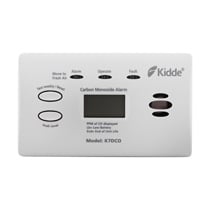
Kidde Carbon Monoxide Alarm - 7DCO / 7DCOC
  • Product Life: 10 years
  • Battery: replaceable AA alkaline batteries included
  • Warranty: 10 year warranty
  • Displays CO levels from 10ppm
  • Peak Level Memory - recalls highest CO levels
  • Ideal for domestic use and camping, caravans & boats
  • Kitemarked to BS EN50291-1 and BS EN50291-2
  • Also suitable for the 2022 Welsh legislation
£15.21 ex VAT
£18.25 inc VAT
Buy Now

If you are unsure if you have the correct carbon monoxide alarm installed our customer care team are here to help. You can call them on 0800 612 6537 or email support@safelincs.co.uk.

Angie Dewick-Eisele

Director

Angie Dewick-Eisele is co-founder of Safelincs Ltd, one of the leading fire safety providers in the UK. Angie was Marketing Manager for many years and as Director is these days responsible for Content Management.

Latest Posts by Angie Dewick-Eisele

Emergency Lighting Requirements1st August 2024
What to do if my Carbon Monoxide alarm goes off?19th March 2024
What is BAFE certification?28th March 2023