Is Your Holiday Home Protected From The ‘Silent Killer’? Carbon Monoxide Responsibilities For Accommodation Providers

Content updated 09 August 2024

When someone books a holiday, what features do they look for? Maybe a hot tub, fire pit or log burner for that little bit of luxury? A carbon monoxide detector might not be top of the list, but with carbon monoxide (CO), or the ‘Silent Killer’, ensuring your holiday accommodation is CO safe should be a priority. Did you know that as a holiday home owner in England, you have a legal responsibility to comply with regulations relating to carbon monoxide safety? Holiday-makers want to have peace of mind that their safety is a top priority when booking a holiday, and carbon monoxide safety is no exception.

Following the tragic death of Hudson Foley, a 24-year-old travelling in Ecuador, from carbon monoxide poisoning, the issue of CO safety when travelling has been highlighted. The dangers of this deadly gas are just as significant within the UK; it is the cause of more than 100 deaths annually. If you own a holiday home, caravans, gite or glamping pod anywhere in the world, protect your guests by fitting a working CO alarm. Part of the Pack Safe Appeal, set up in memory of Hudson, is to promote CO safety measures from accommodation providers. This includes ensuring carbon monoxide alarms are fitted and working, and that gas safety checks are regularly carried out. Safelincs are supporting the Pack Safe Appeal this summer by offering 15% off CO alarms using code HUDSON15.

Why is carbon monoxide dangerous?

Carbon monoxide (CO) is a highly poisonous gas with no smell or taste and can be difficult to detect without the aid of a carbon monoxide detector. Symptoms such as tiredness, shortness of breath, nausea and headaches can be easily mistaken for flu or food poisoning. However, after exposure to high levels for 2 hours, the person may become unconscious and could die from this poisonous gas. With such sudden consequences, early detection is critical.

For more information about the dangers of carbon monoxide and how it kills, read our blog.

Accommodation providers: Your responsibilities

CO gas is produced by the incomplete burning of fuels containing carbon, for example coal, wood, gas or charcoal. A build-up in emissions of CO gas can come from:
• Faulty gas appliances
• Fuel burning stoves, open fires or BBQs used in poorly ventilated areas
• Running a car engine in an enclosed space.

Like landlords, holiday home owners have a responsibility to ensure that their properties are compliant with the regulations Smoke and Carbon Monoxide Alarm (England) Regulations 2015. These regulations state that a carbon monoxide detector should be fitted in any room that has a solid fuel burning appliance such as a log burner or open fire. Whilst not a legal requirement, it is also advisable to install a detector in any room with a gas or oil burning appliance such as a boiler or oven. You should also check and log all smoke and CO alarms on change-over day for added peace on mind.

In Scotland, it is a legal requirement that all homes with a carbon fuel burning appliance, such as a boiler, gas cooker, or open fire, have a CO alarm installed. Similar regulations are also in place in Wales.

Maintaining CO Alarms and Fuel Burning Appliances

The maintenance of gas appliances in all properties is also of paramount importance. The Gas Safety (Installation and Use) Regulations 1998 outlines the legal duties of self-catering accommodation providers to ensure the safety of any guests. All gas appliances should be installed and checked annually by a Gas Safe Engineer. Accommodation providers need to ensure adequate ventilation throughout the holiday accommodation. This is of particular importance in caravans, lodges and tents or glamping pods.

Further to this, it is essential that CO alarms are tested regularly to ensure that it is working, and not near the end of its life. It is recommended that these detectors are tested once a month – sign up for our reminder service to receive texts and emails when this is due.

Provide information for your tenants

With frequent change-over of tenants and short-term occupancy, it may also help to provide a factsheet with guidance on carbon monoxide safety. Information such as how to locate and turn off the mains gas supply, what to do if the carbon monoxide alarm goes off or who to contact in an emergency may prove invaluable. Some tenants will be unfamiliar with gas appliances and general advice on how to use them safely could be useful.

Furthermore, unlike some smoke alarms that are prone to false triggers, a CO alarm is very unlikely to go off unless it detects carbon monoxide. False alarms are very unlikely and residents should be advised to act immediately and assume it is an emergency situation. Many people are not aware of the CO emissions from BBQs and camp fires. Cosy fires and family BBQs can prove deadly if emissions are allowed to accumulate in a tent, glamping pod or caravan. Campsites or caravan sites are advised to alert campers to the possible dangers of carbon monoxide poisoning from these activities.

Confidence in the UK holiday market

With the trend in UK ‘staycations’ looking set to continue into next year, ensuring the safety of guests in all accommodation will only help to increase confidence in UK holidays. Families should have peace of mind that their safety is of the utmost importance. There are many options for carbon monoxide alarms including combined or separate smoke and CO alarms, audible and visual cues and fixed or portable units. The requirement of each accommodation type varies depending on size, risks and structure.

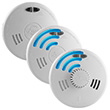
The Kidde 7DCO alarm is a great solution for most providers as it is Kitemarked as safe for use in all domestic situations as well as in caravans, boats and tents. Its 10-year lifespan, digital display and option for free-standing or wall-mounting makes it a reliable and flexible option. And, with readings taken every 15 seconds and displayed on the digital panel, guests would have complete peace of mind that they are protected from the ‘silent killer’.
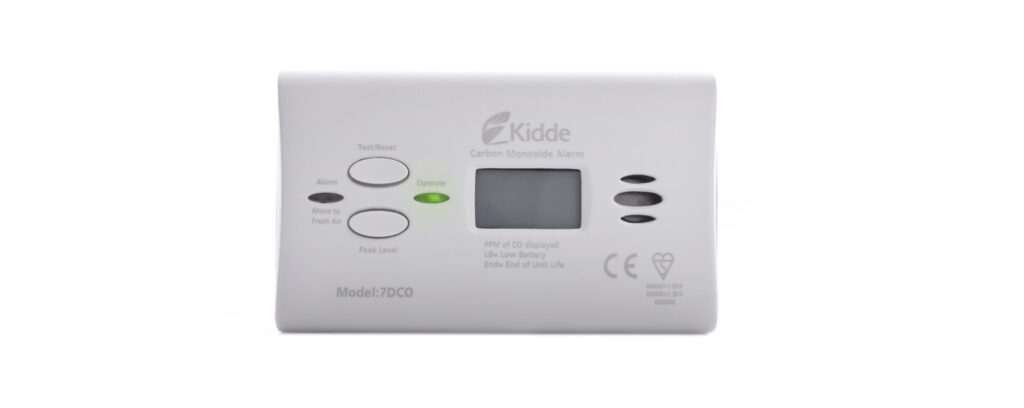
A suitable carbon monoxide alarm
Digital Display Carbon Monoxide Alarm 10 Yr Warranty – Kidde 7DCO

If you are an accommodation provider and would like more information, please contact our customer care team on 0800 612 6537.

Mel Saunders

Head of Marketing

With over 20 years of experience in content writing, design and marketing, Mel now heads up the Content & Marketing Team at Safelincs. Having been in the fire safety industry for over 5 years, Mel has now developed a deep understanding of some of the critical issues facing the industry. Alongside her team, she aims to support the public with resources and information to help them improve fire safety at home, in the workplace or in 3rd sector organisations.

Latest Posts by Mel Saunders

What Is A Class D Fire?14th May 2026
What Is A Class F Fire?13th May 2026
Ionisation Smoke Alarms Buyers Guide12th May 2026

Safelincs Supplying New Nightingale Hospitals

Over the last few days and weeks we have supplied a number of the new Nightingale Hospitals with essential firefighting equipment and evacuation equipment, usually within very short delivery time frames. To enable a dedicated articulated lorry to collect equipment for the Nightingale Hospital in Cardiff we arranged a special collection and opened specifically for this over the Easter Bank Holiday. We also had to hit tight deadlines to get fire safety equipment to Portsmouth to meet a boat supplying the Nightingale Hospital in Jersey. We are very proud to be part of the nationwide effort to fight the virus and it goes without saying that we heavily discounted the products for the NHS, as we do not want to profiteer from this emergency.

As an essential business, Safelincs is carefully balancing the supply of life-protecting safety equipment with making sure that we protect the health of our staff and keep risks of contracting and spreading Covid-19 as low as possible. We have put a multitude of safety measure in place, such as daily temperature checks and single occupancy of offices as well as social distancing measures in our warehouse and the introduction of split shifts of staff who never come into contact with each other. Out of our 60 staff members, we only have 21 staff spread out over our large 78,000sqf offices and warehouses and 14 staff working from home. We have also implemented extra daily routines for cleaning and disinfecting surfaces and door handles and meetings take place over Zoom.

It has been a humbling experience to see every staff member pull together, coping with the sometimes burdensome safety measures.

Harry Dewick-Eisele

Director

MD and founder of Safelincs. Harry has a wealth of in-depth knowledge of all aspects of fire safety and related legislation.

Latest Posts by Harry Dewick-Eisele

Safelincs Supplying New Nightingale Hospitals21st April 2020

Risks of Working From Home

Working from home is often a new and exciting experience for many employees, but it also brings with it new responsibilities. There are a number of associated risks that are often overlooked or forgotten; risks that you wouldn’t usually consider when working normally because someone else is responsible.

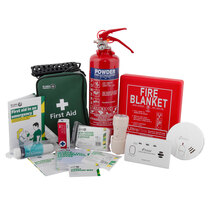
Home working combines all the safety hazards you would find in your normal working environment but instead places them all in your own home. Our Home Working Fire Safety Kit provides a number of essentials for dealing with these risks, giving you piece of mind.

One risk is the increase in the use of electronic devices and wiring, which is a serious fire hazard. In a rush to start work, sockets can easily be overloaded providing an opportunity for fire to break out. Electrical fires are still one of the most common causes of fire in the UK so limiting the chance of ignition is crucial.

Where possible avoid keeping flammable materials, such as paper, near wires and plug sockets. Make sure that your electrical appliances are correctly looked after – do the wires look to be in good health with no damage to the sheathing? The 1kg Powder Extinguisher in this kit will tackle the common fire risks in your home office, including electrical fires.

Working flexible hours when home working is very common and you may find yourself working at night as a result of this. All business workplaces should be fitted with emergency lighting but it is unlikely that you will have this in your own home. The Safe T Light Portable Emergency Light is ideal for home use and will provide you with adequate light to safely evacuate your home in an emergency, should there be a power failure.

Although many people working from home will be office workers, this kit also serves those in the craft or catering industry. The St John Ambulance First Aid Kit is equipped to deal with the most common accidents in and around the home.

People working from home should be encouraged to review the risks and take the appropriate precautions to prevent fires and accidents from happening. Those precautions should include having the means to detect and manage a fire should one occur. In our Home Working Fire Safety Kit, we have also included an optical smoke alarm and a fire blanket to help you cover all the common risks found in the home.

To assist with protecting yourself, your family and your home, there a few simple steps that we would recommend:

  • Ensure you have the appropriate fire detection and protection methods for yourself and your home, should a fire break out.
  • Regularly check the health of your devices and their wiring. If any wires appear to be damaged, that device should not be used.
  • Ensure all electrical devices are turned off and unplugged when not in use to reduce the risk of fire.
  • Equip your home with a first aid kit, as injuries are often unexpected and immediate treatment is usually the best course of action.
  • Know how you would evacuate your home in the event of a fire and practice this with all members of the household.
Home Working Fire Safety Kit - Safelincs
  • Fire blanket included for emergency escape
  • Supplied with a portable powder extinguisher and emergency light
  • St John Ambulance first aid kit provides the essentials for minor injuries
  • Also supplied with an optical smoke alarm and CO alarm
  • Protect your home office / home working environment
£72.80 ex VAT
£87.36 inc VAT
Buy Now

For more information about our product range or to place an order, call today on 0800 612 6537.
Connor Storr

PPC Specialist

Connor is one of our product administrators. He has a wealth of knowledge when it comes to fire and security safes and fire doors.

Latest Posts by Connor Storr

Risks of Working From Home6th April 2020

Safelincs supports Buses 4 Homeless

Buses 4 Homeless is a social enterprise that was set up by Dan Atkins with a mission to provide 14,600 nights of sleep a year for the homeless. This exciting project, offering a three-month rehabilitation programme to vulnerable homeless people, is run from four refurbished double-decker buses and aims to re-engage homeless people back into the community.

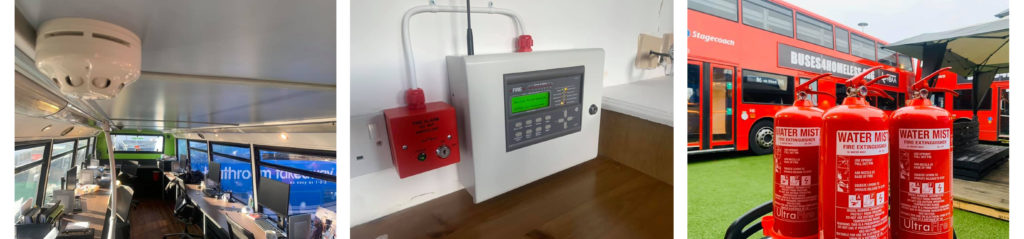
Dan contacted Safelincs to ask for advice about fire safety and when we heard about the project we decided to get involved and donate a state of the art Zerio Plus wireless fire detection system, fire extinguishers, and a fire escape ladder. Installing the equipment enabled the first guests to be welcomed onto the project just before Christmas. Dan Atkins said “I picked up the phone and called Safelincs, spoke about the project and what we are doing. Everyone at Safelincs has been so supportive”. Dan went on to say “it is humbling to have such support”.

The buses provide four very distinct areas for the guests including sleeping accommodation, dining, wellbeing, and education. Each individual has the opportunity to work on their own specific areas and issues that led them to become homeless, learn new skills and help them secure employment. The programme offers the opportunity of long term mentorship to underpin long term success. We wish Dan and his team every success.

Buses 4 Homeless fitted with Zerio Plus wireless alarm panel and water mist extinguishers

Angie Dewick-Eisele

Director

Angie Dewick-Eisele is co-founder of Safelincs Ltd, one of the leading fire safety providers in the UK. Angie was Marketing Manager for many years and as Director is these days responsible for Content Management.

Latest Posts by Angie Dewick-Eisele

Emergency Lighting Requirements1st August 2024
What to do if my Carbon Monoxide alarm goes off?19th March 2024
What is BAFE certification?28th March 2023

Double Awards for Safelincs

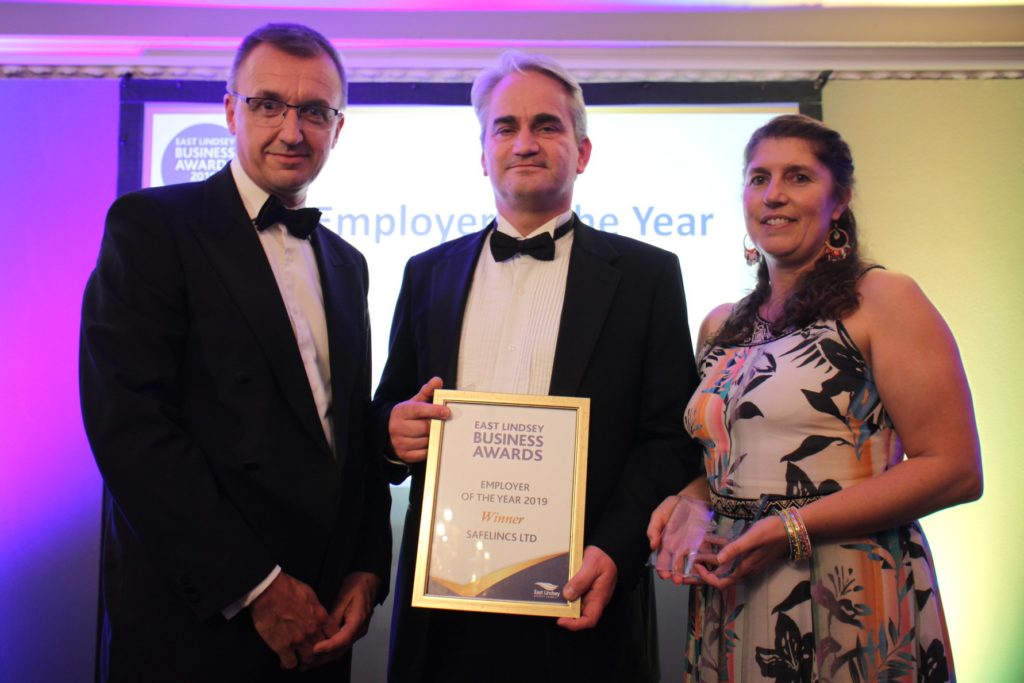
Safelincs receiving Employer of the Year 2019 East Lindsey Business Award

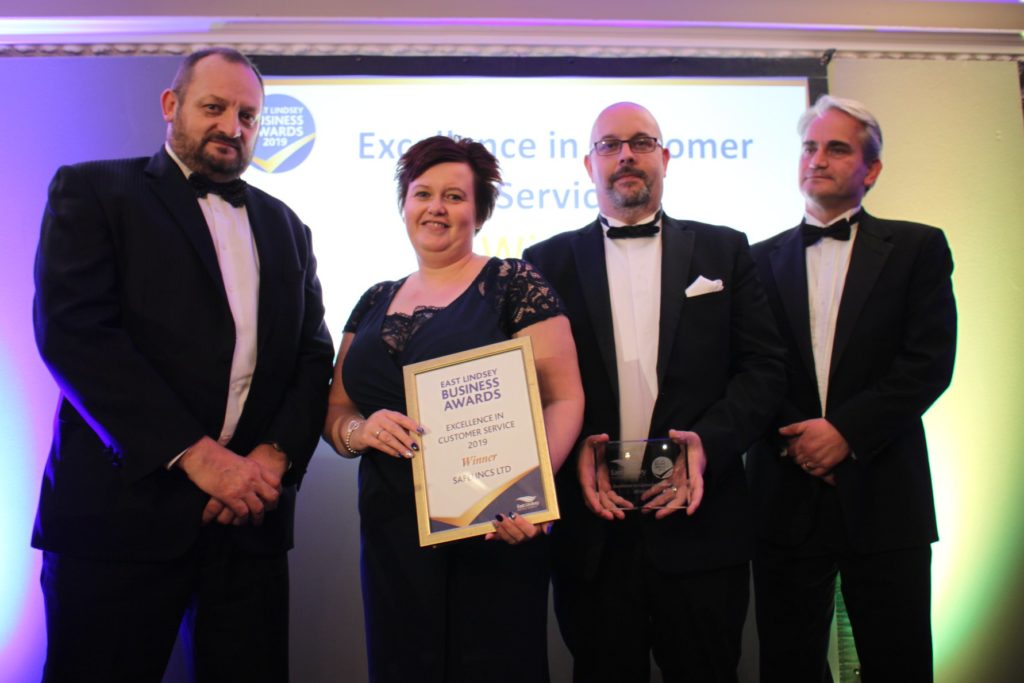
Safelincs Ltd have been named Employer of the Year and been given a second award for Excellence in Customer Service in the ELBA 2019 business awards. These two awards are testimony to the great team at Safelincs. Harry Dewick-Eisele, MD, said ‘We are incredibly proud of our team and these two awards are down to our great team work and ethical business practices’. He went on to say ‘we believe our success is in selecting the right staff from the start, giving them a comprehensive induction period and then involving them in all aspects of the business’.


Safelincs receiving Excellence in Customer Service 2019 East Lindsey Business Award

These two awards follow continued growth for the company, bucking the trend by growing 30% year on year for the last four years. Ensuring that staff are well trained, have a voice within the company and are empowered to provide the best customer service are all contributing factors for Safelincs’ success. With a product range of over 6000 products Safelincs can offer comprehensive fire safety solutions to customers of all sizes and work with organisations such as Eton College, Empire Cinema, the NHS, as well as schools, colleges and universities.


Angie Dewick-Eisele

Director

Angie Dewick-Eisele is co-founder of Safelincs Ltd, one of the leading fire safety providers in the UK. Angie was Marketing Manager for many years and as Director is these days responsible for Content Management.

Latest Posts by Angie Dewick-Eisele

Emergency Lighting Requirements1st August 2024
What to do if my Carbon Monoxide alarm goes off?19th March 2024
What is BAFE certification?28th March 2023

Safelincs team up with Evie Toombes, para show jumper and ambassador for hidden disabilities

Safelincs are proud to be able to help support Evie Toombes with her quest to fund a medical horse box. Evie is an inspirational teenager with spina bifida and is a para show jumper from Skegness, Lincolnshire. She is also an ambassador for hidden disabilities and visits schools to talk to children about her hidden disability in the hope that she will give confidence to other children to speak about their problems.

Over the past few years Evie’s condition meant that she was unable to tolerate food and as a result lost a lot of weight and now needs to be fed through a tube into her stomach. Her condition also affects her legs, bladder and bowel.

Evie and Daisy the Horse aka 'High Offley Business Centre'
Evie with Daisy aka ‘High Offley Business Centre’

Ill health and numerous hospital visits started to make it very difficult for Evie to continue to compete, so two years ago Evie embarked on a plan to fund a medical unit horse box which would give her the ability to go to shows with all her medical equipment.

“Thank you for your support towards the purchase of my medical horse box, the security of having a vehicle that is safe and well equipped enough to deal with the current medical needs I face (that has landed me in hospital at least once a month every month for 15 months) is truly incredible,” said Evie Toombes.

Riding gives Evie freedom from her health issues and the bond with her horse and ponies gives her a boost when she is feeling unwell. Evie has won several trophies. We wish Evie every success in her future competitions.

Angie Dewick-Eisele

Director

Angie Dewick-Eisele is co-founder of Safelincs Ltd, one of the leading fire safety providers in the UK. Angie was Marketing Manager for many years and as Director is these days responsible for Content Management.

Latest Posts by Angie Dewick-Eisele

Emergency Lighting Requirements1st August 2024
What to do if my Carbon Monoxide alarm goes off?19th March 2024
What is BAFE certification?28th March 2023

Time to Change, Safelincs sign the pledge

Signing the “Time To Change” pledge is just one of the many steps that Safelincs have taken to make changes towards how people feel about mental health.

We have trained two Mental Health First Aiders (MHFA) and have implemented a confidential system for staff to contact them and ask for support. We have also appointed a  Well-Being Team. This team of four staff are planning and implementing activities throughout the year that open up conversations about mental health.

Harry Dewick-Eisele, MD, and Stuart Baxter, Commercial Development Manager, signed the pledge to demonstrate that top management are taking the issue of mental health seriously. Harry Dewick-Eisele said ‘We want talking about mental health and any related issues to be as commonplace as talking about a cold or a broken leg’. All the management team at Safelincs are onboard with this initiative and we have an open door policy and staff can pop in to a manager’s office at any time to talk.

The “Time To Change”  website has lots of resources of which we have already used several, such as the Conversation Starter and handouts to get conversations going. We will be engaging staff in a number of activities over the year to ensure that talking about mental health becomes the norm at Safelincs.

Angie Dewick-Eisele

Director

Angie Dewick-Eisele is co-founder of Safelincs Ltd, one of the leading fire safety providers in the UK. Angie was Marketing Manager for many years and as Director is these days responsible for Content Management.

Latest Posts by Angie Dewick-Eisele

Emergency Lighting Requirements1st August 2024
What to do if my Carbon Monoxide alarm goes off?19th March 2024
What is BAFE certification?28th March 2023

Nest Product Generations – How to Identify Your Products

It is well known that electronic technology advances very quickly, with products being outdated and replaced by a newer version every year. More and more frequently these subsequent versions of the same product are being called ‘generations,’ such as a ‘5th gen iPod.’ Nest Labs’ range of ‘smart home’ products is no exception to this trend and the oldest two have already undergone a few iterations of redesign and improvement.

This guide has been written to help you quickly and easily identify which generation your Nest Products belong to.

Nest Protect

1st Generation 2nd Generation
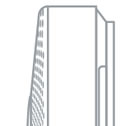
Edges Straight Edges
Nest Protect 1st Generation Edges
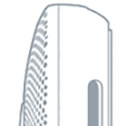
Rounded Edges
Nest Protect 2nd Generation Edges
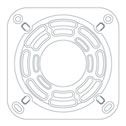
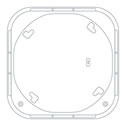
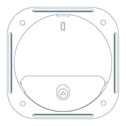
Backplate Square
Nest Protect 1st Generation Backplate
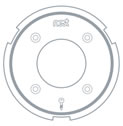
Circular
Nest Protect 2nd Generation Backplate
Battery Door No Battery Door
Nest Protect 1st Generation Battery Door
Battery Door
Nest Protect 2nd Generation Battery Door
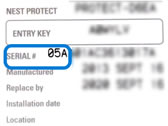
Serial Number 05A or 05C
Nest Protect 1st Generation Serial Number
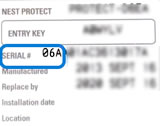
06A or 06C
Nest Protect 2nd Generation Serial Number

Model Number

Open the Nest app on your phone and tap Protect at the bottom, tap the Settings gear at the top followed by the alarm you’re interested in, and then go to Technical Info. If it says your model is Topaz-1.x then you have a First Generation, while Topaz-2.x denotes the Second Generation alarm.

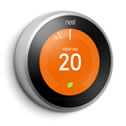
Nest Learning Thermostat

2nd Generation 3rd Generation
Colours Stainless Steel Stainless Steel, Copper, Black, White
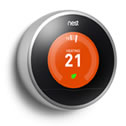
Appearance Nest Thermostat 2nd Generation Appearance Nest Thermostat 3rd Generation Appearance
  • 7cm screen diameter
  • 320 320px resolution
  • 8.25cm screen diameter
  • 480 x 480px screen
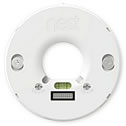
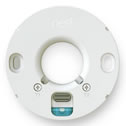
Base Nest Thermostat 2nd Generation Base Nest Thermostat 3rd Generation Base
  • Yellow spirit level
  • Rectangular Display connector
  • Blue spirit level
  • Oval display connector
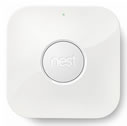
Heat Link Nest Thermostat 2nd Generation Heat Link Nest Thermostat 3rd Generation Heat Link
  • One status light
  • 10cm height and width
  • 3 status lights
  • 11cm height and width

Nest Cam

Indoor Outdoor
Colour Black White
Appearance Nest Thermostat 2nd Generation Appearance Nest Thermostat 3rd Generation Appearance
Differentiating
Features
  • Securely stream 1080p video to your phone, tablet or laptop
  • Various positioning options
  • No installation – simply plug into power and set up via phone app
  • Compatible with standard camera mounts and tripods
  • Weatherproof camera nad cables
  • Magnetic mount with metal plate for wall attachment
  • Night vision
  • Clear 24/7 video with 130 degree viewing angle

Hushing Interlinked Smoke Alarms

Interlinked smoke alarms are becoming more and more popular as they quickly alert you to the event of a fire across larger houses, where there is a risk that you might not hear an alarm going off in the kitchen when you are, for example, in a bedroom upstairs.

Whether connected to each other with wire or wirelessly interlinked through radio frequency, interlinked smoke alarms allow you to connect multiple units – including different types of detectors – which will all sound at the same time when a single alarm detects a potential fire. The heat alarm in the kitchen, the ionisation alarm in your home office, and the specialist strobe and vibration alarm in your elderly parents’ bedroom, for example, will all go off at the same time, if just one alarm is triggered by fire.

Most of us are familiar with the test button on smoke alarms which allows residents to test their alarms regularly, to ensure the components are working and the power supply, whether battery or mains power, is working. On top of this, however, many alarms have a “hush” button which allows you to silence an alarm that has gone off, for example, due to burnt toast.

So how do hush buttons work when you have several interlinked alarms?

It’s easy to assume that, as they are all connected, hushing one alarm will silence all of them, but it is equally logical that only the unit on which you pressed the hush button should be silenced – after all, you don’t want people to assume it was a false alarm if there really is a fire raging downstairs.

Interestingly, not all interconnecting smoke alarms hush in the same way. Here is an overview explaining the different approaches employed by the three main smoke alarm manufacturers in the UK.

Kidde Slick Wireless Smoke and Heat AlarmsFor Kidde smoke alarms, the originating alarm (the unit which detected a potential fire and triggered all of your units) will have its warning light flash faster than all other units while the alarm is sounding – enabling you to identify the smoke alarm that caused the alarm. Pressing the hush button on ANY unit will silence the ENTIRE network.

Ei160e Series Smoke and Heat AlarmsIf you have interlinking Ei Electronics smoke alarms, only the originating unit’s hush button will be able to silence the ENTIRE network. The other units in the circuit can be individually silenced. To identify the originating unit you need to look for the alarm whose warning light is flashing every second, compared to every 40 or so seconds on the other units.

FireAngel WST600 Series Radio-Interlinked Smoke and Heat AlarmsFireAngel smoke alarms, however, deploy an improved silencing protocol. If you hush the originating smoke alarm then, as with the other brands, ALL connected units will be silenced. However, if you hush any other unit, the ORIGINATING alarm will continue to sound but ALL OTHER units will be silenced. This allows you to quickly identify the originating alarm which is very helpful both in case of a false alarm or a real emergency.

If you require support selecting the best smoke alarm system for yourself, please contact the friendly Safelincs support team either by emailing support@safelincs.co.uk or by ringing 0800 612 6537

Evacuation Chair Training Requirements

As with any other item of fire safety equipment, there is a requirement to deliver training. If an organisation determines that an evacuation chair is required sufficient training should be provided. Evacuation chair training ensures that nominated staff members can act quickly and confidently when called to do so. Evacuation chair training is therefore required to fulfil what HSE identify as organisations’ ‘duty to provide a means of escape for disabled people’.

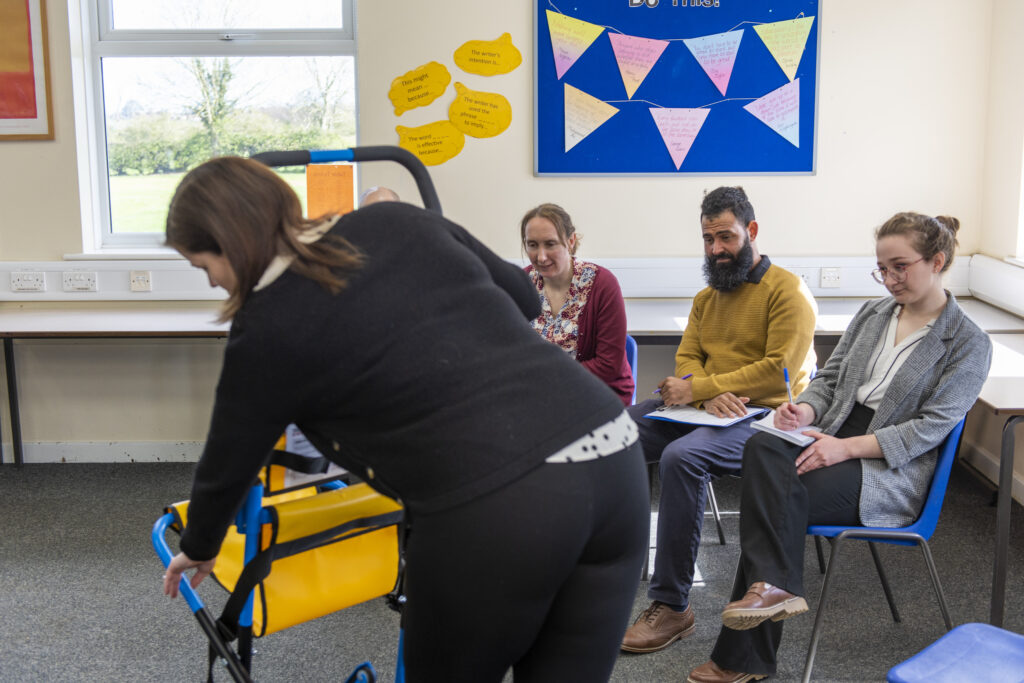
Evacuation chair training in a a classroom
Training can be delivered to groups of up to 4 delegates

Is evacuation chair training a legal requirement?

Yes, where evacuation chairs are installed, staff must legally be trained to use the equipment. This is required by the Equality Act 2010, which recognises the difficulties that some individuals may face during an evacuation. Under this act, organisations are responsible for providing means for safe evacuation of every building occupant. This includes both installing evacuation chairs where required, and training enough staff to use them. According to the Provision and Use of Work Equipment Regulations (PUWER) 1998, equipment provided for use at work can be ‘used only by people who have received adequate information, instruction and training.’ This is essential for evacuation chairs, which are considered to be medical equipment. Misuse in a stressful evacuation situation puts the operator, the chair user, and those around them at risk of injury.

Why is evacuation chair training required?

There are legislative requirements for evacuation chair training. The qualification ensures the safety and confidence of both the chair user and the operator. If not used correctly, lives could be put at risk. Training is therefore essential to ensure the competence of the chair operator, who has undertaken a significant personal responsibility to evacuate a friend, colleague, or visitor to safety in an emergency.

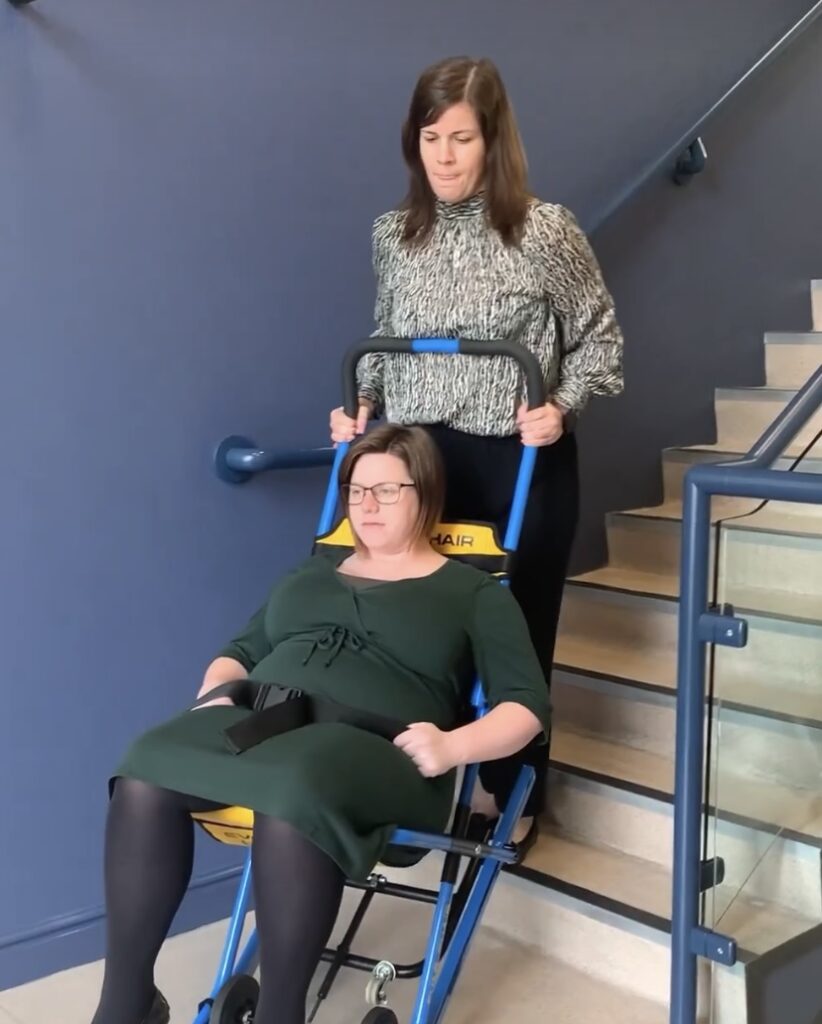
Evacuating a pregnant lady in an evacuation chair
Individuals may need support to evacuate for a variety of reasons

Who should receive training?

Due to the significant responsibility placed on individuals who receive training, it is important to ensure that they meet the following criteria:

  • They are a willing volunteer – no one should be forced to take on this responsibility.
  • They are responsible – staff members selected should be sensible, reliable, and understand the importance of their role.
  • They work in the vicinity of the person identified as needing support. It must be practical and possible for the trained member of staff to get to both the chair and the chair user in an emergency (e.g., they should work on the same floor).
  • They are physically able. Nominees trained to use the chair don’t need to be incredibly strong, but mobility and stamina might be required.
  • There should be enough individuals trained to cover shift patterns and absence from work.

How often should training be refreshed?

Once an individual has successfully completed an evacuation chair training course, they can operate that model of chair for up to 3 years. After this time, refresher training is legally required. There are several other reasons that evacuation chair training might need to be carried out again. If a member of staff who is trained to use the chair leaves, is promoted, or otherwise becomes unable to operate it, a replacement member of staff must be trained. Similarly, if a new FRA, PEEP, or fire drill identifies an individual who would not be able to evacuate, and an additional chair is installed, another member of staff must receive evacuation chair training.

evacuation chair training on a staircase
Training provides delegates with the necessary skills and confidence to support safe evacuation

How many people should receive training on your evacuation chairs?

At a minimum, there must be one evacuation chair installed for every person who would need support to evacuate. For every chair installed, at least one member of staff must be trained and confident to operate it. However, to ensure the safety of all building users when trained staff are unavailable (on annual leave, off sick, or moved to a different office), it is sensible to train additional members of staff where possible. Enrolling a member of staff in a ‘Train the Trainer’ course can be a cost-effective way for training to be dispersed throughout your organisation.       

Fulfilling your organisation’s evacuation chair training requirements

For more information about the importance of training and maintenance for evacuation chairs visit our help guide. Book an evacuation chair training course with Safelincs to equip your employees with comprehensive theoretical and practical training from a fully qualified and experienced trainer. These on-site evacuation chair trainings courses are available nationwide, and suitable for up to 6 participants per course.