How Do Water Fire Extinguishers Work?

Disclaimer: This guide provides general information about water fire extinguishers for educational purposes. Always consult a qualified fire safety professional for advice specific to your premises and ensure you receive proper training before operating any fire extinguisher.

Water fire extinguishers are designed to combat Class A fires by cooling burning materials below their ignition temperature. When you discharge a water fire extinguisher, it releases a stream or spray of water that absorbs heat from the flames and burning surfaces, removing the heat element from the fire triangle. This cooling action rapidly lowers the temperature of materials like wood, paper and textiles, extinguishing the fire and preventing reignition.

Estimated reading time: 7 minutes

Key Takeaways

  • Water fire extinguishers work by removing heat from fires through absorption and cooling.
  • They operate using a stored-pressure mechanism with compressed air or nitrogen as the propellant.
  • Water extinguishers are effective only on Class A fires involving solid combustible materials.
  • Fire ratings like 13A or 21A indicate the size of fire an extinguisher can tackle under test conditions.
  • These extinguishers should never be used on flammable liquids or cooking oil fires.
  • Water lowers the temperature of burning materials below the ignition point, breaking the fire triangle.
Image

What Is the Fire Triangle and How Do Water Extinguishers Disrupt It?

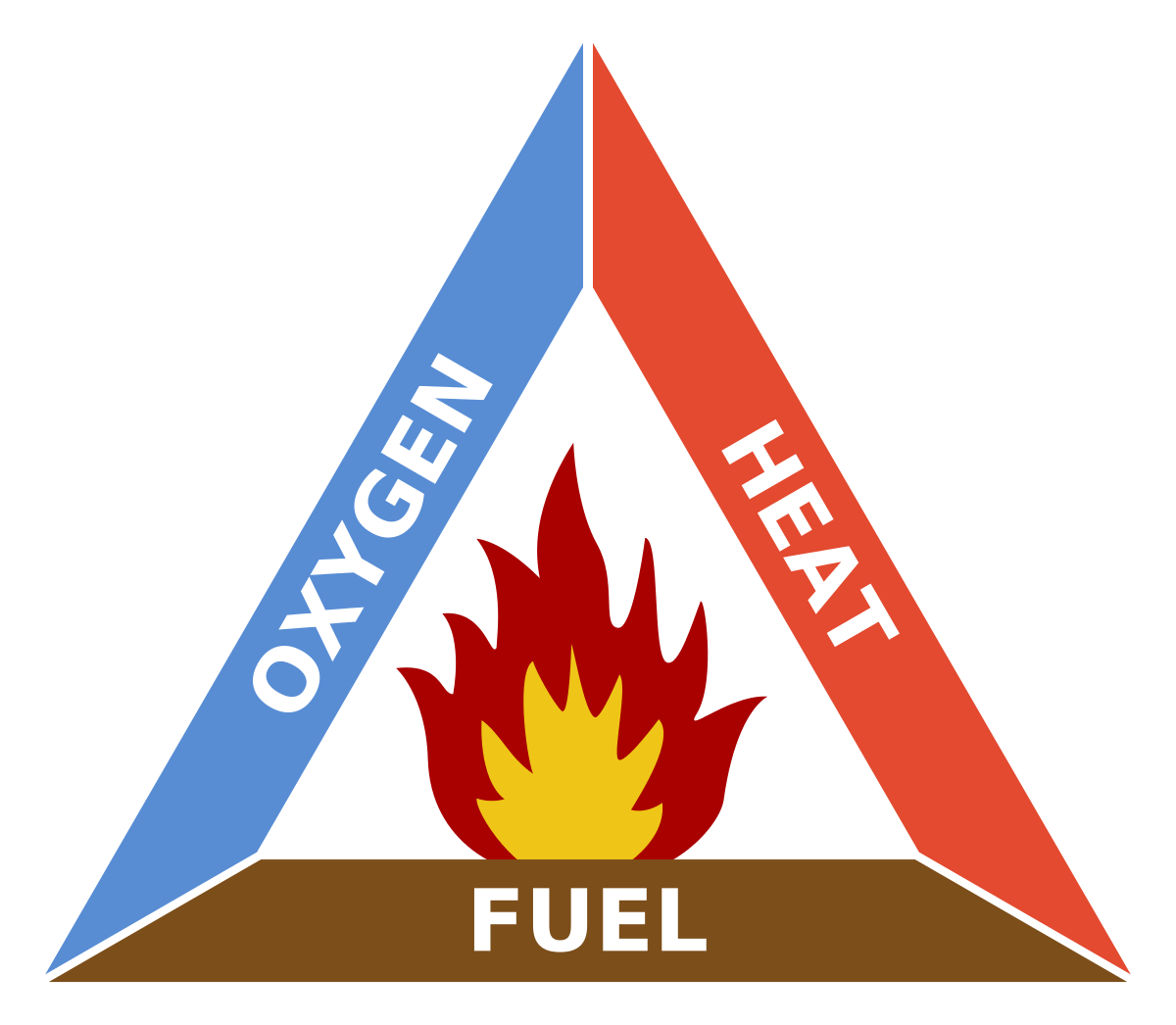
The fire triangle is a fundamental concept in fire safety that explains the three essential elements required for combustion. Heat, fuel and oxygen. Remove any one of these components, and the fire cannot sustain itself.

Water fire extinguishers work by attacking the heat element of the fire triangle. When water makes contact with burning materials, it absorbs tremendous amounts of thermal energy through two processes. Sensible heating occurs as the water temperature rises from ambient to boiling point. Then comes the latent heat of vaporisation, which happens when liquid water transforms into steam. This second process requires approximately 2,260 kilojoules per kilogram, making it exceptionally efficient at removing heat.

This dual absorption process is what makes water so effective at firefighting. As the temperature of the burning material drops below its ignition point, the chemical reactions that sustain combustion can no longer continue. The fire goes out.

Fire Triangle Element Role in Combustion How Water Extinguishers Affect It
Heat Provides energy to sustain combustion Water absorbs heat through sensible heating and the latent heat of vaporisation
Fuel Provides combustible material Water cools fuel below ignition temperature
Oxygen Supports chemical reactions Water creates some displacement, but primarily works through cooling
Fire Triangle Element
Heat
Role in Combustion
Provides energy to sustain combustion
How Water Extinguishers Affect It
Water absorbs heat through sensible heating and the latent heat of vaporisation
Fire Triangle Element
Fuel
Role in Combustion
Provides combustible material
How Water Extinguishers Affect It
Water cools fuel below ignition temperature
Fire Triangle Element
Oxygen
Role in Combustion
Supports chemical reactions
How Water Extinguishers Affect It
Water creates some displacement, but primarily works through cooling

How Does the Stored Pressure Mechanism Work in Water Fire Extinguishers?

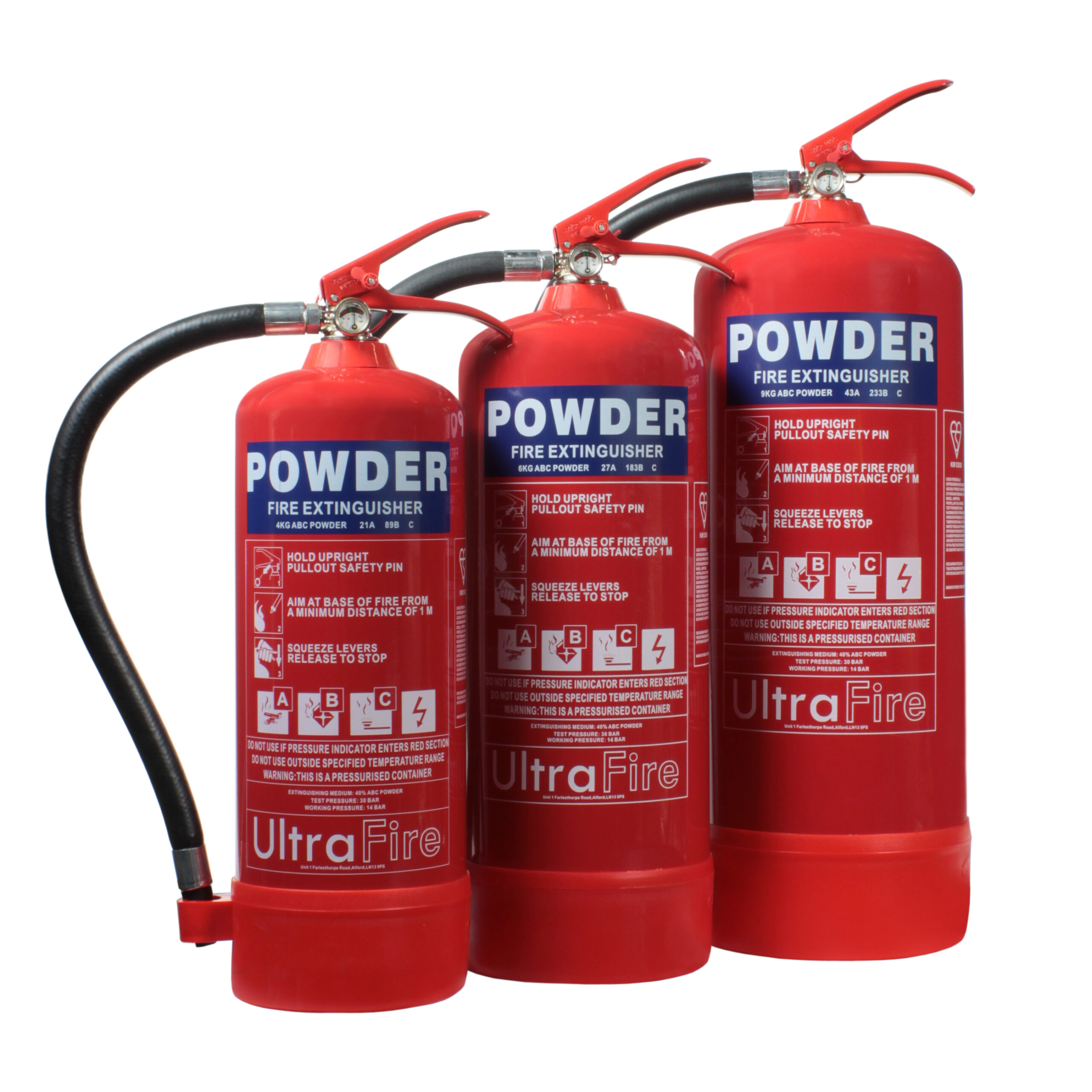
Most modern water fire extinguishers in the UK are stored-pressure units. In this design, both the extinguishing agent (water) and the pressurising gas live together in the same cylinder. The pressurising gas is typically compressed air or nitrogen.

When you squeeze the handle of a stored-pressure extinguisher, you open the valve at the top of the cylinder. The compressed gas pushes down on the water, forcing it up through the siphon tube and out through the nozzle. This creates a continuous stream or spray of water directed at the fire.

The pressure inside stays constant throughout the discharge until the extinguisher is empty. You can check this pressure using the gauge mounted on the body. The indicator should show the unit is in the green ‘charged’ zone for the extinguisher to be ready for use.

Stored Pressure vs Cartridge-Operated Stored Pressure (Most Common): Agent and propellant stored together in one cylinder. The pressure gauge shows readiness. Nitrogen or air is used as a propellant.

Cartridge-Operated (Less Common): Agent and propellant stored separately. CO2 cartridge punctured when activated. No pressure gauge. Common in industrial settings.  
Image

What Do Fire Ratings Like 13A and 21A Mean?

Fire ratings on water extinguishers indicate the size and type of fire the unit can extinguish under controlled test conditions. The rating consists of a number followed by a letter. The number represents the fire size. The letter indicates the fire classification.

For Class A fires, test fires are created using a crib of wooden sticks measuring 500mm wide and 546mm high. The crib’s length determines the rating. A 13A rating means the extinguisher successfully extinguished a crib 1.3 metres long under test conditions. A 21A rating means it can tackle a 2.1 metre-long crib.

These tests follow BS EN3, the standard that governs fire extinguisher manufacture and performance in the UK and Europe. After an eight-minute pre-burn, a skilled operator must extinguish the entire test fire with no signs of reignition for at least three minutes. Rigorous testing ensures reliability.

Higher numbers indicate greater firefighting capability. If you need a 13A-rated extinguisher for your premises, a 21A-rated unit will provide even better protection. However, physical size and weight also increase with higher ratings, so there’s always a balance to strike.

Fire Rating Test Crib Length Typical Extinguisher Sizes
8A 0.8 metres 2 litre water mist
13A 1.3 metres 3 litres of water, 6 litres of water, 6 litres of water mist
21A 2.1 metres 6 litre water additive, 9 litre water
27A 2.7 metres 6 litre water additive with enhanced formula
Fire Rating
8A
Test Crib Length
0.8 metres
Typical Extinguisher Sizes
2 litre water mist
Fire Rating
13A
Test Crib Length
1.3 metres
Typical Extinguisher Sizes
3 litres of water, 6 litres of water, 6 litres of water mist
Fire Rating
21A
Test Crib Length
2.1 metres
Typical Extinguisher Sizes
6 litre water additive, 9 litre water
Fire Rating
27A
Test Crib Length
2.7 metres
Typical Extinguisher Sizes
6 litre water additive with enhanced formula

Which Types of Fires Can Water Fire Extinguishers Tackle?

Water fire extinguishers are designed exclusively for Class A fires. These involve ordinary combustible materials that produce ash when burned. Think wood, paper, cardboard, textiles, fabrics and most plastics.

In premises such as offices, schools, warehouses and hotels, Class A fires pose the most significant fire risk. This makes water extinguishers a practical and cost-effective choice for many buildings. They’re often paired with CO2 extinguishers to provide additional coverage for electrical equipment fires as well.

Water extinguishers excel at penetrating deep into burning materials. This allows them to tackle deep-seated fires where heat has penetrated below the surface. 

The water soaks into the material, cooling it throughout and preventing reignition from hot spots lurking beneath.

Some water extinguishers have passed the 35kV dielectric test specified in BS EN3. These units may be marked as suitable for use on live electrical equipment up to 1000V at a distance of one metre.
Image

When Should You Never Use a Water Fire Extinguisher?

Understanding the limitations of water fire extinguishers is as important as knowing their capabilities. You should never use a water fire extinguisher on:

Class B Fires (Flammable Liquids)

Water is denser than most flammable liquids, such as petrol, diesel or paint. It sinks below the liquid surface and fails to create an effective barrier. Worse, the water can cause the burning liquid to splash and spread, worsening the fire rather than extinguishing it.

Class C Fires (Flammable Gases)

Water is ineffective against gas fires. The primary danger with gas fires is the escaping gas itself. Extinguishing the flame without shutting off the gas supply creates an explosion risk as an invisible cloud of gas builds.

Class F Fires (Cooking Oils and Fats)

Water reacts violently with hot cooking oils. When water contacts oil heated above 340°C, it instantly vaporises into steam. This explosive expansion can spray burning oil in all directions, causing severe injuries and spreading the fire throughout the kitchen.

How Do You Operate a Water Fire Extinguisher Safely?

Operating a water fire extinguisher correctly can make the difference between successfully controlling a small fire and allowing it to spread. The standard method uses the PASS technique. It’s simple but effective.

1. Pull the safety pin or break the tamper seal. This unlocks the operating mechanism. Hold the extinguisher upright with the nozzle pointing away from you.

2. Aim the nozzle at the base of the flames, not at the top. Fires burn upwards, but the fuel is at the bottom. Attacking the base cuts off the fire’s fuel source.

3. Squeeze the handle slowly and steadily. This opens the valve and releases the water stream. You should stand at least two to three metres from the fire for safety.

4. Sweep the nozzle from side to side across the base of the fire. Continue sweeping until all visible flames are extinguished. Keep watching for several minutes after the fire is out in case reignition occurs from smouldering materials.

Always ensure you’ve got a clear escape route behind you before attempting to fight any fire. If the fire is larger than a waste paper bin, spreading rapidly, there’s heavy smoke or you feel unsafe, evacuate immediately and call 999. Your life is more valuable than any property.

What’s the Difference Between Water Jet and Water Mist Extinguishers?

Water jet extinguishers discharge a high-pressure stream of water. This stream can reach up to 10 metres, allowing you to fight fires from a safe distance. The powerful jet penetrates deep into burning materials, making it effective against deep-seated fires. However, the concentrated stream covers a smaller surface area at once.

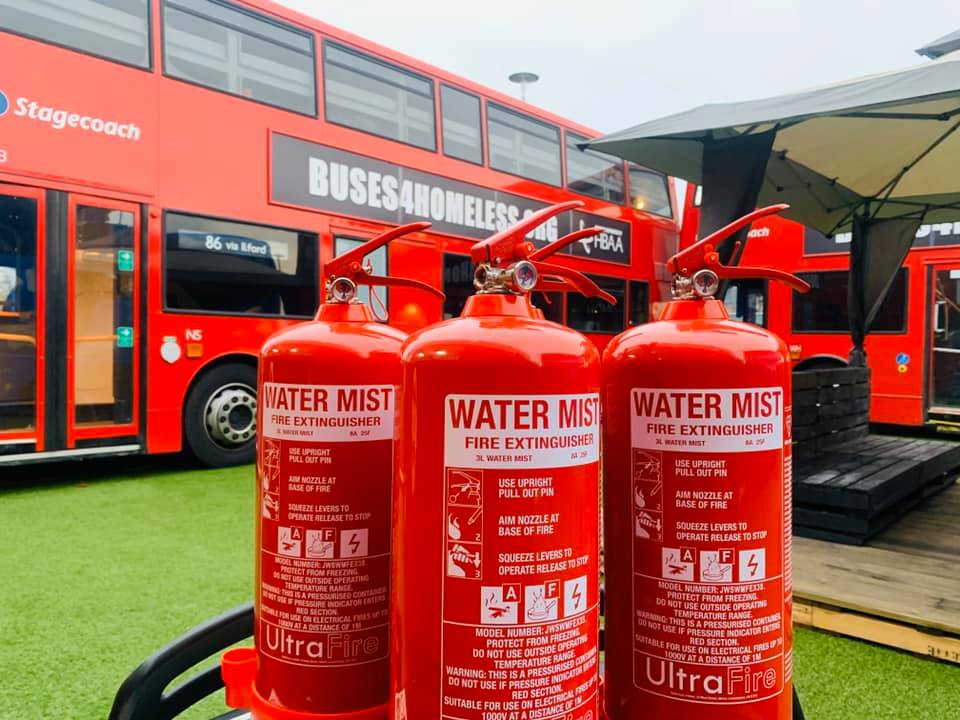
Water mist extinguishers discharge water as a fine mist through a special nozzle. The mist rapidly covers a much larger surface area. This creates a more efficient cooling effect and reduces water damage compared to a jet. The mist also creates a partial barrier between you and the fire, offering better protection from radiant heat.2

How Do Water Mist Extinguishers Differ from Standard Water Extinguishers?

Water mist extinguishers represent an evolution in fire extinguisher technology. They discharge water as microscopic droplets, typically 10-100 microns in diameter. This creates dramatically more surface area compared to standard water streams.

The increased surface area means more efficient heat absorption. Water mist extinguishers can tackle Class A fires just as effectively as standard units, often with smaller capacities. Many water mist models also carry ratings for Class B and Class F fires, making them more versatile than their traditional counterparts.

The microscopic droplets have another crucial advantage. They don’t form a continuous conductive path for electricity. This allows water mist extinguishers to be used safely on live electrical equipment up to 1000V at a distance of 1 metre.

Water mist also causes less collateral damage. The fine droplets evaporate quickly rather than pooling on floors or soaking into furnishings. This makes water mist extinguishers ideal for offices, heritage buildings, museums and other locations where water damage would be costly or devastating to operations.

Why Choose Safelincs

Choosing the proper fire extinguisher for your premises is a critical safety decision that shouldn’t be rushed. At Safelincs, we offer a comprehensive range of water and water-mist fire extinguishers for every application, from small offices to large warehouses.

Our expert team can help you select the correct type and rating for your specific fire risks, ensuring you’re protected without overspending on unnecessary capacity.

We provide delivery, installation and commissioning services to ensure your fire protection meets UK regulations and gives you complete peace of mind. Contact our fire safety specialists today for personalised advice on selecting and placing water fire extinguishers.  

Mel Saunders

Head of Marketing

With over 20 years of experience in content writing, design and marketing, Mel now heads up the Content & Marketing Team at Safelincs. Having been in the fire safety industry for over 5 years, Mel has now developed a deep understanding of some of the critical issues facing the industry. Alongside her team, she aims to support the public with resources and information to help them improve fire safety at home, in the workplace or in 3rd sector organisations.

Latest Posts by Mel Saunders

What Is A Class D Fire?14th May 2026
What Is A Class F Fire?13th May 2026
Ionisation Smoke Alarms Buyers Guide12th May 2026

When Should a Flammables Store Be Used?

A flammable store is required when you store flammable liquids that exceed specific threshold quantities in your workplace. The Dangerous Substances and Explosive Atmospheres Regulations 2002 (DSEAR) require flammable substances to be stored safely to prevent fire, explosion, and harm to people. Proper storage in flammable liquid cabinets helps you comply with these legal requirements and protects your workplace.

Estimated reading time: 5 minutes  

Key Takeaways

  • A flammables store is required when storing flammable liquids above specific quantities in the workplace.
  • DSEAR 2002 requires risk assessments and safe storage of all dangerous substances.
  • HSE guidance recommends 50 litres as a maximum for extremely flammable, highly flammable, and flammable liquids with a flashpoint below ambient temperature in workroom cabinets.
  • Your workplace type, substance classification and risk assessment determine specific storage needs.
  • Flammable stores must meet construction standards, be appropriately located, and be adequately ventilated

Disclaimer: This guide provides general information about flammable storage requirements in the UK. It doesn’t constitute legal or professional advice. Always consult relevant regulations, conduct proper risk assessments, and seek professional guidance for your specific circumstances.  

Image

What Are the Legal Requirements for Storing Flammable Liquids?

The primary legal requirement is compliance with DSEAR 2002. This requires you to eliminate or reduce the risks posed by dangerous substances. You must conduct a risk assessment, provide appropriate storage, ensure proper ventilation and put control measures in place.

The Health and Safety Executive (HSE) enforces these requirements and provides guidance on compliance. Failure to comply can result in prosecution and fines. More importantly, it can lead to serious consequences if an incident occurs.

DSEAR applies to nearly all workplaces and covers any substance that could cause fire or explosion. If you store petrol, solvents, paints or other flammable liquids, you need to follow these rules.

What Storage Thresholds Trigger the Need for a Flammables Store?

Storage thresholds vary depending on the flashpoint and quantity of your liquids. HSE guidance recommends that 50 litres is a maximum for extremely flammable, highly flammable, and flammable liquids with a flashpoint below ambient temperature when stored in workroom cabinets. For flammable liquids with a higher flashpoint (up to 60°C), the recommended maximum is 250 litres.

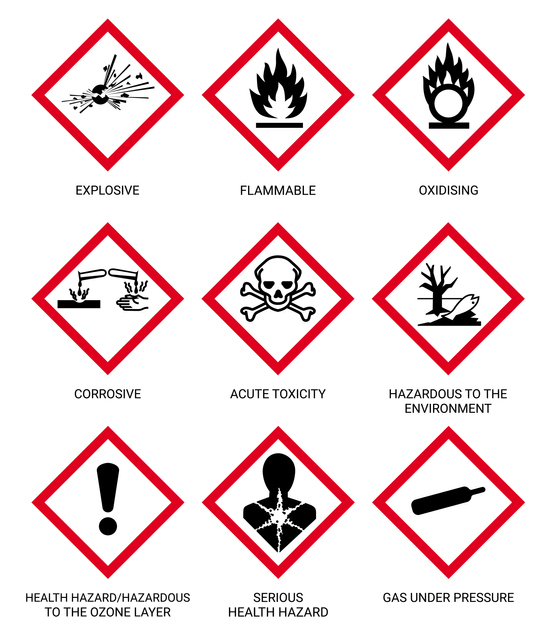
Understanding how substances are classified helps you determine your storage needs. Under the current GB CLP Regulation, flammable liquids are classified into three categories:

Classification Flashpoint Examples Storage Considerations
Category 1 Below 23°C and boiling point ≤35°C Diethyl ether, pentane Requires dedicated storage even in small quantities
Category 2 Below 23°C and boiling point >35°C Petrol, acetone, methanol, white spirit, and many solvents Dedicated storage recommended; maximum 50 litres in workroom cabinets
Category 3 23°C to 60°C Paraffin (kerosene), diesel, and some oils Storage requirements based on quantity and risk assessment; maximum 250 litres in workroom cabinets for those with flashpoint above ambient
Classification
Category 1
Flashpoint
Below 23°C and boiling point ≤35°C
Examples
Diethyl ether, pentane
Storage Considerations
Requires dedicated storage even in small quantities
Classification
Category 2
Flashpoint
Below 23°C and boiling point >35°C
Examples
Petrol, acetone, methanol, white spirit, and many solvents
Storage Considerations
Dedicated storage recommended; maximum 50 litres in workroom cabinets
Classification
Category 3
Flashpoint
23°C to 60°C
Examples
Paraffin (kerosene), diesel, and some oils
Storage Considerations
Storage requirements based on quantity and risk assessment; maximum 250 litres in workroom cabinets for those with flashpoint above ambient

(Note: The table above reflects current GB CLP classification. Older terminology such as “extremely flammable” and “highly flammable” may still be encountered but refers to the now-superseded CHIP Regulations.)

But that’s guidance, not a rigid rule. Your specific circumstances matter. The type of building, proximity to ignition sources and other factors all play a role.

Your risk assessment determines the appropriate storage method. It considers the specific substances, quantities and workplace conditions. Two workplaces storing the same liquid might need different solutions based on their circumstances.

Which Workplaces Need Flammables Stores?

Any workplace that stores flammable liquids, solvents, paints, adhesives, or chemicals in quantities above safe levels requires appropriate storage. Manufacturing facilities, workshops and laboratories are prominent examples. Maintenance areas, schools, hospitals and even retail environments might need them too.

Small offices aren’t exempt. Even small quantities in communal areas may require proper storage if your risk assessment identifies significant hazards. A cleaning cupboard full of spirit-based cleaners could pose a real risk.

The deciding factor isn’t your workplace type. It’s the substances you store and the risks they present. A school art department with litres of white spirit needs the same care as an industrial paint shop. Same substance, same risks.

Image

What Makes a Proper Flammables Store?

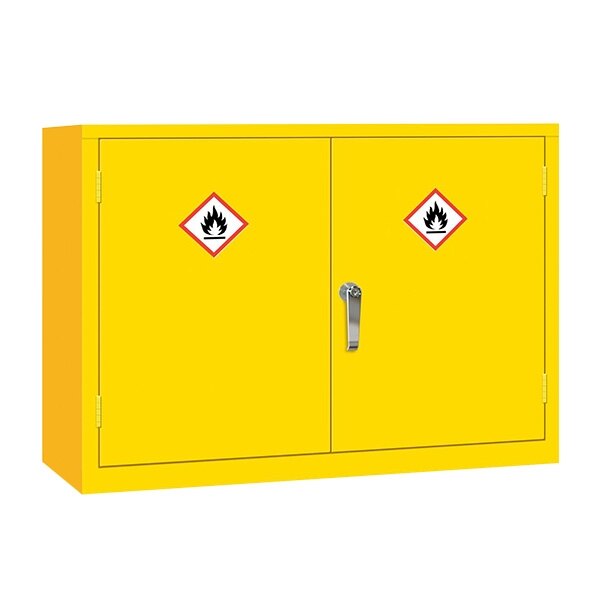
A proper flammables store is a cabinet constructed from steel with fire-resistant properties. It needs secure locking mechanisms to prevent unauthorised access. You don’t want untrained people handling dangerous substances.

The cabinet must provide spill containment capable of retaining 110% of the volume of the largest container stored inside. Flammable liquids that leak can spread quickly and create a significant hazard. Adequate ventilation prevents vapour accumulation inside the cabinet. The vapours are often more dangerous than the liquid itself.

Clear labelling matters. Everyone needs to know what’s inside and what hazards they’re dealing with. Position the cabinet away from ignition sources, escape routes, and high-traffic areas. You don’t want a flammables store blocking your fire exit or sitting next to a boiler.

Size and capacity should match your storage needs without encouraging overstocking beyond safe limits.

How Do COSHH Regulations Affect Flammable Storage?

The Control of Substances Hazardous to Health Regulations 2002 (COSHH) overlap with DSEAR requirements for many flammable substances. COSHH focuses on health risks from substances, while DSEAR focuses on fire and explosion risks. Many flammable liquids are covered by both sets of regulations.

You must assess the health risks posed by your substances and prevent or control exposure. That means maintaining your control measures and providing your staff with proper information and training. Not optional extras.

A flammable liquid that emits harmful vapours requires storage that addresses both concerns. Your cabinet must prevent fire risks under DSEAR and health risks under COSHH. That’s why proper ventilation is so important. It tackles both vapour accumulation and exposure in one go.

Need Help With Flammable Storage?

Choosing the proper storage solution can feel complicated. The regulations overlap, and your specific needs depend on many factors. Getting it right protects your people and your premises, though.

We’ve helped thousands of businesses find the right flammable storage solutions. Our team understands the regulations and can guide you through your options. Contact us for expert advice on keeping your workplace safe.  

Mel Saunders

Head of Marketing

With over 20 years of experience in content writing, design and marketing, Mel now heads up the Content & Marketing Team at Safelincs. Having been in the fire safety industry for over 5 years, Mel has now developed a deep understanding of some of the critical issues facing the industry. Alongside her team, she aims to support the public with resources and information to help them improve fire safety at home, in the workplace or in 3rd sector organisations.

Latest Posts by Mel Saunders

What Is A Class D Fire?14th May 2026
What Is A Class F Fire?13th May 2026
Ionisation Smoke Alarms Buyers Guide12th May 2026

Why is my smoke alarm beeping?

Key Takeaways

  • A continuous alarm may mean smoke, dust, dirt, damage or an alarm that’s passed its 10 year lifespan.
  • Intermittent beeping or chirping usually signals a low battery, and this is more common at night when temperatures drop.
  • Mains powered smoke alarms have backup batteries that can chirp when they run low.
  • You should replace smoke alarms every 10 years because the sensors deteriorate over time.
  • Placing your alarm in the wrong spot (near kitchens, bathrooms or draughty areas) can trigger false alarms.
  • We offer replacement options for discontinued models, often without needing an electrician.

Is your smoke alarm beeping in the night and keeping you awake? Or perhaps it’s disturbing your day? Whether you’ve got mains powered interlinked smoke alarms or battery powered ones, follow our guidance below to troubleshoot the beeping and get some peace back.

What Type of Sound Is Your Smoke Alarm Making?

Before you start troubleshooting, work out what type of sound your smoke alarm is making. This’ll help you pinpoint the cause and find the right fix.

Note: Beep patterns vary by manufacturer and model. Always check your alarm’s user manual for the specific meanings of different sounds.  

Sound Type Pattern Likely Cause Urgency
Continuous loud alarm Non-stop sounding Smoke or fire detected, dust or fault High: check for fire straight away
Intermittent chirping Single beep every 30 to 60 seconds Low battery Medium: replace battery soon
Rapid beeping Multiple quick beeps End of life warning or malfunction Medium: replace alarm
Sound Type
Continuous loud alarm
Pattern
Non-stop sounding
Likely Cause
Smoke or fire detected, dust or fault
Urgency
High: check for fire straight away
Sound Type
Intermittent chirping
Pattern
Single beep every 30 to 60 seconds
Likely Cause
Low battery
Urgency
Medium: replace battery soon
Sound Type
Rapid beeping
Pattern
Multiple quick beeps
Likely Cause
End of life warning or malfunction
Urgency
Medium: replace alarm
Image

Why Is My Smoke Alarm Sounding Continuously?

A smoke alarm that won’t stop sounding needs your attention straight away. Follow these steps to work out what’s going on.

First, check there’s no smoke or fire in your property.

If there’s no fire, look into these common causes:

Could it be another alarm? Make sure the beeping is definitely coming from your smoke alarm. Other alarms in your home, such as a carbon monoxide alarm or burglar alarm, could be making the noise.

Is dust or dirt setting it off? Give the alarm a clean if it’s dusty or dirty. Vacuum around the alarm or use a hairdryer on a cool setting to blow out any dust from the sensor chamber.

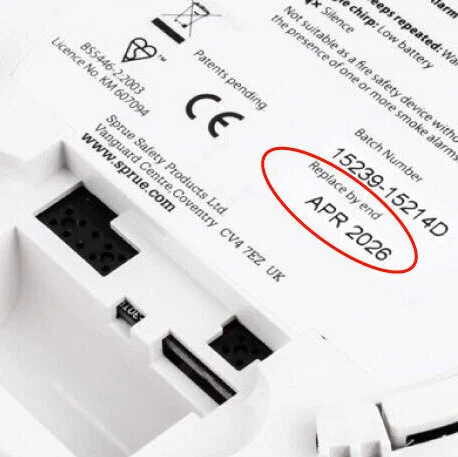
Has your smoke alarm reached its expiry date? Check the “replace by” or manufacture date on the back of your alarm. Smoke alarms last a maximum of 10 years. If the manufacturing date is approaching or past 10 years, it’s time for a new one. The sensors inside deteriorate after this point, making the alarm less effective at detecting fires.

Is your alarm in the wrong spot? Different sensor types work best in different locations. An optical smoke alarm in a kitchen, for example, may go off from cooking fumes.

Could the alarm be damaged or faulty? Water, fire, grease and certain paints can all cause faults. If you think there’s damage, replace your smoke alarm straight away to keep your home and family safe.  

Why Is My Battery Smoke Alarm Chirping Intermittently?

An intermittent chirp or beep (typically once every 30 to 60 seconds) almost always means a low battery. Here’s what to do.

Replace the battery. Make sure you’re using the right battery type and inserting it the right way round. A low battery is more likely to sound at night because a drop in room temperature reduces its ability to power the alarm.

Check how old your alarm is. Smoke alarms last a maximum of 10 years. If the manufacturing date on yours is approaching or past 10 years, it’s time for a replacement. Even with a fresh battery, an old alarm may chirp because the sensors are wearing out.

Look for signs of damage. Water, fire, grease and certain paints can cause faults. If you suspect a problem, replace your smoke alarm straight away.  

Smoke Alarm Battery Types and Lifespan
Battery Type Typical Lifespan When To Replace
Alkaline 9V (PP3) 12 to 18 months We recommend annually, or every 6 months for maximum safety
Alkaline AA 12 to 18 months We recommend annually
Lithium 9V Up to 5 years When it starts chirping
Sealed lithium (10 year) 10 years Replace the entire alarm
Battery Type
Alkaline 9V (PP3)
Typical Lifespan
12 to 18 months
When To Replace
We recommend annually, or every 6 months for maximum safety
Battery Type
Alkaline AA
Typical Lifespan
12 to 18 months
When To Replace
We recommend annually
Battery Type
Lithium 9V
Typical Lifespan
Up to 5 years
When To Replace
When it starts chirping
Battery Type
Sealed lithium (10 year)
Typical Lifespan
10 years
When To Replace
Replace the entire alarm

Buy replacement smoke alarm batteries so your family gets alerted if there’s ever a fire in your home.

Why Is My Mains Powered Smoke Alarm Chirping Intermittently?

All new or recently extended homes should have mains powered interlinked alarms fitted. These also contain a backup battery to keep you protected during power cuts. Some makes/models contain replaceable batteries, whereas some have sealed batteries which cannot be replaced. Please check your user manual for more information.

The most common cause of chirping in mains powered alarms is a low backup battery.

Even though your alarm connects to the mains electricity, you’ll still need to replace the backup battery from time to time. Here’s how to stop the chirping:

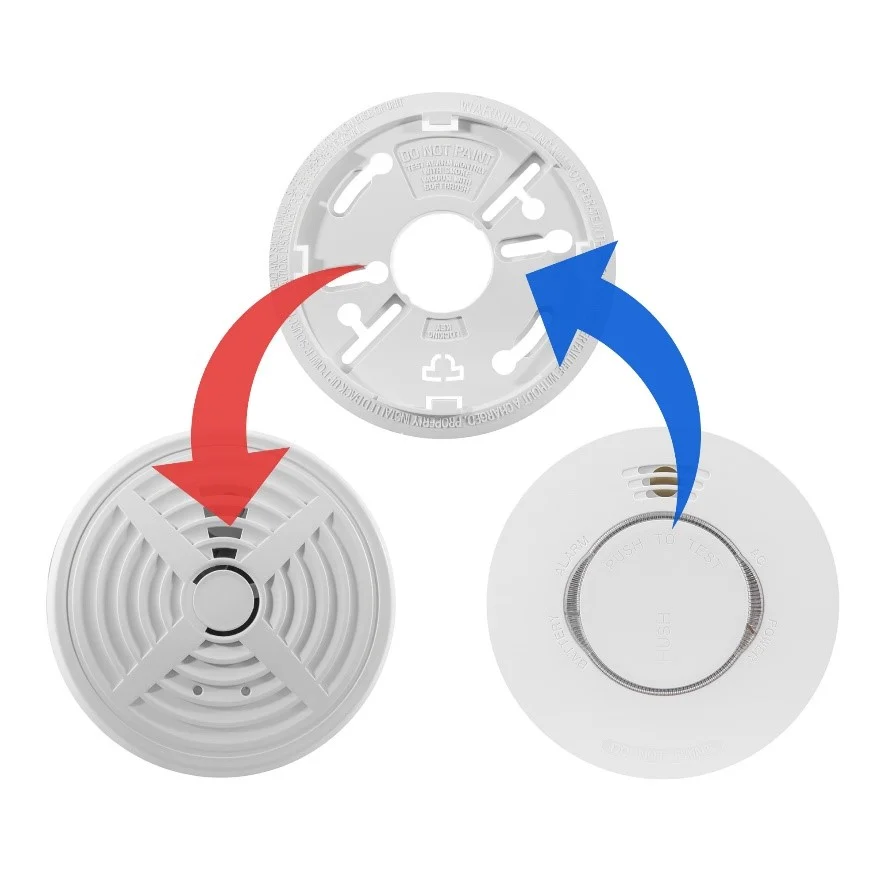
  • Locate the battery compartment (usually by twisting the alarm off its base)
  • Replace the backup battery with the correct type for your alarm
  • Press the test button to check it’s working

If your alarm keeps chirping after you’ve replaced the backup battery, it may have reached the end of its 10 year lifespan and need replacing altogether.

Image

What Replacement Batteries Do Smoke Alarms Need?

Smoke alarms typically need one of these battery types:

  • Alkaline AA batteries (usually two)
  • Alkaline 9V battery (PP3)
  • Lithium 9V battery (lasts longer)

Check the label on your smoke alarm or look in the user manual to confirm the right type. Using the wrong battery can cause problems or void your warranty.

How Do I Replace a Mains Powered Smoke Alarm?

You should replace smoke alarms after 10 years, whether they’re mains powered or battery powered. The sensors deteriorate over time. Battery alarms are easy to swap out, but what about mains powered ones?

Good news: you can replace most mains powered alarms without calling an electrician if you buy the exact same model (if it’s still available) or an Easichange® replacement.

Learn why you should replace smoke alarms after 10 years.  

What If My Smoke Alarm Model Has Been Discontinued?

Need a replacement but can’t find your model anymore? We offer a dedicated collection of replacement smoke and heat alarms. We’ve chosen these specifically to be the simplest, most direct replacements, and you can often fit them without needing an electrician.

How Can I Prevent False Alarms?

The sensor type in your alarm determines where you should put it. False alarms often happen because the wrong alarm type is too close to a steamy, dusty or smoky area.

Where Should Different Smoke Alarm Types Go?
Alarm Type Best Locations Keep Away From
Heat alarms Kitchens, garages, dusty workshops Bedrooms, hallways (use smoke alarms there instead)
Optical smoke alarms Bedrooms, living rooms, hallways Kitchens, bathrooms, garages
Ionisation smoke alarms (discontinued) Landings, hallways Areas near kitchens or bathrooms
Alarm Type
Heat alarms
Best Locations
Kitchens, garages, dusty workshops
Keep Away From
Bedrooms, hallways (use smoke alarms there instead)
Alarm Type
Optical smoke alarms
Best Locations
Bedrooms, living rooms, hallways
Keep Away From
Kitchens, bathrooms, garages
Alarm Type
Ionisation smoke alarms (discontinued)
Best Locations
Landings, hallways
Keep Away From
Areas near kitchens or bathrooms

Spots to Avoid When Fitting Smoke Alarms

To prevent false alarms or poor performance, don’t fit alarms in these spots:

  • Next to doors, windows, air vents or fans that create a draught
  • Outside or in unheated spaces
  • Anywhere curtains or furniture would block the airflow
  • Steamy or humid rooms like shower rooms
  • In kitchens (use a heat alarm instead of a smoke alarm)

Find out which smoke alarm works best in each room.  

Quick Troubleshooting Summary
Problem What To Do
Continuous alarm with no fire Clean the alarm, check its position or replace it if it’s over 10 years old
Intermittent chirping (battery alarm) Replace the battery straight away
Intermittent chirping (mains alarm) Replace the backup battery – if your unit has a replaceable battery inside.
Alarm over 10 years old Replace the whole unit
Frequent false alarms Check where it’s positioned and consider a different alarm type
Discontinued alarm needs replacing Use an Easichange® or compatible replacement
Problem
Continuous alarm with no fire
What To Do
Clean the alarm, check its position or replace it if it’s over 10 years old
Problem
Intermittent chirping (battery alarm)
What To Do
Replace the battery straight away
Problem
Intermittent chirping (mains alarm)
What To Do
Replace the backup battery – if your unit has a replaceable battery inside.
Problem
Alarm over 10 years old
What To Do
Replace the whole unit
Problem
Frequent false alarms
What To Do
Check where it’s positioned and consider a different alarm type
Problem
Discontinued alarm needs replacing
What To Do
Use an Easichange® or compatible replacement

Don’t wait to change or replace a faulty smoke alarm. It’s one of the most important things you can do to keep your home and family safe. If you need any help, call our customer service team on 0800 612 6537 or email us.

Mel Saunders

Head of Marketing

With over 20 years of experience in content writing, design and marketing, Mel now heads up the Content & Marketing Team at Safelincs. Having been in the fire safety industry for over 5 years, Mel has now developed a deep understanding of some of the critical issues facing the industry. Alongside her team, she aims to support the public with resources and information to help them improve fire safety at home, in the workplace or in 3rd sector organisations.

Latest Posts by Mel Saunders

What Is A Class D Fire?14th May 2026
What Is A Class F Fire?13th May 2026
Ionisation Smoke Alarms Buyers Guide12th May 2026

How to Control a Flammable Liquid Fire

Key Takeaways

  • Flammable liquid fires (Class B) involve petrol, diesel, oils, paints and alcohol, and can ignite from a single spark or open flame.
  • Never use water on a flammable liquid fire, as it can spread the flames and cause dangerous reactions.
  • Foam, CO2 and dry powder extinguishers are the three effective options for tackling Class B fires.
  • The PASS technique (Pull, Aim, Squeeze, Sweep) is the universal method for operating fire extinguishers safely.
  • Only fight flammable liquid fires if they’re small, contained and you have a clear escape route.
  • Prevention through proper storage and keeping flammable liquids away from ignition sources is your best defence.

When petrol, paint thinners or oils catch fire, you’re facing one of the most dangerous and fast-spreading fire types. Flammable liquid fires can escalate in seconds. Using the wrong approach can make things far worse. If you’ve ever wondered what you’d do if faced with burning fuel or oil, you’re not alone. Knowing how to control these fires safely could save lives and property.  

Understanding Flammable Liquid Fires (Class B)

In the UK, fires involving flammable liquids are classified as Class B fires. These include petrol, diesel, oils, alcohol, paraffin, certain paints and some solvents. What makes these fires so hazardous is their ability to spread rapidly and produce intense heat.

These liquids have low flash points. This means they can ignite from a single spark or open flame. Think about why you see “No Smoking” signs at petrol stations. The danger comes from the open flame of a lighter or match used to light a cigarette, which can ignite flammable vapours in the surrounding air.

Flammable liquids can quickly vaporise when burning, mixing with oxygen in the air to create an even greater fire hazard. The fire doesn’t just burn on the surface. The vapours themselves become fuel, which is why these fires can seem to “jump” or spread so quickly.

Image

Why Water is Your Enemy With Flammable Liquid Fires

Here’s something you need to know: never, ever use water on a flammable liquid fire.

When water comes into contact with burning oil or fuel, it vaporises into steam. This spits out the burning liquid, intensifying the fire. Remember your school science lessons? Oil and water don’t mix. Water is denser than most flammable liquids, so it sinks beneath them, then rapidly turns to steam. This creates an explosive ball of flames that spreads the fire further.

Using water on a Class B fire isn’t just ineffective; it’s dangerous. It’s risky and can turn a manageable situation into a life-threatening emergency.

Choosing The Right Fire Extinguisher For Flammable Liquids

For tackling Class B fires safely, you’ve got three effective options. Each works differently. Understanding these differences helps you make the right choice for your environment.

Foam Extinguishers (Cream Label)

Foam extinguishers work by creating a barrier over the surface of the flammable liquid, cutting off its oxygen supply and cooling the fire. They’re effective for contained liquid fires: think of fuel in a container or a spill that hasn’t spread.

Foam provides lasting protection and can even be applied to liquids in tanks to shield them from ignition from other sources. However, they’re not suitable for free-flowing or “running” liquid fires.

CO2 Extinguishers (Black Label) 

Carbon dioxide extinguishers displace oxygen, suffocating the fire. They’re brilliant because they leave no residue, making them ideal for areas with sensitive equipment. They’re also safe to use on electrical fires, making them a versatile choice.

One important note: the nozzle of a CO2 extinguisher becomes very cold during discharge and can cause frost burns. Never touch it with your bare hands. Always hold the extinguisher by the handle.

Dry powder extinguishers (blue label)

Powder extinguishers are multipurpose units that can tackle Class A, B and C fires. They’re effective for uncontained or “spill” fires where liquid is running.

However, they create visibility issues due to the fine powder cloud, and they don’t cool the fire. This means reignition is possible. They’re generally not recommended for indoor use unless necessary.

You can explore the full range of fire extinguishers suitable for your needs to ensure you’re appropriately protected.  

How to Control a Flammable Liquid Fire: The PASS Technique

When using any fire extinguisher, the PASS technique is your essential guide: Pull, Aim, Squeeze, and Sweep. This method works for all extinguisher types and helps you remember the steps when you’re under stress.

1

Step 1: Pull The Safety Pin

Pull out the pin from the top of the extinguisher. This may require a slight twisting action as well as pulling. This safety pin prevents accidental discharge, so removing it activates the extinguisher and allows you to use the trigger.

2

Step 2: Aim at The Base

Aim the nozzle or horn of the extinguisher at the base of the flames, not at the fire itself. This is crucial because the base is where the fuel is burning. If you aim higher up at the fire, you’re wasting your extinguishing agent and won’t put it out effectively.

For flammable liquid fires, maintain a safe distance. Approximately two to three metres is a general guideline, though this may vary depending on the extinguisher type. This protects you from the heat and any potential splashing or spreading of the burning liquid.

3

Step 3: Squeeze The Handle

Firmly squeeze the trigger or handle to discharge the extinguishing agent, applying steady, even pressure to maintain a continuous, controlled flow. Don’t pump it or squeeze intermittently. You want a consistent stream.

4

Step 4: Sweep Across The Fire

Sweep the nozzle from side to side across the base of the fire, covering the entire burning area with the extinguishing agent. Continue this sweeping motion until the flames are fully extinguished, and don’t stop until the extinguisher is empty. This helps prevent reignition.

Note that with oil and fat fires, you should avoid the standard PASS technique as the force can spread the burning liquid. For cooking oil fires, a wet chemical extinguisher or fire blanket is more appropriate.

Image

What You Need to Check Before You Fight The Fire

Before you even reach for an extinguisher, assess whether it’s safe to fight the fire. Here’s your mental checklist:

Only attempt to fight a flammable liquid fire if

  • The fire is small and contained (no larger than a waste bin).
  • You have the correct type of extinguisher for Class B fires.
  • You have a clear escape route behind you with no smoke, flames or heat blocking your exit.
  • The fire service has been called.
  • You feel confident and have received proper training.

You must have an established evacuation path. Ensure that no fire, smoke or heat obstructs your escape route. Your safety always comes first.

If the fire is spreading rapidly, producing thick smoke, or if you have any doubt about your ability to extinguish it, evacuate and leave it to the professionals. There’s no shame in getting out. It’s the wise decision.

Image

When Flammable Liquid Fires Are Too Dangerous to Fight

Fire extinguishers should only be used for small fires that you’re confident you can handle yourself. Some situations demand evacuation:

  • The fire is larger than you are.
  • Flames are spreading to other materials or areas.
  • Thick smoke is filling the room.
  • You can hear crackling or explosive sounds.
  • The heat is intense, even from several metres away.
  • Multiple containers of flammable liquids are nearby.
  • You don’t have the correct type of extinguisher.

In these scenarios, sound the fire alarm, evacuate everyone, close doors behind you (but don’t lock them) and call 999 once you’re safely outside.

Preventing Flammable Liquid Fires in The First Place

Of course, the best way to control a flammable liquid fire is to prevent one from starting. Here’s how you can seriously reduce your risk:

Storage Matters

Store all flammable liquids safely in appropriate containers, well away from any ignition sources such as heaters, electrical equipment or open flames. Purpose-built flammable liquid storage cabinets create a temporary barrier between a potential fire and the contents, buying time for evacuation.

Control Ignition Sources

Keep flammable liquids away from sparks, hot surfaces, smoking areas and any equipment that could generate heat. In garages and workshops, this means proper separation and clear signage.

Ventilation is Vital

Flammable liquid vapours can accumulate in poorly ventilated spaces, creating an invisible fire hazard. Ensure adequate airflow wherever you store or use these materials.

Regular Inspections

Check containers for leaks, damage or deterioration. A small leak today could be a significant fire hazard tomorrow.

Proper Training

Everyone who handles flammable liquids should receive training on safe handling, storage and emergency response procedures.

Ensuring Your Fire Safety Equipment Is Ready

Having the correct fire extinguishers is only half the battle. They need to be adequately maintained and serviced so they work when you need them most. The Regulatory Reform (Fire Safety) Order 2005 requires fire safety equipment to be kept in good working order.

Professional fire extinguisher servicing ensures your equipment will function correctly in an emergency. Annual servicing checks pressure, examines seals, tests discharge mechanisms, and verifies that each extinguisher is suitable for the fire risks at its location.  

Your Next Steps For Flammable Liquid Fire Safety

Controlling a flammable liquid fire safely requires the proper knowledge, the correct equipment and an honest assessment of the situation. Remember: foam, CO2, or dry powder extinguishers only, never water. Use the PASS technique, aim at the base and always prioritise your escape route.

But more importantly, invest in prevention. Proper storage, regular inspections and appropriate fire safety equipment create layers of protection that can stop fires before they start.

Need expert guidance on fire safety for your premises, or unsure which fire extinguishers you need? Our team is ready to help you today. Get in touch with us for personalised advice on protecting your property and people from flammable liquid fires.  

Mel Saunders

Head of Marketing

With over 20 years of experience in content writing, design and marketing, Mel now heads up the Content & Marketing Team at Safelincs. Having been in the fire safety industry for over 5 years, Mel has now developed a deep understanding of some of the critical issues facing the industry. Alongside her team, she aims to support the public with resources and information to help them improve fire safety at home, in the workplace or in 3rd sector organisations.

Latest Posts by Mel Saunders

What Is A Class D Fire?14th May 2026
What Is A Class F Fire?13th May 2026
Ionisation Smoke Alarms Buyers Guide12th May 2026

10 Things You Should Know About Fire Doors

Key Takeaways

  • Fire doors contain fire and smoke in the room where a fire starts.
  • FD30 fire doors resist fire for 30 minutes and FD60 doors provide 60-minute protection.
  • You need fire doors in all non-domestic properties, flats and houses of multiple occupancy.
  • Intumescent strips expand when heated to seal gaps between the door and frame.
  • A competent person must fit fire doors to ensure they work correctly.
  • Using wedges or props to hold fire doors open is illegal and dangerous.
  • Fire door retainers like Dorgard let you hold fire doors open legally.
  • You should inspect and maintain fire doors regularly, with frequency based on building type and risk.
  • You can paint fire doors with standard decorative paint without affecting their rating.
  • Building regulations specify where you need fire doors in domestic properties.

Most of us walk through fire doors every day at home, at work or in public buildings. But how much do you actually know about them? We’ve put together expert answers to the most common fire door questions based on what customers ask our fire safety specialists. You can also read more about the role of fire doors in buildings.

Image

What Makes Fire Doors So Important for Building Safety?

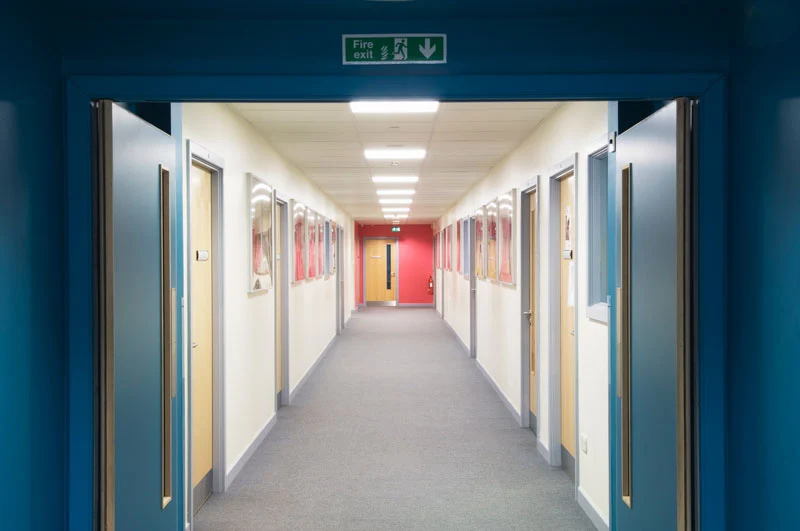
Fire doors keep fire and smoke contained in the room where a fire starts. They stop flames and toxic smoke from spreading to other parts of the building. This makes them a key part of any building’s passive fire protection, working alongside fire alarms, emergency lighting and escape routes to protect lives and property.

What Do Fire Doors Actually Do?

Fire doors do three things that save lives and reduce property damage:

  • They compartmentalise buildings: Fire stays in the room where it starts
  • They protect escape routes: Corridors and stairways stay clear from fire, giving people more time to evacuate and giving firefighters better access
  • They limit damage: The rest of the building, its contents and neighbouring properties stay protected  

How Do Fire Doors Work to Prevent Fire Spread?

Fire doors stop fire from spreading for a set period. Manufacturers build them from materials that withstand fire for either 30 minutes or 60 minutes, depending on the rating.

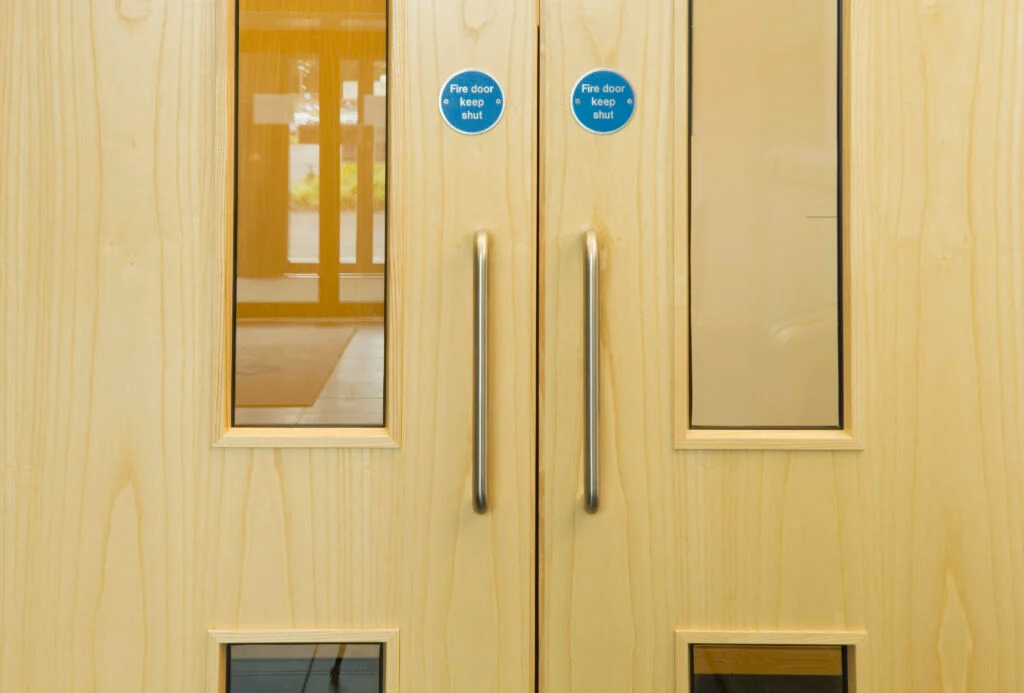
Every fire door has intumescent strips fitted in a groove around its edges. When a fire breaks out, heat makes these strips expand rapidly. They fill the gap between the door and frame, seal the room and stop fire spreading for the rated time.

Here’s the thing: a fire door only works if it’s closed when fire breaks out. So you should always fit your fire door with an automatic fire door closer and the right signage.  

Image

How Are Fire Doors Made and Certified?

Fire doors are thicker than standard doors. Most have a solid core made from various materials. Construction varies between manufacturers, but every door must be tested and certified to withstand fire for at least 30 minutes.

Here’s how certification works:

1. Manufacturers send their fire door and frame designs for testing as a complete set at an approved testing centre

2. After successful testing, the design goes forward for certification

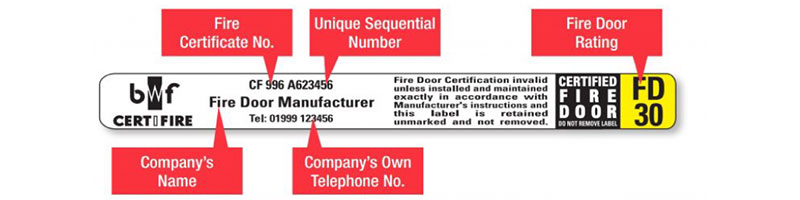
3. Once approved, every fire door set built to those specifications gets a certification label

Where to find certification information:
Information on Label Location
Manufacturer details Top edge of door
Date of manufacture Top edge of door
Fire rating (FD30/FD60) Top edge of door
Certification scheme Top edge of door
Information on Label
Manufacturer details
Location
Top edge of door
Information on Label
Date of manufacture
Location
Top edge of door
Information on Label
Fire rating (FD30/FD60)
Location
Top edge of door
Information on Label
Certification scheme
Location
Top edge of door
Image

How Long Do Fire Doors Hold Back Fire?

Manufacturers test fire doors and frames to hold back fire for specific periods:

Fire Door Rating Fire Resistance Time Typical Use
FD30 30 minutes Homes, flats, offices
FD60 60 minutes Higher-risk areas, care homes, escape routes
FD90+ 90+ minutes Specialist applications (rarely needed)
Fire Door Rating
FD30
Fire Resistance Time
30 minutes
Typical Use
Homes, flats, offices
Fire Door Rating
FD60
Fire Resistance Time
60 minutes
Typical Use
Higher-risk areas, care homes, escape routes
Fire Door Rating
FD90+
Fire Resistance Time
90+ minutes
Typical Use
Specialist applications (rarely needed)

How well a fire door performs depends on proper installation with the right seals and fire-rated hardware, including fire door closers. Fire doors in busy areas can wear out over time, so check them regularly and sort out any maintenance issues quickly. The Fire Safety (England) Regulations 2022 set specific inspection frequencies for residential buildings over 11m.

Browse our range of FD30 and FD60 fire doors to find certified options for your building.  

Image

Are Fire Doors a Legal Requirement in the UK?

Yes. You need fire doors in all non-domestic properties: businesses, commercial premises and public buildings. They’re also mandatory in residential flats and houses of multiple occupancy.

The Regulatory Reform (Fire Safety) Order 2005 says building operators in England and Wales must appoint a Responsible Person to manage fire safety. Part of their job is reducing the risk of fire spreading through the building.

Your fire risk assessment should identify:

  • Where you need fire doors
  • What rating each door should have
  • Any extra requirements like smoke seals (FD30s/FD60s)

Do I Need Fire Doors in My House or Flat?

Fire-rated doors add valuable protection in domestic properties. Here’s what you need to know.

Houses and Bungalows

Building regulations set out where you need fire doors:

Situation What You Need
New builds or renovations with 3+ floors Fire doors on every habitable room leading from a stairwell
Loft conversions creating a third floor Fire doors on rooms leading from the stairwell
Door between your home and integral garage Must be a fire door
Standard two-storey homes Not legally required, but worth considering
Situation
New builds or renovations with 3+ floors
What You Need
Fire doors on every habitable room leading from a stairwell
Situation
Loft conversions creating a third floor
What You Need
Fire doors on rooms leading from the stairwell
Situation
Door between your home and integral garage
What You Need
Must be a fire door
Situation
Standard two-storey homes
What You Need
Not legally required, but worth considering

FD30 fire doors work well in most domestic situations.

Flats and HMOs

Your building should have a fire risk assessment that specifies door requirements. Building Regulations Approved Document B (Volume 1: Dwellings) sets these standards.

Flat Location What You Need
Entrance door onto communal areas FD30 fire door
Flats 4.5m+ above ground level Fire doors between all habitable rooms, plus entrance door
Ground floor flats Fire door at entrance if it opens onto a communal area. You usually don’t need internal fire doors if each room has an escape route
Flat Location
Entrance door onto communal areas
What You Need
FD30 fire door
Flat Location
Flats 4.5m+ above ground level
What You Need
Fire doors between all habitable rooms, plus entrance door
Flat Location
Ground floor flats
What You Need
Fire door at entrance if it opens onto a communal area. You usually don’t need internal fire doors if each room has an escape route
Image

Can I Paint Fire Doors?

Yes. You can use regular decorative paint or varnish on fire doors without affecting how they perform. You don’t need special fire-resistant paint.

What to avoid when painting:

  • Don’t use heat or chemical paint strippers near intumescent seals
  • Don’t paint over hinges, hardware or seals
  • Don’t apply so many coats that the door can’t close properly

What about style?

You don’t have to sacrifice looks. Fire doors come in various finishes: real wood veneer (oak, walnut, ash, sapele), Formica laminate and pre-painted RAL colours.

Can I Leave Fire Doors Open Legally?

Only if you use approved devices like a fire door retainer or hold-open free-swing door closer.

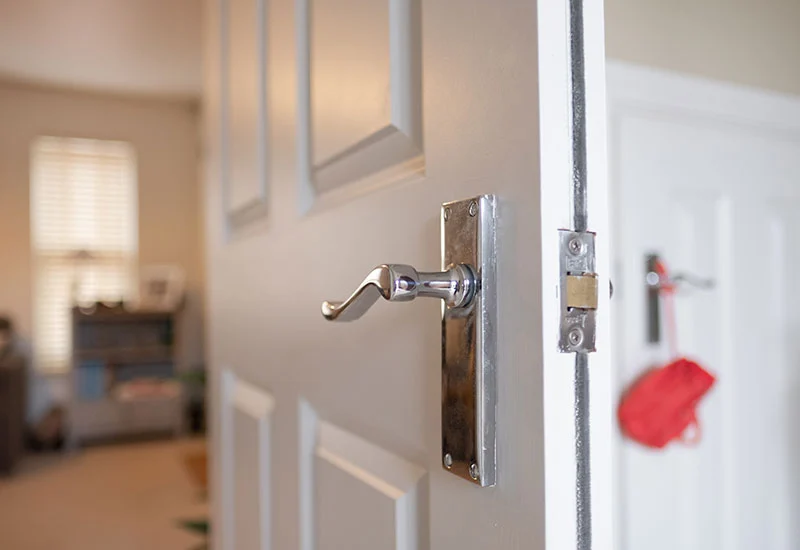
Never prop or wedge fire doors open. It’s dangerous and illegal. Fire doors have self-closing devices so they shut automatically if fire breaks out. If you wedge a fire door open, it can’t stop fire spreading.

Legal Ways to Hold Fire Doors Open

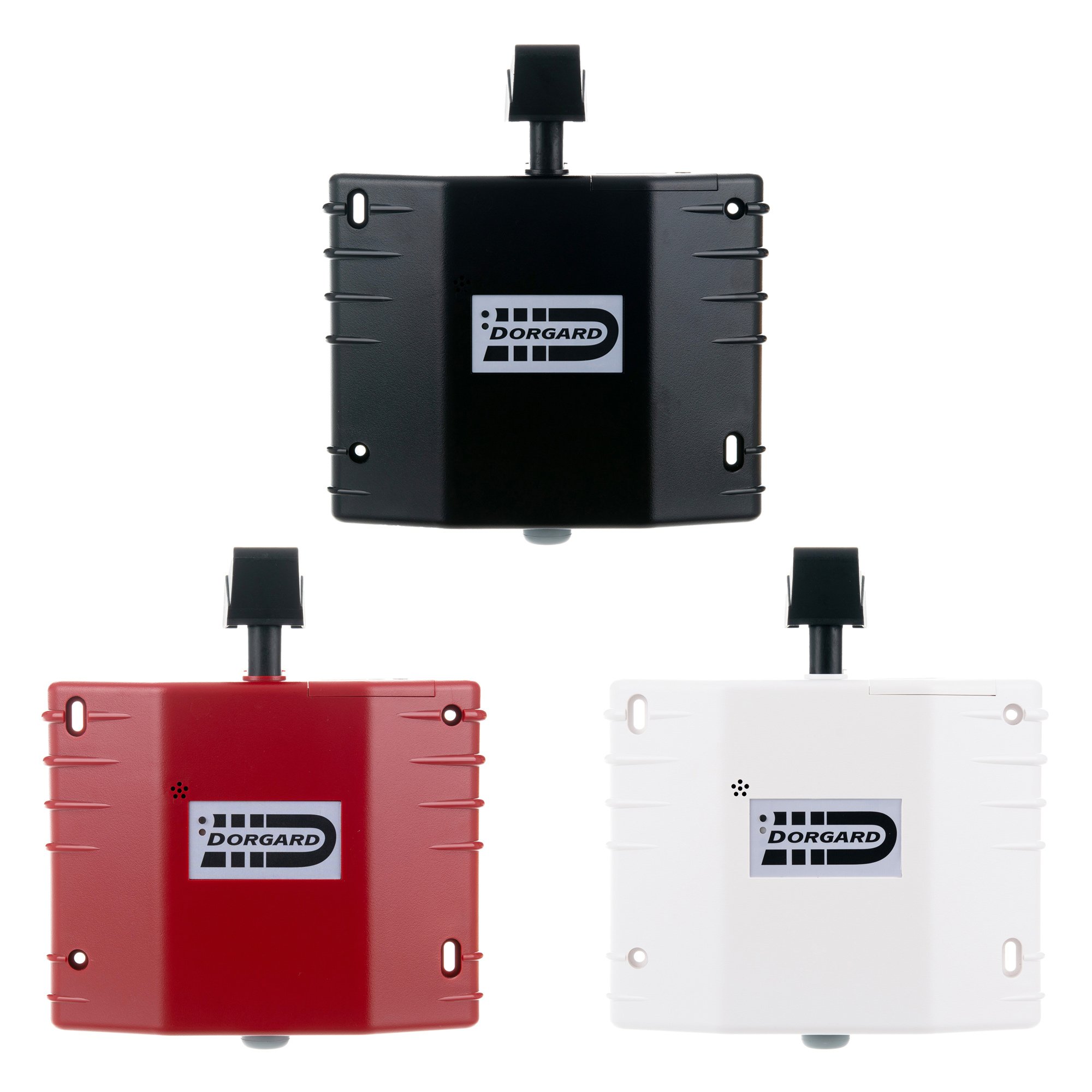
Fire door retainers like Dorgard give you a practical, legal solution when you need fire doors to stay open for accessibility or ventilation:

Product How It Works Best For
Dorgard Fire Door Retainer Plunger releases at 65dB when fire alarm sounds Retrofitting existing doors
Free-swing door closer Door moves freely but closes automatically when alarm activates High-traffic areas, care homes
Electromagnetic holders Wired to fire alarm panel and releases when power cuts New builds, noisy environments
Product
Dorgard Fire Door Retainer
How It Works
Plunger releases at 65dB when fire alarm sounds
Best For
Retrofitting existing doors
Product
Free-swing door closer
How It Works
Door moves freely but closes automatically when alarm activates
Best For
High-traffic areas, care homes
Product
Electromagnetic holders
How It Works
Wired to fire alarm panel and releases when power cuts
Best For
New builds, noisy environments
Image

Dorgard Fire Door Retainers

  • Hold fire doors open legally at any angle
  • Wire-free plunger-based design
  • BS EN 1155:1997 and BS EN 1634-1
  • Triggered acoustically at 65dB
  • FREE extended 5-year warranty
  • FREE shipping

£89.58 ex VAT | £107.50 inc VAT

Who Can Install Fire Doors?

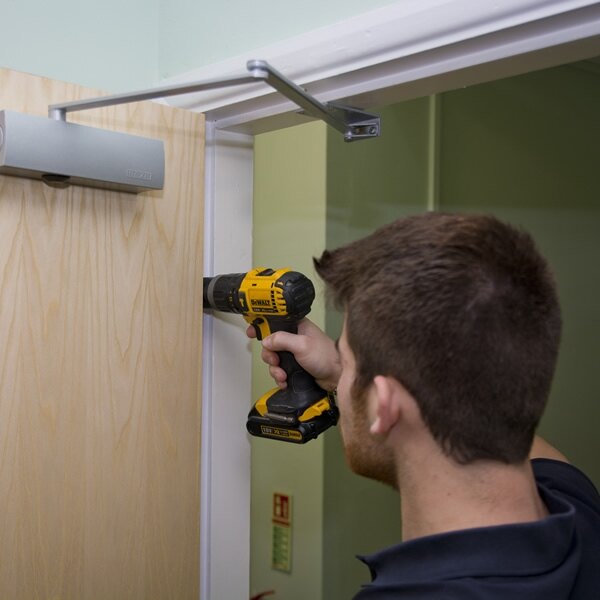
A competent person with relevant training, experience and joinery skills must fit fire doors. Whatever a fire door’s rating, poor installation could mean it fails within five minutes.

Key installation requirements:

  • Gap between fire door and frame: no more than 4mm at the top and sides (with 2-4mm being the industry standard)
  • Intumescent seals positioned correctly
  • Fire-rated hinges and hardware fitted properly
  • Door closes fully and latches correctly

The Code of Practice for Fire Door Assemblies doesn’t require installers to hold specific certification. But the Fire Safety Order says a competent person must carry out the work: someone with the right training, experience, qualifications and knowledge.

Professional Fire Door Installation

Using qualified installers gives you confidence that everything meets requirements and your fire door will work when it matters.

Image

Our Fire Door Installation Service

  • Nationwide service by certified fire door installers
  • We install all fire door sets and hardware purchased from Safelincs
  • Complete fire door and frame installation available
  • Experienced installers who know what they’re doing

£719.79 ex VAT | £863.75 inc VAT

Frequently Asked Questions

What is the difference between FD30 and FD60 fire doors?
FD30 fire doors resist fire for 30 minutes. FD60 fire doors give you 60 minutes of protection. FD60 doors are thicker (54mm compared to 44mm) and you’ll find them in higher-risk locations like care homes and commercial escape routes. Most homes need FD30 doors.
How often should I inspect fire doors?
Inspection frequency depends on building type. The Fire Safety (England) Regulations 2022 require quarterly checks for communal fire doors in residential buildings with storeys over 11 metres in height, and annual checks (on a best endeavours basis) for flat entrance doors. BS 9999 and the British Woodworking Federation recommends six-monthly checks as general guidance, with more frequent checks in high-traffic areas.
Can I fit a fire door myself?
We don’t recommend it. Fire door installation needs precise fitting with 2-4mm gaps, correct seal placement and fire-rated hardware. Get it wrong and your fire door won’t work. A competent installer makes sure your door meets legal requirements and performs correctly.
What happens if someone props fire doors open illegally?
Propping fire doors open is a serious offence under UK fire safety law. The Responsible Person could face prosecution, substantial fines and even a prison sentence. But here’s what really matters: wedged-open fire doors can’t contain fire, and that can cost lives.
Do fire doors need intumescent strips?
Yes. Intumescent strips are essential. They fit around the door edges and expand when they get hot, sealing the gap between door and frame. Without properly fitted intumescent seals, your fire door can’t achieve its rated fire resistance.

Ask a Question

Still got questions about fire doors? Ask one of our experts on our fire safety forum.

All information correct at time of publication.

Mel Saunders

Head of Marketing

With over 20 years of experience in content writing, design and marketing, Mel now heads up the Content & Marketing Team at Safelincs. Having been in the fire safety industry for over 5 years, Mel has now developed a deep understanding of some of the critical issues facing the industry. Alongside her team, she aims to support the public with resources and information to help them improve fire safety at home, in the workplace or in 3rd sector organisations.

Latest Posts by Mel Saunders

What Is A Class D Fire?14th May 2026
What Is A Class F Fire?13th May 2026
Ionisation Smoke Alarms Buyers Guide12th May 2026