Protecting Your Home With A Heat Alarm

Protecting your home with a heat alarm is one of the simplest and most effective steps you can take to improve your kitchen fire safety. Kitchens are steamy, smoky places at the best of times — even just boiling the kettle or burning the toast can send a smoke alarm into a full meltdown. That’s where heat alarms come in, cutting out the false alarms without leaving you unprotected when it actually matters.

💡
Contents

  • What is a heat alarm?
  • Where to put a heat alarm in the kitchen
  • What temperature does a heat alarm go off?
  • What does a heat alarm look like?
  • Why is my heat alarm beeping?
  • How to stop a heat alarm beeping
  • How to turn off a heat alarm
  • Are heat alarms a legal requirement?

What Is a Heat Alarm?  

A heat alarm is a fire detection device that monitors temperature rather than smoke. Instead of reacting to particles in the air, it contains a thermistor that sits quietly waiting for the temperature in the room to climb above a certain threshold, or watching the rate at which it rises accelerate. When it does, the alarm sounds to warn you of a potential fire.

Think of it as the cooler-headed cousin of the smoke alarm. It won’t panic every time you burn your bagel, but it will absolutely let you know when something is genuinely wrong.

Heat alarms are particularly valuable in kitchens and garages, where smoke and fumes are a normal part of daily life. Fitted as part of a well-rounded home detection system alongside smoke alarms in hallways and living areas, they give you far better coverage overall.  

Where to Put a Heat Alarm in the Kitchen

Placement really does matter here. Heat rises, so ceiling mounting is always best, ideally in the centre of the room. The general recommendation is to position your heat alarm at least 300mm away from walls and any light fittings or decorative features. Air doesn’t circulate well in corners and objects overhead can physically block heat from reaching the sensor. 

If your kitchen has a sloped ceiling, measure vertically from the peak. The alarm can sit within 150mm of it, though you still want it as central as possible. Most manufacturers include clear positioning guidance in the manual, so it’s worth a quick read before you get the drill out. Alternatively, we’ve created a guide to the correct smoke alarm placement.

One thing worth knowing: heat alarms are designed for kitchens and garages specifically. Your hallways, landing, lounge and bedrooms are better served by optical smoke alarms, which are faster to detect the slow-smouldering fires most likely to happen in those rooms.  
Image

What Temperature Does a Heat Alarm Go Off?  

Most heat alarms are set to trigger at 58°C. That sounds high, but normal cooking temperatures rarely push the ambient air in your kitchen above that level. The alarm is specifically calibrated to detect the kind of rapid, sustained heat rise that points to a real fire rather than enthusiastic stir-frying.

Some alarms also respond to a rapid rate of rise in temperature, so even if the absolute temperature hasn’t hit 58°C yet, a sudden dramatic spike can trigger the alarm. This dual-response approach gives you an extra layer of protection.  

What Does a Heat Alarm Look Like?  

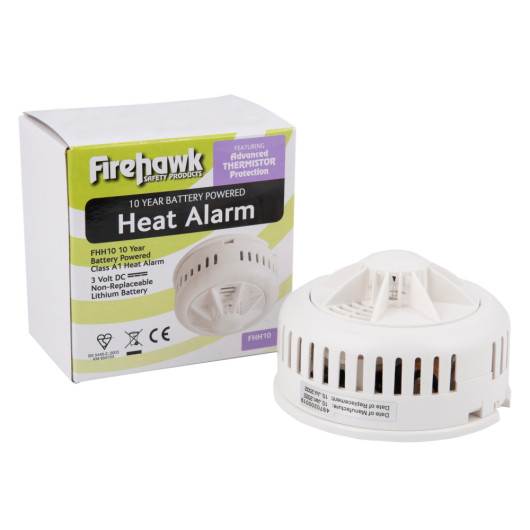
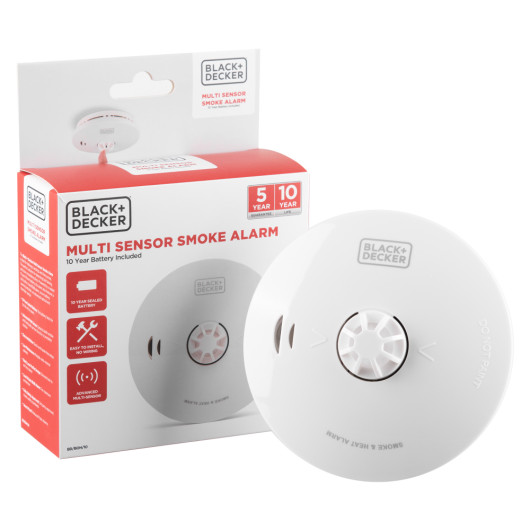
Heat alarms are generally round, white or off-white plastic discs, quite similar in appearance to a smoke alarm. They’re designed to mount on the ceiling and sit fairly flush once fitted. You won’t notice them much day-to-day, which is kind of the point.

The main thing to look for aesthetically (and practically) is the test button on the front or side, and a small LED indicator light that confirms the alarm is powered and working. If you’re buying a radio-interlinked heat alarm, it may be slightly larger to accommodate the wireless module, but it’s still a tidy, unobtrusive piece of kit.  
Image

Why Is My Heat Alarm Beeping?

There are a few reasons a heat alarm might start chirping or beeping, and most of them are easy to fix:

  • Low battery: a regular short beep, usually every 30 to 60 seconds, almost always means the battery is running low. Replace it and the beeping should stop.
  • End of life warning: many modern alarms have a lifespan of around 10 years. When they reach the end of it, they’ll let you know with a continuous chirping pattern. At that point, replacement is the answer rather than fiddling with the battery.
  • Test mode: if someone pressed the test button recently, the alarm may have been triggered deliberately. Worth checking before you worry.
  • Actual heat detection: if the alarm is sounding continuously and urgently, treat it as a real fire warning. Get everyone out and call 999.

If you’re consistently getting unexplained beeping and the battery is fine, it could indicate a fault in the unit. Contact the manufacturer or check with Safelincs’ customer service team for guidance.

How to Stop a Heat Alarm Beeping  

If it’s a low battery chirp, the fix is simple: replace the battery with the correct type (usually a 9V PP3 or AA, but check your manual). Most alarms will stop within a minute or two of a fresh battery being fitted.

For a continuous alarm sound (the kind triggered by heat detection) pressing and holding the test/hush button on the unit should silence it temporarily if it’s a false alarm. Bear in mind this is only appropriate if you are completely certain there is no fire risk. Never silence an alarm without checking the room first.

If the alarm is at end of life and chirping intermittently, the only real solution is to replace the unit entirely.

How to Turn Off a Heat Alarm  

Turning off a heat alarm temporarily is usually done by pressing and holding the test/hush button for around five to ten seconds. Some models require you to remove the battery or disconnect the mains supply to fully power them down.

If you’re replacing the unit or carrying out work nearby, check the manual for the correct shutdown procedure for your specific model. For mains-powered alarms, you’ll need to switch off the power at the fuse board before disconnecting.

A quick note: turning off your heat alarm isn’t something to do casually. Even in low-risk situations, an unmonitored kitchen is statistically where fires are most likely to start. If you’re carrying out renovations or there’s a reason to disable it short-term, make sure it’s back in service as soon as possible.

💡

Are Heat Alarms a Legal Requirement?

In Scotland, the answer is a firm yes. Following the introduction of new fire safety legislation, all domestic properties in Scotland are now legally required to have a heat alarm fitted in the kitchen. These must also be interlinked with smoke alarms elsewhere in the property.

For the rest of the UK, the requirements vary depending on the type of property and any building regulations that applied when work was carried out. If heat alarms were fitted when you moved in, or if they’ve been specified as part of an extension or renovation, you’re obliged to keep them working.

For rental properties in England and Wales, landlords have a duty to ensure adequate fire detection is in place. While heat alarms in kitchens may not be explicitly mandated everywhere, they represent clear best practice and are widely recommended by fire services.

Protecting your home with a heat alarm in the kitchen works best as part of a complete home fire detection system. Pairing it with optical smoke alarms in hallways and sleeping areas gives you the best possible chance of detecting a fire early, wherever it starts. Think of it like a neighbourhood watch: each alarm is responsible for its own area, but they all work together to keep the whole home protected.

Safelincs offers a full range of interlinked smoke and heat alarm systems designed specifically for UK homes, with free expert advice if you’re not sure which setup suits your property. If you have any questions, please get in touch with our friendly team.

All information correct at time of publication. For the latest legal
How many different types of fire extinguishers are there?

Most people walk straight past a fire extinguisher without a second glance. It’s only when you’re standing in front of one, needing it, that you realise you have no idea which one to grab or how to use them. This guide answers exactly that. How many different types of fire extinguishers are there? Six, and they have their uses in very different scenarios.

Here’s the thing: fire extinguishers are not interchangeable. Using the wrong type on the wrong fire can make things considerably worse, and in some cases (water on an electrical fire, for instance) genuinely dangerous. In the UK there are six different types, each built for specific fire risks. Consider this your no-nonsense guide to knowing your CO2 from your wet chemical, and why it actually matters.

💡
In this guide:

  • How Do Fire Extinguishers Work?
  • Water Fire Extinguishers
  • Foam Fire Extinguishers
  • CO2 Fire Extinguishers
  • Powder Fire Extinguishers
  • Wet Chemical Fire Extinguishers
  • Lithium-ion battery extinguishers
  • How Many Fire Extinguishers Do I Need?
  • Fire Extinguishers Explained
  • Choosing the Right Extinguisher

How Do Fire Extinguishers Work?  

At their most basic, fire extinguishers work by removing one or more elements from the fire triangle. Fire needs three things to keep burning: heat, fuel and oxygen. Take away any one of those and the fire goes out.

Every extinguisher is a pressurised cylinder containing an extinguishing agent. Pull the safety pin, squeeze the handle, and that pressure forces the agent out through a nozzle or horn. Simple enough in principle, but the agent inside determines which fires the extinguisher can tackle safely and which it should never go near.

Different types tackle the fire triangle in different ways. Some cool the fire down, while others smother it or interrupt the chemical reaction keeping it alive. That’s what makes each type distinct and why knowing the difference matters more than most people realise.

Water Mist Fire Extinguishers  

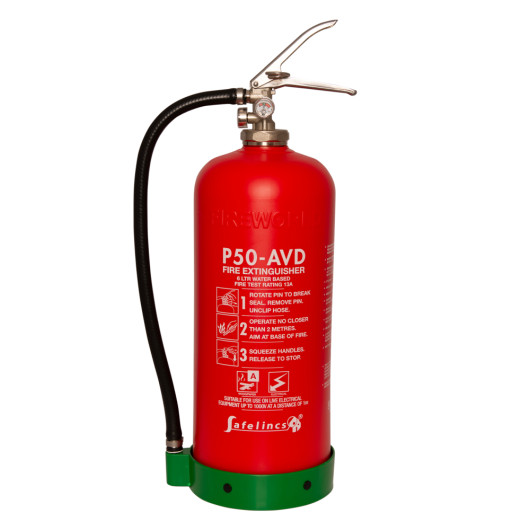
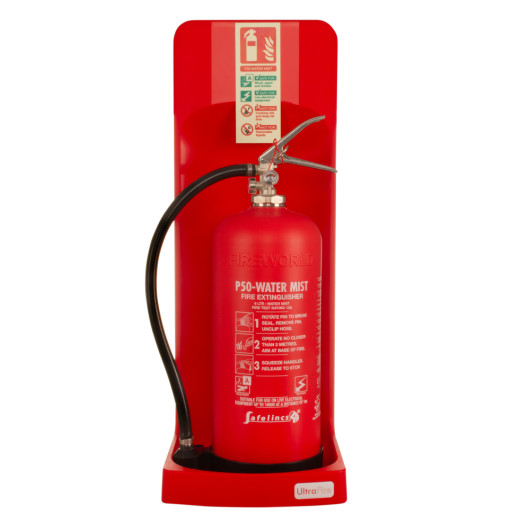
Water mist extinguishers are a modern evolution of the traditional water extinguisher and arguably the most versatile type on this list. Same red body, but the technology inside is a significant step forward. They’ve become increasingly popular in care homes, hospitals, schools and commercial kitchens, and it’s easy to see why.

How Do Water Mist Fire Extinguishers Work?

Rather than a solid jet of water, water mist extinguishers release an ultra-fine mist of microscopic droplets. This increases the surface area in contact with the fire, cooling it faster while simultaneously displacing oxygen around the flame. The droplets are so fine that the mist is safe to use around electrical equipment up to 1000V.

What Can Water Mist Fire Extinguishers Be Used On?

Water mist extinguishers handle Class A fires (solid materials) and Class F fires involving cooking oils and fats. That combination is what sets them apart from standard water extinguishers and makes them such a practical choice in environments where multiple fire risks are present. Their suitability near live electrical equipment up to 1000V makes them incredibly versatile.

Shop Water Mist Fire Extinguishers

Discover our full range of water mist fire extinguishers to find the right one for your home or business.
Image

Foam Fire Extinguishers  

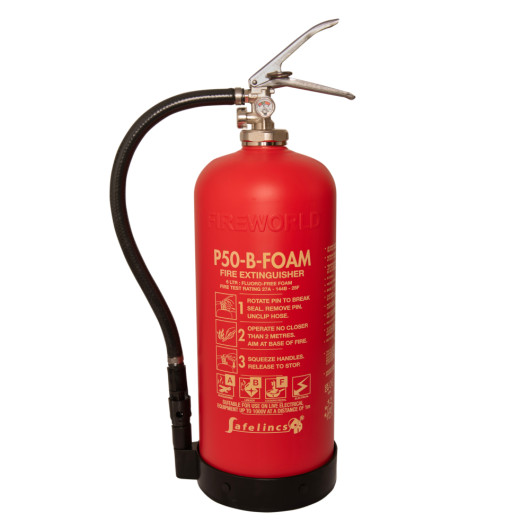
Foam extinguishers are a versatile option, identifiable by their red body and cream-coloured panel. However, water mist extinguishers are generally the preferred recommendation in most environments. They offer comparable versatility without leaving any residue to clean up, and unlike foam, they won’t cause damage if deployed near food or on delicate fabrics.

Foam remains a capable choice for workshops and commercial premises where multiple fire risks are present, but if you’re looking for a single extinguisher that covers everyday risks with minimal collateral impact, water mist is usually the better answer.

What Are Foam Fire Extinguishers Used For?

Foam works by forming a blanket over the burning material, sealing off oxygen and preventing flammable vapours from escaping and re-igniting. There’s a cooling effect too, which makes them effective on two fronts at once. Think of it as smothering and cooling simultaneously, which is a combination that makes them particularly reliable on liquid fires.

What Can Foam Fire Extinguishers Be Used On?

Foam extinguishers are rated for Class A fires (solid materials) and Class B fires covering flammable liquids like petrol and paint. That dual rating is what makes them such a practical choice where both fire risks coexist.

Foam extinguishers are usually suitable for use on live electrical equipment. Look for the dielectric test symbol on the front of the extinguisher to confirm this. Like water extinguishers, they should never be used on Class F fires involving cooking fats.

Shop Foam Fire Extinguishers

Discover our full range of foam fire extinguishers to find the right one for your home or business.
Image

CO2 Fire Extinguishers  

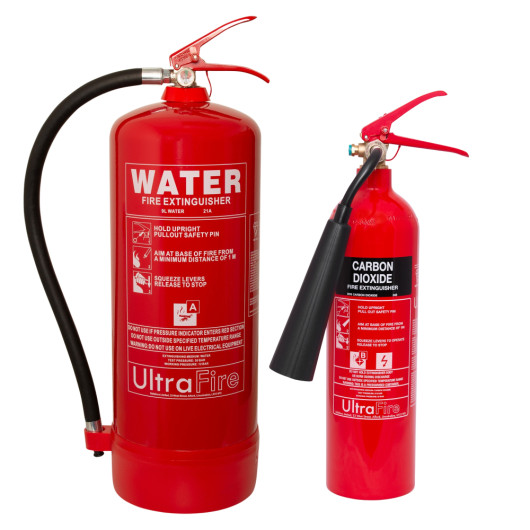
CO2 extinguishers are the clean, no-mess option. They are identifiable by their red body, black panel and distinctive hard horn rather than a standard nozzle. They are the best choice for anywhere with equipment that needs protecting, such as server rooms and offices as they leave no residue or damage.

What Can CO2 Fire Extinguishers Be Used On?

CO2 works by displacing the oxygen around a fire. Carbon dioxide is heavier than air, so it floods the area and suffocates the flames. CO2 extinguishers are rated for Class B fires (flammable liquids) and are the go-to choice for electrical fires, covering server rooms, computer-filled offices and control rooms among others.

They’re not suitable for Class A fires, as without cooling the burning material, solid fuels can re-ignite once the CO2 disperses. Worth keeping in mind if your risk assessment covers both.

A note on safety

CO2 displaces oxygen for humans as well as fires. In small or enclosed spaces, ensure ventilation after use. The horn also gets extremely cold during discharge, so always grip the insulated handle to avoid cold burns.

Shop CO2 Fire Extinguishers

Discover our full range of CO2 fire extinguishers to find the right one for your home or business.
Image

Powder Fire Extinguishers  

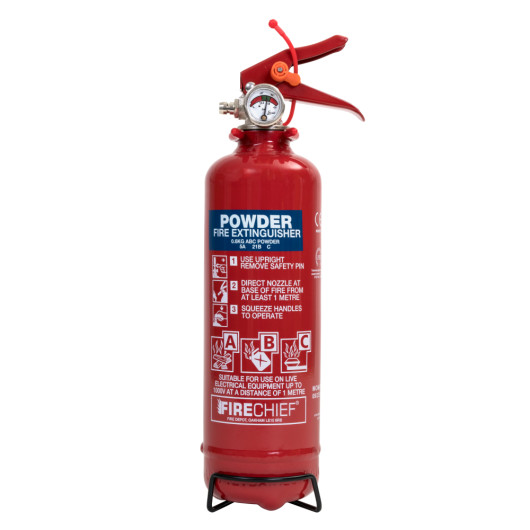
Powder extinguishers (often called ABC or dry powder extinguishers) are the broadest spectrum type available. Common in vehicles and outdoor spaces, you can quickly identify a powder extinguisher via its red body and blue panel.

What Are Powder Fire Extinguishers Used For?

The powder interrupts the chemical chain reaction that sustains a fire, breaking the process at a molecular level. It’s a different mechanism to cooling or smothering and it’s what gives powder its unusually wide coverage.

Dry powder extinguishers handle Class A, Class B and Class C fires. Class C covers flammable gases like LPG and natural gas, making powder one of the few types suitable for gas fires. That’s why you’ll find them in industrial environments and on commercial vehicles.

The catch? Powder is messy. It obscures visibility during use and can cause breathing difficulties in enclosed spaces. Think of it as the sledgehammer of fire extinguishers: devastatingly effective, but not remotely subtle. For most indoor settings it isn’t the first choice despite its range.

Shop Dry Powder Fire Extinguishers

Discover our full range of dry powder fire extinguishers to find the right one for your home or business.
Image

Wet Chemical Fire Extinguishers  

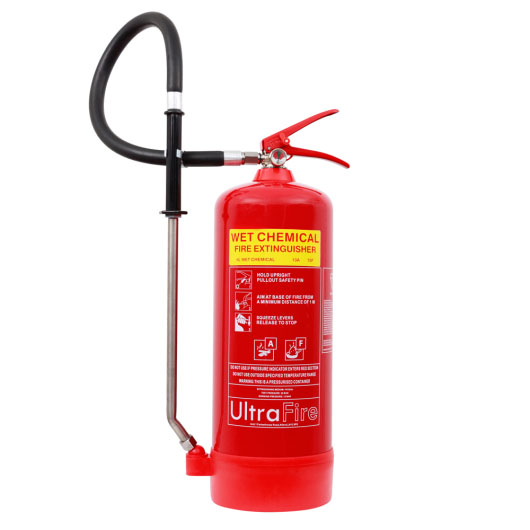
With a red body and yellow panel, wet chemical extinguishers are the specialist option. If you run a commercial kitchen, they’re non-negotiable. They exist specifically to tackle a type of fire that most other extinguishers simply cannot handle safely: burning cooking oil.

What Are Wet Chemical Fire Extinguishers Used For?

Wet chemical extinguishers work in two ways at once. The potassium-based solution reacts with burning oil to create a soapy foam layer, sealing the surface and cutting off oxygen. Simultaneously it cools the oil rapidly, reducing the risk of re-ignition once the fire is out. It’s a precise solution to a genuinely hazardous fire type, such as chip pan fires and deep fat fryers.

What Can Wet Chemical Fire Extinguishers Be Used On?

Wet chemical extinguishers are rated for Class F fires (burning cooking oils and fats) which is their primary purpose. Many models also cover Class A fires, making them a practical dual-purpose choice in kitchen environments where solid material fires are also a risk.

Outside that scope, they’re not the right tool for flammable liquids, though most Class F extinguishers are suitable for use on live electrical equipment, as they are designed for use on electrical cookers. In a kitchen setting that’s rarely a problem, but it’s worth knowing the limits before you need to act on them.

Shop Wet Chemical Fire Extinguishers

Discover our full range of wet chemical fire extinguishers to find the right one for your home or business.
Image

Class L fires: lithium-ion battery extinguishers  

As lithium-ion batteries become increasingly common in everything from electric vehicles to e-bikes, scooters, and portable electronics, a new category of extinguisher has emerged to tackle the specific hazard they present. Class L extinguishers are designed for lithium-ion cell and battery fires, where conventional agents are largely ineffective and can sometimes make the situation worse.

Lithium-ion battery fires burn at extremely high temperatures and are prone to thermal runaway, a self-sustaining reaction that can cause a battery to repeatedly re-ignite even after it appears to have been extinguished. Class L extinguishers use specialist agents formulated to cool the battery cells rapidly and suppress this process.

These extinguishers are particularly relevant anywhere lithium-ion batteries are stored, charged, or used in significant quantities, including EV charging points, e-bike storage areas, warehouses handling battery-powered equipment, and premises with large numbers of portable devices.

Shop Lithium-Ion Battery Fire Extinguishers

Discover our full range of lithium-ion fire extinguishers to find the right one for your home or business.
Image
💡

How Many Fire Extinguishers Do I Need?

The honest answer is that it depends on your premises, the fire risks present and the layout of the building.

Under the Regulatory Reform (Fire Safety) Order 2005, businesses in England and Wales must carry out a fire risk assessment and provide appropriate firefighting equipment. British Standard BS 5306-8 gives more specific direction: as a general rule, at least one 13A-rated water or foam extinguisher per 200 square metres of floor space, with a minimum of two extinguishers per floor.

That’s a starting point, not a formula. A commercial kitchen with deep fat fryers or significant oil-based cooking needs wet chemical, while a server room needs CO2. The types and quantities should reflect the actual risks in your specific environment, which is exactly why a proper fire risk assessment matters.

Unsure where to start? Our team at Safelincs can help you work through it with a fire extinguisher site survey, or you can use our fire risk assessment tools for a clearer picture.  

Fire Extinguishers Explained  

Not sure which type you need at a glance? This table covers all six types, the fire classes they handle and where they’re best placed. The amber entries are the ones worth paying attention to; they flag the conditions and limitations that catch people out.  

Type Panel colour Class ASolids Class BLiquids Class CGases Class FCooking oils Electrical Best for
Water Red Yes No No No No Offices, warehouse, retail
Water mist Red Yes No No Yes Up to 1000V Care homes, hospitals, kitchens
Foam Cream Yes Yes No No If tested Garages, workshops, mixed risks
CO2 Black No Yes No No Yes Server rooms, offices, electrical
Dry powder Blue Yes Yes Yes No Limited Industrial, vehicles, outdoor
Wet chemical Yellow Many models No No Yes No Commercial kitchens, deep fat fryers
Type
Water
Panel colour
Red
Class ASolids
Yes
Class BLiquids
No
Class CGases
No
Class FCooking oils
No
Electrical
No
Best for
Offices, warehouse, retail
Type
Water mist
Panel colour
Red
Class ASolids
Yes
Class BLiquids
No
Class CGases
No
Class FCooking oils
Yes
Electrical
Up to 1000V
Best for
Care homes, hospitals, kitchens
Type
Foam
Panel colour
Cream
Class ASolids
Yes
Class BLiquids
Yes
Class CGases
No
Class FCooking oils
No
Electrical
If tested
Best for
Garages, workshops, mixed risks
Type
CO2
Panel colour
Black
Class ASolids
No
Class BLiquids
Yes
Class CGases
No
Class FCooking oils
No
Electrical
Yes
Best for
Server rooms, offices, electrical
Type
Dry powder
Panel colour
Blue
Class ASolids
Yes
Class BLiquids
Yes
Class CGases
Yes
Class FCooking oils
No
Electrical
Limited
Best for
Industrial, vehicles, outdoor
Type
Wet chemical
Panel colour
Yellow
Class ASolids
Many models
Class BLiquids
No
Class CGases
No
Class FCooking oils
Yes
Electrical
No
Best for
Commercial kitchens, deep fat fryers

Choosing the Right Extinguisher

The right extinguisher comes down to the fire risks in your specific environment. For most offices and homes, a water mist or foam extinguisher covers the majority of likely scenarios. Add a CO2 where electrical equipment is present. If you have a kitchen with deep fat fryers, a wet chemical extinguisher is essential.

Safelincs stocks a full range of fire extinguishers from leading manufacturers, including service-free models that cut ongoing maintenance costs without compromising on safety. All products meet UK standards, so you can buy with confidence knowing they’ll perform when it matters most.

Still wondering how many different types of fire extinguishers there are and which one is right for your building? Our UK-based customer service team are on hand to help, whether you’re kitting out a single office or managing fire safety across a large estate. Get in touch and we’ll be happy to answer any questions you may have.  

Mel Saunders

Head of Marketing

With over 20 years of experience in content writing, design and marketing, Mel now heads up the Content & Marketing Team at Safelincs. Having been in the fire safety industry for over 5 years, Mel has now developed a deep understanding of some of the critical issues facing the industry. Alongside her team, she aims to support the public with resources and information to help them improve fire safety at home, in the workplace or in 3rd sector organisations.

Latest Posts by Mel Saunders

What Is A Class D Fire?14th May 2026
What Is A Class F Fire?13th May 2026
Ionisation Smoke Alarms Buyers Guide12th May 2026

What do we do to maintain our emergency lighting

What do we do to maintain our emergency lighting? It’s a question that doesn’t get asked nearly enough. Emergency lighting maintenance is one of those things nobody prioritises until they really, really need it. The power cuts out and suddenly those glowing green exit signs are the most important things in the building. Not to mention the fact that the law requires you to maintain emergency lighting in your building, and the stakes are higher than most people realise.

Whether you are responsible for a busy office, a bustling shop, a rented property or a sprawling commercial site, this guide covers everything you need to know when it comes to properly maintaining your emergency lighting.

  💡In This Guide

  • What Is Emergency Lighting?
  • What Is the Purpose of Emergency Lighting?
  • Where Is Emergency Lighting Required?
  • How Often Should Emergency Lighting Be Tested?
  • How to Test Emergency Lighting
  • Who Can Test Emergency Lighting?
  • What Do We Do to Maintain Our Emergency Lighting?

What Is Emergency Lighting?  

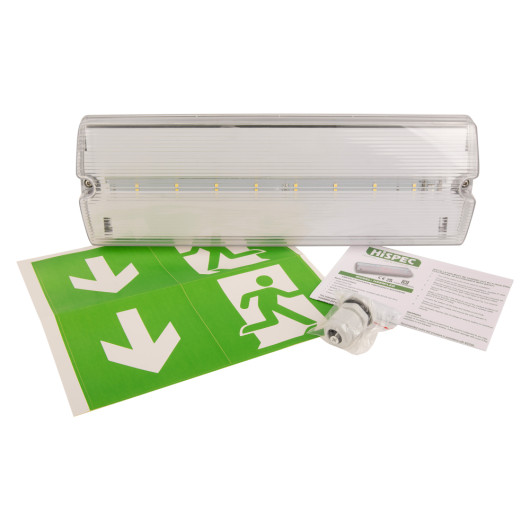
Emergency lighting is a battery-backed lighting system that activates automatically when the mains power supply fails. Unlike standard light fittings, these do not rely on the grid. They have their own internal power source, so when the likes of a powercut happen, people can still see where they are going.

There are two main types: escape route lighting illuminates the path people need to follow to get out safely, while standby lighting allows normal activities to continue during a power failure. This is most common in places such as hospitals or control rooms where work simply cannot stop. Most systems are either Maintained (on all the time) or non-maintained (only activating when the mains fails). The type you need depends on how your building is used.

What Are Illuminated Exit Signs?

Illuminated exit signs are technically a form of emergency lighting, but they cause more confusion than you might expect, largely because people are not always sure whether they should be on all the time or only during an emergency.

Those green running-man signs above fire doors need to be either maintained (always illuminated) or non-maintained (only lit during an emergency). In most public buildings, maintained signs are the standard. The logic is simple: you want people to know exactly where the exits are before a fire breaks out, not just when they are already scrambling to find them.

What Is the Purpose of Emergency Lighting?

The purpose of emergency lighting is to keep people safe when an emergency plunges a building into darkness. This could be anything from a powercut to a fire. 

Without it, evacuation becomes dangerous. People trip, panic, lose their bearings and struggle to find exits they would otherwise walk past every day. There is also a legal dimension. The Regulatory Reform (Fire Safety) Order 2005 requires it for most non-domestic premises in England and Wales. Equivalent legislation covers Scotland and Northern Ireland. Your fire risk assessment should identify whether it is needed and where; if it does, you are obligated to install and maintain the system correctly.  

Image

💡Where Is Emergency Lighting Required?

Emergency lighting is required anywhere that a loss of mains lighting would put people at risk. In practice, that means most areas of most commercial buildings. The fittings are typically needed in:

  • Escape routes, including corridors and stairwells
  • Open plan areas where people work or gather
  • Changing rooms and toilet facilities above a certain size
  • Locations housing fire fighting equipment
  • Areas around fire alarm call points
  • Any spot containing a hazard that someone might walk into in the dark

That last one is worth thinking about carefully. A poorly lit plant room or a stairwell with an awkward turn can be seriously dangerous without adequate lighting during an emergency.

Does My Building Need Emergency Lighting?  

Most commercial and public buildings will need some form of it. This includes:

  • Offices and retail premises
  • Schools, hospitals and care homes
  • Hotels and leisure facilities
  • Places of worship
  • HMOs and buildings with shared communal areas

If you are unsure, a professional fire risk assessment for your premises is the right way to establish your specific requirements. Standard single-occupancy homes are generally exempt, but properties with shared areas, such as blocks of flats, will almost certainly need it in common parts like corridors and stairwells.  

How Often Should Emergency Lighting Be Tested?  

Emergency lighting should be tested more often than most people realise. Emergency lighting is not a fit-and-forget installation; it needs regular, documented testing to remain compliant and, more importantly, to actually work when it is needed.

BS 5266-1:2025 (the British Standard that governs emergency lighting, updated in October 2025 to replace the previous 2016 edition) sets out a clear schedule. Here is what it looks like:

Test type Frequency Duration Who can do it
Short functional test Monthly ~1 minute Competent in-house person
Full rated discharge test Annually 3 hours Competent person or qualified contractor
Test type
Short functional test
Frequency
Monthly
Duration
~1 minute
Who can do it
Competent in-house person
Test type
Full rated discharge test
Frequency
Annually
Duration
3 hours
Who can do it
Competent person or qualified contractor

The monthly test is a quick check to confirm the system activates. The annual test is the proper stress test; it runs the batteries down to their full rated duration to confirm they can sustain the system when it counts.

Some modern systems come with self-testing functionality, where each luminaire carries out its own checks automatically and logs the results. For larger sites, this can be a genuine time-saver and is well worth considering.  

How to Test Emergency Lighting

Thankfully, testing isn’t complicated. It does, however, need to be done properly and recorded every single time.  

Monthly Emergency Lighting Test (Short Functional Test)

The monthly test is about confirming basic functionality. You are simply checking that the lights come on when the mains power is interrupted and that exit signs illuminate as they should.

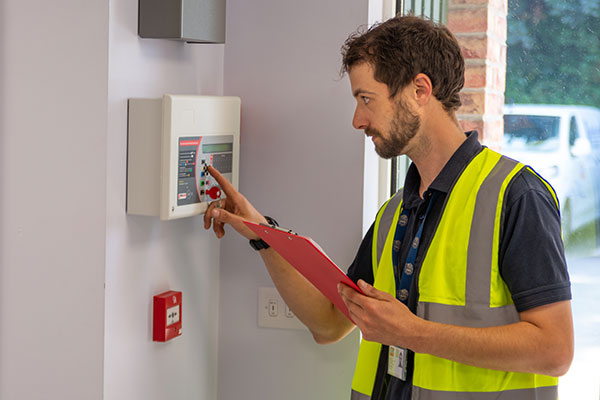
To carry it out, the mains supply to the emergency lighting circuit is interrupted; either via a key switch, a dedicated test switch or by isolating the circuit at the distribution board. The fittings should activate immediately. Once you have confirmed they are working, restore the mains supply and allow the batteries to recharge. Keep the test short to avoid draining the batteries unnecessarily.

Log the date, the tester’s name and the outcome straight away. Do not leave it until the end of the week.

Annual Emergency Lighting Test (Full Duration Test)

Annual emergency lighting takes a bit more planning. The mains supply is cut for the full rated duration of the system (three hours for most installations) and the lights must remain functional throughout. At the end of the test, every luminaire and sign is checked to confirm it is still illuminated.

As this discharges the batteries significantly, it needs to happen at a time when the building will not need the system to work in an emergency for at least 24 hours afterwards. For sites that are occupied around the clock, that takes some coordination.

Any faults found during the annual test must be repaired and retested before the system is signed off. A failed luminaire or a battery that gives up the ghost partway through needs to be fixed before you can consider the test complete.

Who Can Test Emergency Lighting?  

The monthly functional test can be carried out by a competent, trained member of staff. This basically means someone who understands the system, knows how to use the test switches and isolation procedures and can record the results accurately. A specialist contractor isn’t needed in this scenario, so long as your staff member actually knows what they are doing.

The annual full duration test is a different matter, however. Technically, a competent internal team member can still carry it out. In practice, many organisations bring in a qualified electrical contractor or specialist fire safety engineer for this one, and there are good reasons for that. The annual test involves extended electrical isolation, a thorough inspection of every fitting and a proper assessment of battery condition. Missing a fault at this stage is not just a paperwork problem.

Does Emergency Lighting Testing Need to Be Certified?

For many premises, yes. Buildings subject to third-party audits, specific insurance requirements or licensing conditions will often need a written certificate confirming the annual test was carried out to BS 5266-1. A qualified contractor can provide this, which gives building owners and managers a useful layer of documented assurance.

If you manage a large or complex site, a maintenance contract covering both monthly and annual testing is worth serious consideration. It removes the risk of something slipping through the cracks, which (speaking from experience dealing with a lot of building managers) happens more often than anyone likes to admit.

Image

What Do We Do to Maintain Our Emergency Lighting?  

Good emergency lighting maintenance comes down to a consistent process, carried out by people who know what they are looking for every single time.

Here is what a solid regime looks like in practice:

  • Monthly: A short functional test confirms all luminaires and exit signs activate correctly. Results go into the log book the same day.
  • Annually: A full rated discharge test is completed, batteries are assessed, any faults are repaired and the system is certified as compliant with BS 5266-1.
  • Ongoing: Any faults spotted during routine checks are dealt with promptly. A dim luminaire, a cracked fitting or a failing exit sign LED should never be left for the next scheduled test. Emergency lighting faults are not the kind of thing to add to a to-do list and forget about.

It’s also worth carrying out a visual inspection as part of your regular fire safety walkround. Fittings should be clean, undamaged, unobstructed and positioned correctly. If someone has moved a cabinet in front of an exit sign, or a new partition has been put up that leaves a dark patch in an escape route, those problems need fixing outside of the formal test schedule.

Keeping Records

This deserves its own mention, because it is the part that most often gets overlooked. A testing log is not a bureaucratic formality, but your evidence of compliance. Without it you have very little to show anyone who asks.

Your log should record every test carried out: the date and time, the name of the person responsible, the outcome and any remedial actions taken. Safelincs offers free fire safety log books to help with exactly this, ready for download instantly.

A system that has not been tested, has failing batteries or leaves dark spots in an escape route is a real risk to real people. The good news is that maintaining it properly is not complicated. A clear testing schedule, a reliable log book and competent people carrying out the checks will cover the vast majority of what you need.

If you need support, whether that is sourcing the right emergency lighting fittings and luminaires, getting clarity on your legal obligations or arranging a fire risk assessment, the Safelincs team is here and genuinely happy to help. Feel free to get in touch and we’ll answer any query you may have.  

Mel Saunders

Head of Marketing

With over 20 years of experience in content writing, design and marketing, Mel now heads up the Content & Marketing Team at Safelincs. Having been in the fire safety industry for over 5 years, Mel has now developed a deep understanding of some of the critical issues facing the industry. Alongside her team, she aims to support the public with resources and information to help them improve fire safety at home, in the workplace or in 3rd sector organisations.

Latest Posts by Mel Saunders

What Is A Class D Fire?14th May 2026
What Is A Class F Fire?13th May 2026
Ionisation Smoke Alarms Buyers Guide12th May 2026

Can You Extinguish a Lithium-ion Battery Fire?

You may not realise it, but lithium-ion (Li-ion) batteries are everywhere. Your phone, your laptop, the power drill in the garage, your kid’s e-scooter – they all run on the same rechargeable technology. Most of the time, they’re perfectly safe. When something goes wrong, however, the fire risk is a very different beast to anything we’ve traditionally dealt with. So, can you extinguish a lithium-ion battery fire? And if so, how? Let’s take a look at what fire safety technology exists to help.

💡
Contents

  • What Class of Fire Is a Lithium-Ion Battery?
  • How Hot Is a Lithium-Ion Battery Fire?
  • What to Do If a Lithium-Ion Battery Catches Fire
  • How to Put Out a Lithium-Ion Battery Fire

What Class of Fire Is a Lithium-Ion Battery?

This is a question that’s had the fire safety industry scratching its head for years, simply because it’s not always been clear. Traditionally, fires are split into classes based on the fuel type: Class A for solids, Class B for flammable liquids, Class D for metals, and so on. Lithium-ion battery fires never sat neatly in any of these boxes.

That’s now changed. In February 2026, the revised standard BS ISO 3941:2026 introduced a brand new category named Class L specifically for fires involving lithium-ion cells and batteries. It’s a landmark update that formally acknowledges what fire safety professionals have long known: these fires behave in a completely different way to anything else.  
Fire Class Type of Fire
A Solid materials (wood, paper, textiles)
B Flammable liquids
C Flammable gases
D Combustible metals
F Cooking oils and fats
L Lithium-ion cells and batteries (new, 2026)
Fire Class
A
Type of Fire
Solid materials (wood, paper, textiles)
Fire Class
B
Type of Fire
Flammable liquids
Fire Class
C
Type of Fire
Flammable gases
Fire Class
D
Type of Fire
Combustible metals
Fire Class
F
Type of Fire
Cooking oils and fats
Fire Class
L
Type of Fire
Lithium-ion cells and batteries (new, 2026)

Unlike conventional fires, a Class L fire is driven by electrochemical reactions happening inside the battery, not just surface combustion. The battery essentially becomes its own fuel source, which is what makes it so tricky to deal with. While Class L does not currently create new UK legal duties on its own, it does mean your fire risk assessment should now explicitly consider the presence of lithium-ion batteries. If it doesn’t, it’s likely out of date.

How Hot Is a Lithium-Ion Battery Fire?

Short answer: extremely hot. We’re talking melt-your-tools hot.

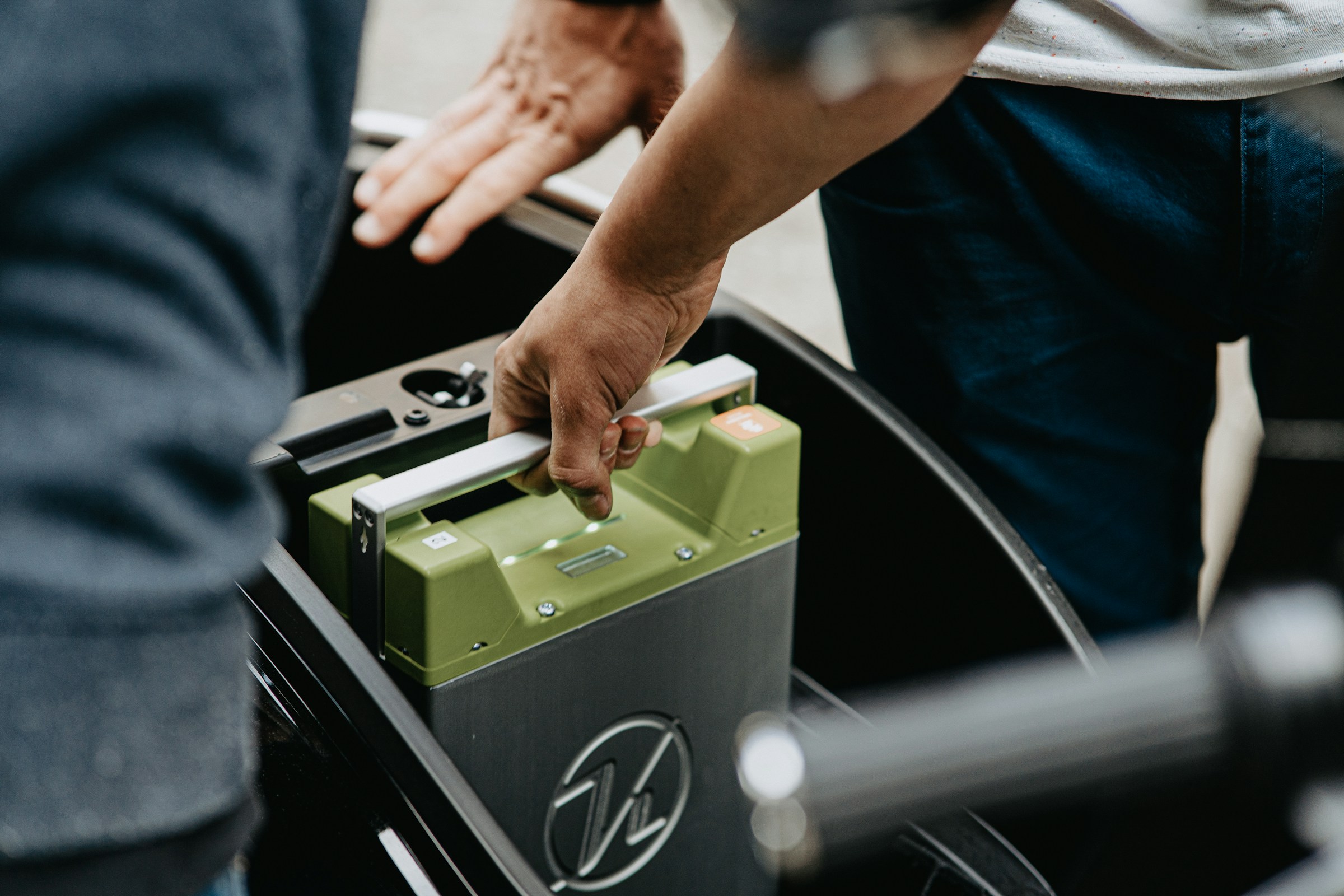
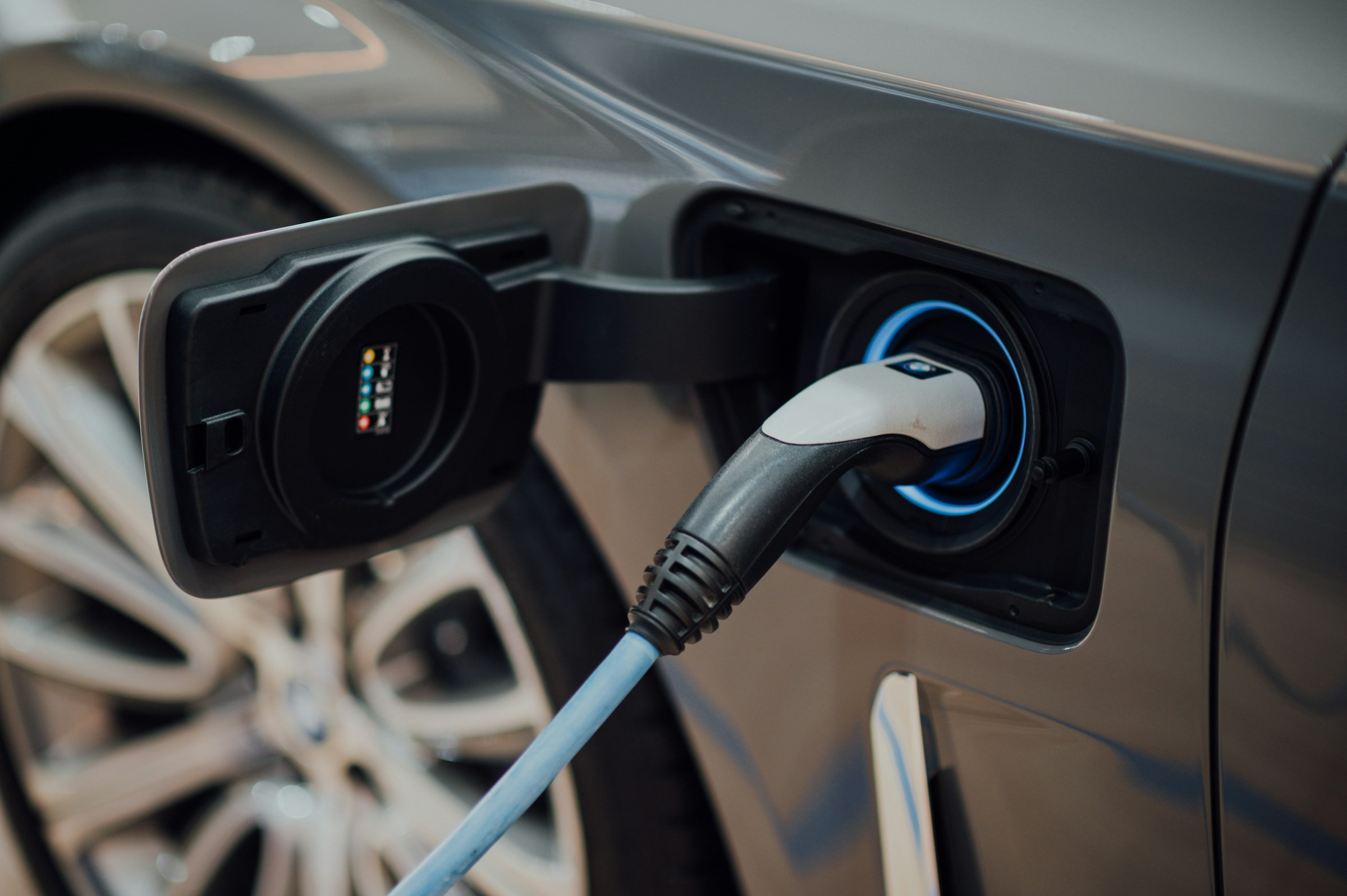
A lithium-ion battery fire is caused by a process called thermal runaway. This is, in short, a chain reaction where heat triggers more heat, gases are released, and the fire becomes self-sustaining. Once it starts, it accelerates fast. Battery temperatures during thermal runaway typically range between 200°C and 1,000°C, and in large battery packs or electric vehicles, temperatures can climb even higher.

To put that into context, a petrol-powered vehicle fire burns at around 815°C. An EV fire? Closer to 2,760°C at its peak.

The reason these fires are so ferocious is that decomposing battery cathodes release oxygen as they break down, meaning the fire can sustain itself even when you cut off the external oxygen supply. Smothering it simply doesn’t work in the same way it would with a conventional fire. There’s also the small matter of the toxic gases (including carbon monoxide and hydrogen) that are produced during thermal runaway and present a serious risk to anyone nearby.

Image
⚠️

What to Do If a Lithium-Ion Battery Catches Fire

First things first: if it’s a large fire, or you have any doubt whatsoever, evacuate the area and call 999 immediately. Li-ion fires spread fast and the fumes are toxic, so put your safety first.

That said, if a fire is caught very early or you suspect your lithium-ion battery device is about to go into thermal runaway, you may be able to act quickly and safely. Here’s a general guide:

  • Stop using the device immediately if you notice swelling, overheating, unusual smells, or discolouration
  • Move the device away from flammable materials if it’s safe to do so
  • Do not use a standard water or CO₂ extinguisher as these are likely to be ineffective and could make things worse
  • Use a purpose-built lithium-ion extinguisher if you have one to hand and the fire is very small
  • Call 999 if there’s any doubt and make sure everyone is out of the area
For electric vehicles, the guidance is even clearer: do not attempt to fight the fire yourself. The volume of energy involved makes it beyond the scope of personal firefighting equipment. The London Fire Brigade has useful guidance on safe charging and storage habits worth reading if you have an EV or e-bike at home.  

Image

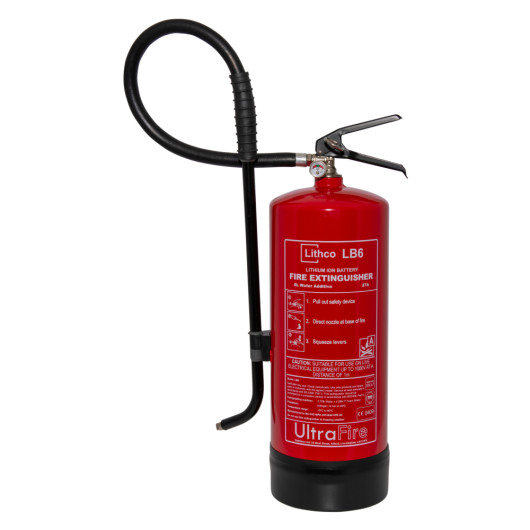
Lithco 6lr Lithium-Ion Batery Fire Extinguisher

Designed specifically for use on rechargeable lithium-ion battery fires, the LB6 fire extinguisher satisfies modern fire risks in a cost-effective, multi-purpose solution.

  • Designed for UPS systems, laptops, power tools, and bulk device chargers
  • Heat dispersing, low-viscosity agent to penetrate battery casings
  • Rigid applicator lance for enhanced control and user safety
  • Third-party tested up to 360Wh battery capacity

£179.00 ex VAT

£214.80 inc VAT

How to Put Out a Lithium-Ion Battery Fire  

Given that Class L fires are self-oxygenating and can reignite even after appearing extinguished, the goal shifts from “put it out” to “cool it down and contain it.” There are now products specifically designed for exactly that.

Lithium-Ion Fire Extinguishers

There are two types of extinguisher designed specifically for li-ion battery fires.

The Lithco LB6 Fire Extinguisher is a water-based extinguisher containing a special additive called P Foam. Unlike standard water extinguishers, the agent in the LB6 is designed to penetrate through the outer casing of an electrical device and reach the battery itself. It’s been rigorously third-party tested up to 360Wh battery capacity and is proven effective on li-ion fires in handheld devices, laptops and power tools. It’s also safe to use on live electrical equipment up to 1,000V, and handles Class A fires too, making it a versatile unit to have around.

The second type uses an Aqueous Vermiculite Dispersion (AVD) agent. Rather than simply suppressing flames, AVD works by surrounding the burning battery cells and forming a crust around the device, cutting off the fire and acting as a physical barrier that stops it spreading beyond the battery or device itself.

AVD extinguishers are increasingly the recommended choice for lithium-ion fire risks. Compact aerosol versions are well suited to home and workshop use, while larger AVD extinguishers can replace an entire commercial fire point, handling the same risks covered by water and CO2 units as well as Class L lithium-ion fires.

Worth noting: neither type of li-ion extinguisher is suitable for electric car fires. The sheer quantity of extinguishing agent needed makes that a job for the fire service.

Electric Car Fire Blankets

For electric vehicles, the best option available is the Lithco Electric Vehicle Fire Blanket with Telescopic Poles. Rather than trying to extinguish an EV fire outright (which frankly isn’t realistic), the blanket is designed to contain it. It wraps around the vehicle to stop flames and molten debris spreading to nearby cars or structures, while simultaneously cutting off the oxygen supply to slow the fire’s progress.

These blankets are designed for use at car parks, charging stations, car ferries and by fire service personnel. They’re not an extinguishing tool, but a containment one, and that distinction matters enormously when dealing with a fire of this intensity. They should be used by trained personnel only.

Lithium-Ion Battery Storage Safes

Prevention, as ever, beats cure. The Lithium-Ion Battery Fire Protection Box is suitable for quarantining items, and is particularly useful for protection when transporting or storing goods. For larger items, we’d recommend the Premium Plus Storage and Charging Cabinet, which is both fire and explosion proof, ideal for protecting business assets.

If you’re regularly charging e-bikes, power tool batteries, or multiple devices in one location, dedicated battery storage is well worth considering.

Image

If your assessment doesn’t currently account for Class L hazards, now is a good time to revisit it. If you’re not sure what equipment you need, our team at Safelincs is on hand to help, just get in touch via live chat or give us a call.

Mel Saunders

Head of Marketing

With over 20 years of experience in content writing, design and marketing, Mel now heads up the Content & Marketing Team at Safelincs. Having been in the fire safety industry for over 5 years, Mel has now developed a deep understanding of some of the critical issues facing the industry. Alongside her team, she aims to support the public with resources and information to help them improve fire safety at home, in the workplace or in 3rd sector organisations.

Latest Posts by Mel Saunders

What Is A Class D Fire?14th May 2026
What Is A Class F Fire?13th May 2026
Ionisation Smoke Alarms Buyers Guide12th May 2026