Wednesday 18th February 2026
Disclaimer: This guide provides general information about water fire extinguishers for educational purposes. Always consult a qualified fire safety professional for advice specific to your premises and ensure you receive proper training before operating any fire extinguisher.
Water fire extinguishers are designed to combat Class A fires by cooling burning materials below their ignition temperature. When you discharge a water fire extinguisher, it releases a stream or spray of water that absorbs heat from the flames and burning surfaces, removing the heat element from the fire triangle. This cooling action rapidly lowers the temperature of materials like wood, paper and textiles, extinguishing the fire and preventing reignition.
Estimated reading time: 7 minutes
Key Takeaways
- Water fire extinguishers work by removing heat from fires through absorption and cooling.
- They operate using a stored-pressure mechanism with compressed air or nitrogen as the propellant.
- Water extinguishers are effective only on Class A fires involving solid combustible materials.
- Fire ratings like 13A or 21A indicate the size of fire an extinguisher can tackle under test conditions.
- These extinguishers should never be used on flammable liquids or cooking oil fires.
- Water lowers the temperature of burning materials below the ignition point, breaking the fire triangle.
What Is the Fire Triangle and How Do Water Extinguishers Disrupt It?
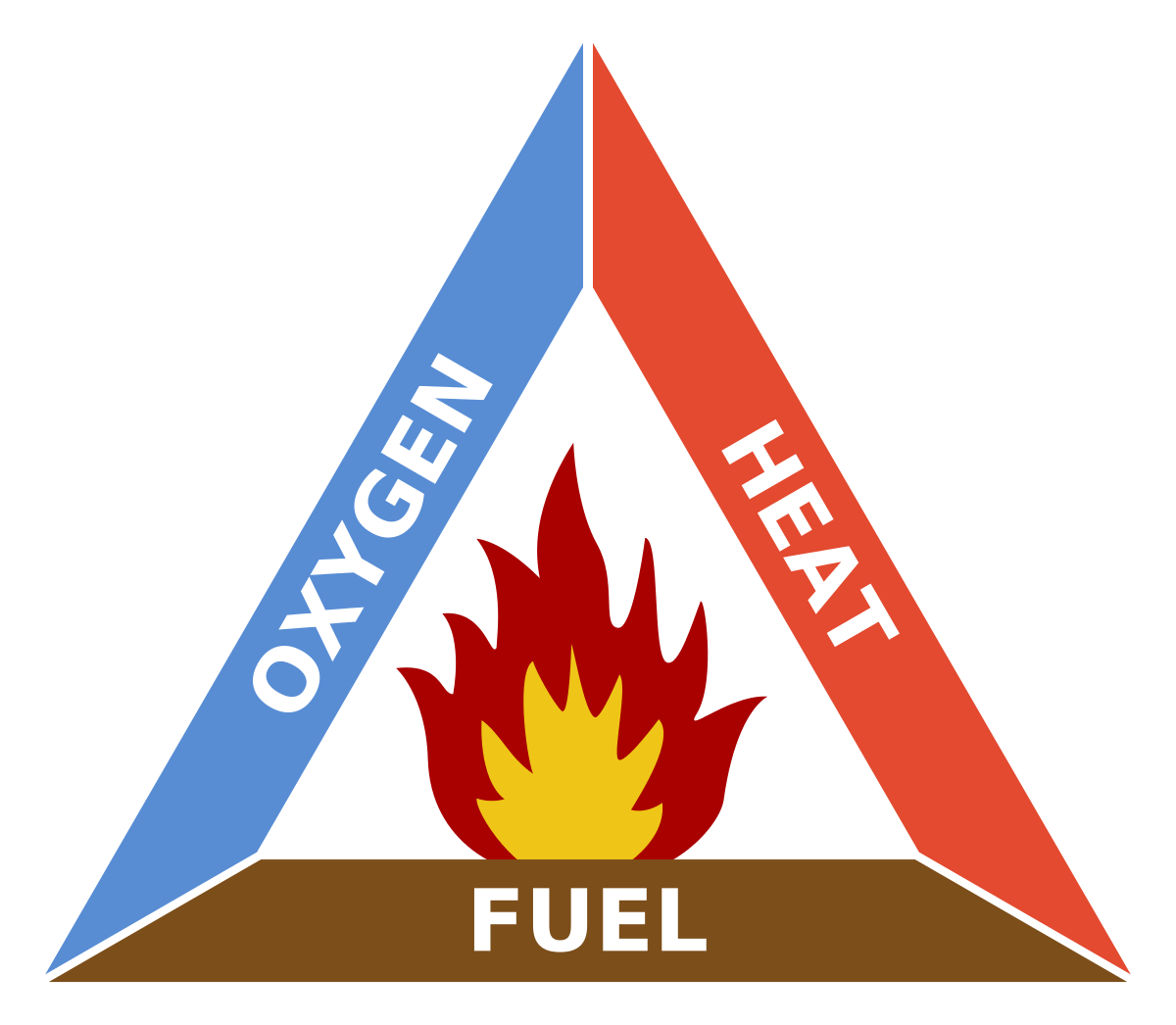
The fire triangle is a fundamental concept in fire safety that explains the three essential elements required for combustion. Heat, fuel and oxygen. Remove any one of these components, and the fire cannot sustain itself.
Water fire extinguishers work by attacking the heat element of the fire triangle. When water makes contact with burning materials, it absorbs tremendous amounts of thermal energy through two processes. Sensible heating occurs as the water temperature rises from ambient to boiling point. Then comes the latent heat of vaporisation, which happens when liquid water transforms into steam. This second process requires approximately 2,260 kilojoules per kilogram, making it exceptionally efficient at removing heat.
This dual absorption process is what makes water so effective at firefighting. As the temperature of the burning material drops below its ignition point, the chemical reactions that sustain combustion can no longer continue. The fire goes out.
| Fire Triangle Element | Role in Combustion | How Water Extinguishers Affect It |
|---|---|---|
| Heat | Provides energy to sustain combustion | Water absorbs heat through sensible heating and the latent heat of vaporisation |
| Fuel | Provides combustible material | Water cools fuel below ignition temperature |
| Oxygen | Supports chemical reactions | Water creates some displacement, but primarily works through cooling |
How Does the Stored Pressure Mechanism Work in Water Fire Extinguishers?
Most modern water fire extinguishers in the UK are stored-pressure units. In this design, both the extinguishing agent (water) and the pressurising gas live together in the same cylinder. The pressurising gas is typically compressed air or nitrogen.
When you squeeze the handle of a stored-pressure extinguisher, you open the valve at the top of the cylinder. The compressed gas pushes down on the water, forcing it up through the siphon tube and out through the nozzle. This creates a continuous stream or spray of water directed at the fire.
The pressure inside stays constant throughout the discharge until the extinguisher is empty. You can check this pressure using the gauge mounted on the body. The indicator should show the unit is in the green ‘charged’ zone for the extinguisher to be ready for use.
Stored Pressure vs Cartridge-Operated Stored Pressure (Most Common): Agent and propellant stored together in one cylinder. The pressure gauge shows readiness. Nitrogen or air is used as a propellant.
Cartridge-Operated (Less Common): Agent and propellant stored separately. CO2 cartridge punctured when activated. No pressure gauge. Common in industrial settings.
What Do Fire Ratings Like 13A and 21A Mean?
Fire ratings on water extinguishers indicate the size and type of fire the unit can extinguish under controlled test conditions. The rating consists of a number followed by a letter. The number represents the fire size. The letter indicates the fire classification.
For Class A fires, test fires are created using a crib of wooden sticks measuring 500mm wide and 546mm high. The crib’s length determines the rating. A 13A rating means the extinguisher successfully extinguished a crib 1.3 metres long under test conditions. A 21A rating means it can tackle a 2.1 metre-long crib.
These tests follow BS EN3, the standard that governs fire extinguisher manufacture and performance in the UK and Europe. After an eight-minute pre-burn, a skilled operator must extinguish the entire test fire with no signs of reignition for at least three minutes. Rigorous testing ensures reliability.
Higher numbers indicate greater firefighting capability. If you need a 13A-rated extinguisher for your premises, a 21A-rated unit will provide even better protection. However, physical size and weight also increase with higher ratings, so there’s always a balance to strike.
| Fire Rating | Test Crib Length | Typical Extinguisher Sizes |
|---|---|---|
| 8A | 0.8 metres | 2 litre water mist |
| 13A | 1.3 metres | 3 litres of water, 6 litres of water, 6 litres of water mist |
| 21A | 2.1 metres | 6 litre water additive, 9 litre water |
| 27A | 2.7 metres | 6 litre water additive with enhanced formula |
Which Types of Fires Can Water Fire Extinguishers Tackle?
Water fire extinguishers are designed exclusively for Class A fires. These involve ordinary combustible materials that produce ash when burned. Think wood, paper, cardboard, textiles, fabrics and most plastics.
In premises such as offices, schools, warehouses and hotels, Class A fires pose the most significant fire risk. This makes water extinguishers a practical and cost-effective choice for many buildings. They’re often paired with CO2 extinguishers to provide additional coverage for electrical equipment fires as well.
Water extinguishers excel at penetrating deep into burning materials. This allows them to tackle deep-seated fires where heat has penetrated below the surface.
The water soaks into the material, cooling it throughout and preventing reignition from hot spots lurking beneath.
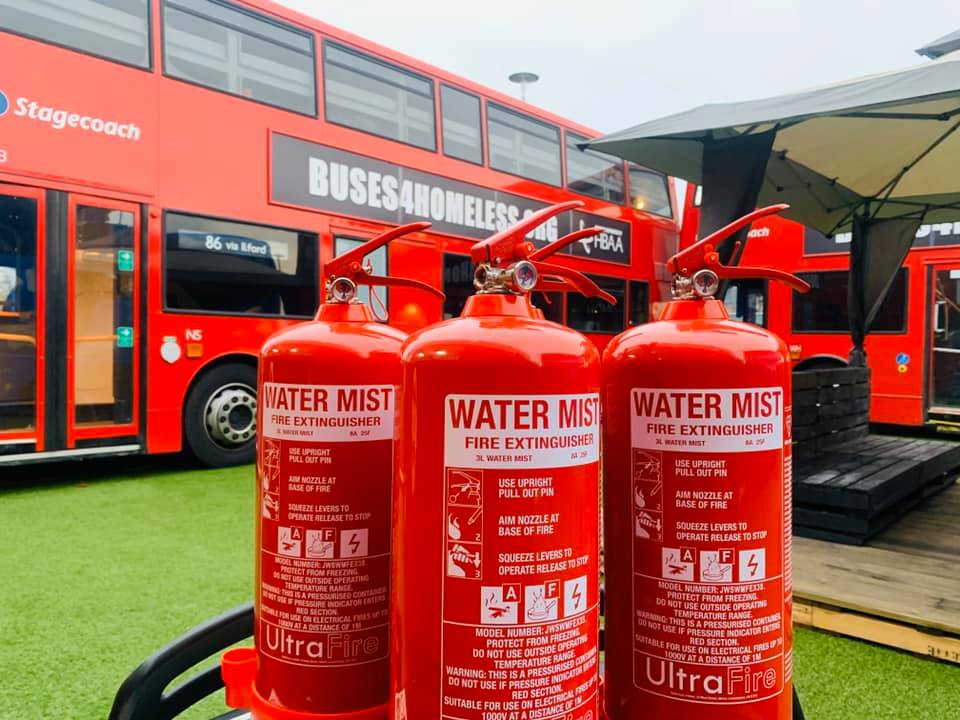
Some water extinguishers have passed the 35kV dielectric test specified in BS EN3. These units may be marked as suitable for use on live electrical equipment up to 1000V at a distance of one metre.
When Should You Never Use a Water Fire Extinguisher?
Understanding the limitations of water fire extinguishers is as important as knowing their capabilities. You should never use a water fire extinguisher on:
Class B Fires (Flammable Liquids)
Water is denser than most flammable liquids, such as petrol, diesel or paint. It sinks below the liquid surface and fails to create an effective barrier. Worse, the water can cause the burning liquid to splash and spread, worsening the fire rather than extinguishing it.
Class C Fires (Flammable Gases)
Water is ineffective against gas fires. The primary danger with gas fires is the escaping gas itself. Extinguishing the flame without shutting off the gas supply creates an explosion risk as an invisible cloud of gas builds.
Class F Fires (Cooking Oils and Fats)
Water reacts violently with hot cooking oils. When water contacts oil heated above 340°C, it instantly vaporises into steam. This explosive expansion can spray burning oil in all directions, causing severe injuries and spreading the fire throughout the kitchen.
How Do You Operate a Water Fire Extinguisher Safely?
Operating a water fire extinguisher correctly can make the difference between successfully controlling a small fire and allowing it to spread. The standard method uses the PASS technique. It’s simple but effective.
1. Pull the safety pin or break the tamper seal. This unlocks the operating mechanism. Hold the extinguisher upright with the nozzle pointing away from you.
2. Aim the nozzle at the base of the flames, not at the top. Fires burn upwards, but the fuel is at the bottom. Attacking the base cuts off the fire’s fuel source.
3. Squeeze the handle slowly and steadily. This opens the valve and releases the water stream. You should stand at least two to three metres from the fire for safety.
4. Sweep the nozzle from side to side across the base of the fire. Continue sweeping until all visible flames are extinguished. Keep watching for several minutes after the fire is out in case reignition occurs from smouldering materials.
Always ensure you’ve got a clear escape route behind you before attempting to fight any fire. If the fire is larger than a waste paper bin, spreading rapidly, there’s heavy smoke or you feel unsafe, evacuate immediately and call 999. Your life is more valuable than any property.
What’s the Difference Between Water Jet and Water Mist Extinguishers?
Water jet extinguishers discharge a high-pressure stream of water. This stream can reach up to 10 metres, allowing you to fight fires from a safe distance. The powerful jet penetrates deep into burning materials, making it effective against deep-seated fires. However, the concentrated stream covers a smaller surface area at once.
Water mist extinguishers discharge water as a fine mist through a special nozzle. The mist rapidly covers a much larger surface area. This creates a more efficient cooling effect and reduces water damage compared to a jet. The mist also creates a partial barrier between you and the fire, offering better protection from radiant heat.2
How Do Water Mist Extinguishers Differ from Standard Water Extinguishers?
Water mist extinguishers represent an evolution in fire extinguisher technology. They discharge water as microscopic droplets, typically 10-100 microns in diameter. This creates dramatically more surface area compared to standard water streams.
The increased surface area means more efficient heat absorption. Water mist extinguishers can tackle Class A fires just as effectively as standard units, often with smaller capacities. Many water mist models also carry ratings for Class B and Class F fires, making them more versatile than their traditional counterparts.
The microscopic droplets have another crucial advantage. They don’t form a continuous conductive path for electricity. This allows water mist extinguishers to be used safely on live electrical equipment up to 1000V at a distance of 1 metre.
Water mist also causes less collateral damage. The fine droplets evaporate quickly rather than pooling on floors or soaking into furnishings. This makes water mist extinguishers ideal for offices, heritage buildings, museums and other locations where water damage would be costly or devastating to operations.
Why Choose Safelincs
Choosing the proper fire extinguisher for your premises is a critical safety decision that shouldn’t be rushed. At Safelincs, we offer a comprehensive range of water and water-mist fire extinguishers for every application, from small offices to large warehouses.
Our expert team can help you select the correct type and rating for your specific fire risks, ensuring you’re protected without overspending on unnecessary capacity.
We provide delivery, installation and commissioning services to ensure your fire protection meets UK regulations and gives you complete peace of mind. Contact our fire safety specialists today for personalised advice on selecting and placing water fire extinguishers.
All information correct at time of posting.