Friday 13th February 2026
Key Takeaways
- Fire doors contain fire and smoke in the room where a fire starts.
- FD30 fire doors resist fire for 30 minutes and FD60 doors provide 60-minute protection.
- You need fire doors in all non-domestic properties, flats and houses of multiple occupancy.
- Intumescent strips expand when heated to seal gaps between the door and frame.
- A competent person must fit fire doors to ensure they work correctly.
- Using wedges or props to hold fire doors open is illegal and dangerous.
- Fire door retainers like Dorgard let you hold fire doors open legally.
- You should inspect and maintain fire doors regularly, with frequency based on building type and risk.
- You can paint fire doors with standard decorative paint without affecting their rating.
- Building regulations specify where you need fire doors in domestic properties.
Most of us walk through fire doors every day at home, at work or in public buildings. But how much do you actually know about them? We’ve put together expert answers to the most common fire door questions based on what customers ask our fire safety specialists. You can also read more about the role of fire doors in buildings.
What Makes Fire Doors So Important for Building Safety?
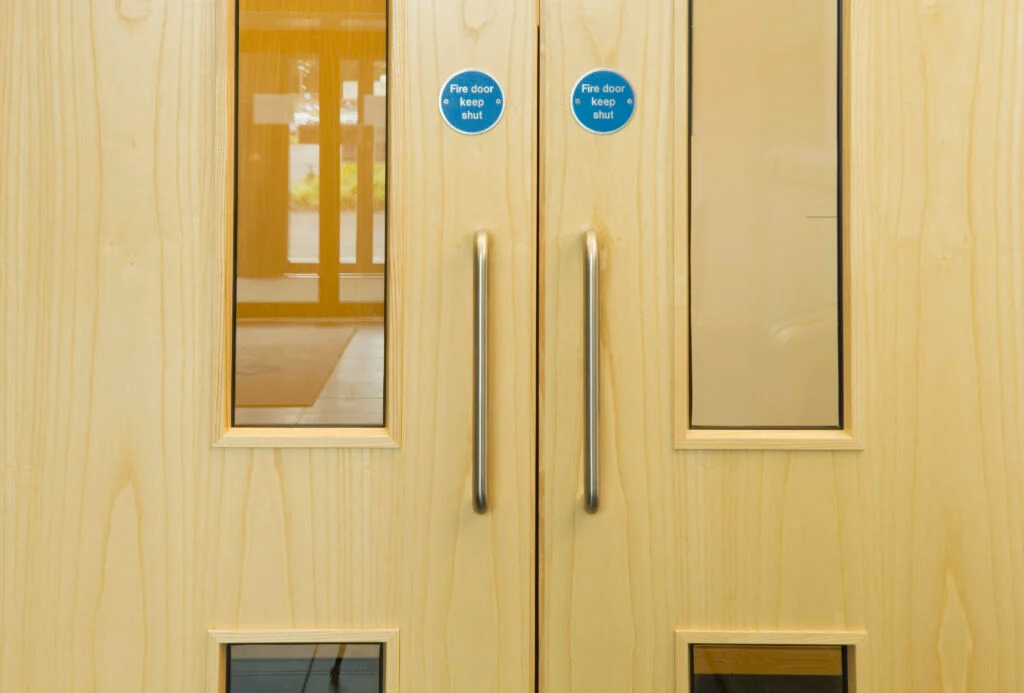
Fire doors keep fire and smoke contained in the room where a fire starts. They stop flames and toxic smoke from spreading to other parts of the building. This makes them a key part of any building’s passive fire protection, working alongside fire alarms, emergency lighting and escape routes to protect lives and property.
What Do Fire Doors Actually Do?
Fire doors do three things that save lives and reduce property damage:
- They compartmentalise buildings: Fire stays in the room where it starts
- They protect escape routes: Corridors and stairways stay clear from fire, giving people more time to evacuate and giving firefighters better access
- They limit damage: The rest of the building, its contents and neighbouring properties stay protected
How Do Fire Doors Work to Prevent Fire Spread?
Fire doors stop fire from spreading for a set period. Manufacturers build them from materials that withstand fire for either 30 minutes or 60 minutes, depending on the rating.
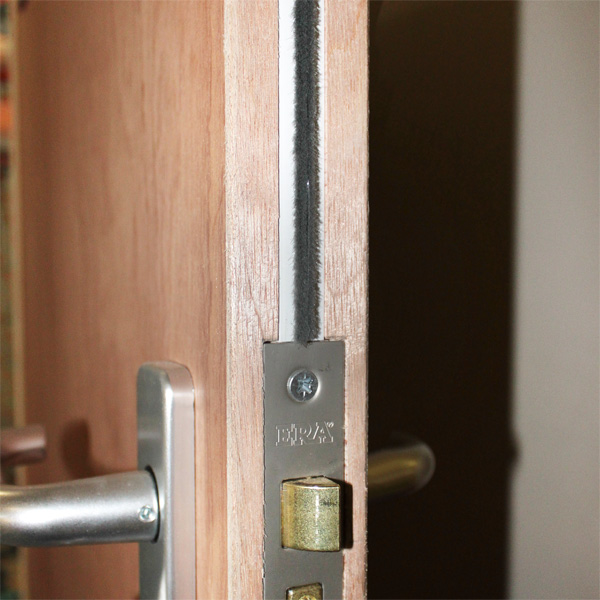
Every fire door has intumescent strips fitted in a groove around its edges. When a fire breaks out, heat makes these strips expand rapidly. They fill the gap between the door and frame, seal the room and stop fire spreading for the rated time.
Here’s the thing: a fire door only works if it’s closed when fire breaks out. So you should always fit your fire door with an automatic fire door closer and the right signage.

How Are Fire Doors Made and Certified?
Fire doors are thicker than standard doors. Most have a solid core made from various materials. Construction varies between manufacturers, but every door must be tested and certified to withstand fire for at least 30 minutes.
Here’s how certification works:
1. Manufacturers send their fire door and frame designs for testing as a complete set at an approved testing centre
2. After successful testing, the design goes forward for certification
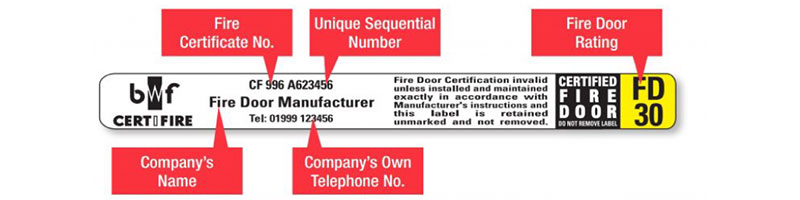
3. Once approved, every fire door set built to those specifications gets a certification label
| Information on Label | Location |
|---|---|
| Manufacturer details | Top edge of door |
| Date of manufacture | Top edge of door |
| Fire rating (FD30/FD60) | Top edge of door |
| Certification scheme | Top edge of door |
How Long Do Fire Doors Hold Back Fire?
Manufacturers test fire doors and frames to hold back fire for specific periods:
| Fire Door Rating | Fire Resistance Time | Typical Use |
|---|---|---|
| FD30 | 30 minutes | Homes, flats, offices |
| FD60 | 60 minutes | Higher-risk areas, care homes, escape routes |
| FD90+ | 90+ minutes | Specialist applications (rarely needed) |
How well a fire door performs depends on proper installation with the right seals and fire-rated hardware, including fire door closers. Fire doors in busy areas can wear out over time, so check them regularly and sort out any maintenance issues quickly. The Fire Safety (England) Regulations 2022 set specific inspection frequencies for residential buildings over 11m.
Browse our range of FD30 and FD60 fire doors to find certified options for your building.
Are Fire Doors a Legal Requirement in the UK?
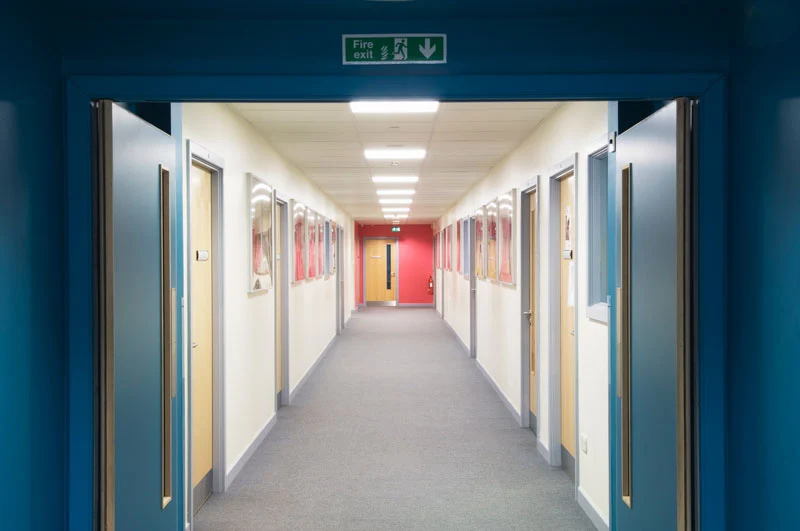
Yes. You need fire doors in all non-domestic properties: businesses, commercial premises and public buildings. They’re also mandatory in residential flats and houses of multiple occupancy.
The Regulatory Reform (Fire Safety) Order 2005 says building operators in England and Wales must appoint a Responsible Person to manage fire safety. Part of their job is reducing the risk of fire spreading through the building.
Your fire risk assessment should identify:
- Where you need fire doors
- What rating each door should have
- Any extra requirements like smoke seals (FD30s/FD60s)
Do I Need Fire Doors in My House or Flat?
Fire-rated doors add valuable protection in domestic properties. Here’s what you need to know.
Houses and Bungalows
Building regulations set out where you need fire doors:
| Situation | What You Need |
|---|---|
| New builds or renovations with 3+ floors | Fire doors on every habitable room leading from a stairwell |
| Loft conversions creating a third floor | Fire doors on rooms leading from the stairwell |
| Door between your home and integral garage | Must be a fire door |
| Standard two-storey homes | Not legally required, but worth considering |
FD30 fire doors work well in most domestic situations.
Flats and HMOs
Your building should have a fire risk assessment that specifies door requirements. Building Regulations Approved Document B (Volume 1: Dwellings) sets these standards.
| Flat Location | What You Need |
|---|---|
| Entrance door onto communal areas | FD30 fire door |
| Flats 4.5m+ above ground level | Fire doors between all habitable rooms, plus entrance door |
| Ground floor flats | Fire door at entrance if it opens onto a communal area. You usually don’t need internal fire doors if each room has an escape route |
Can I Paint Fire Doors?
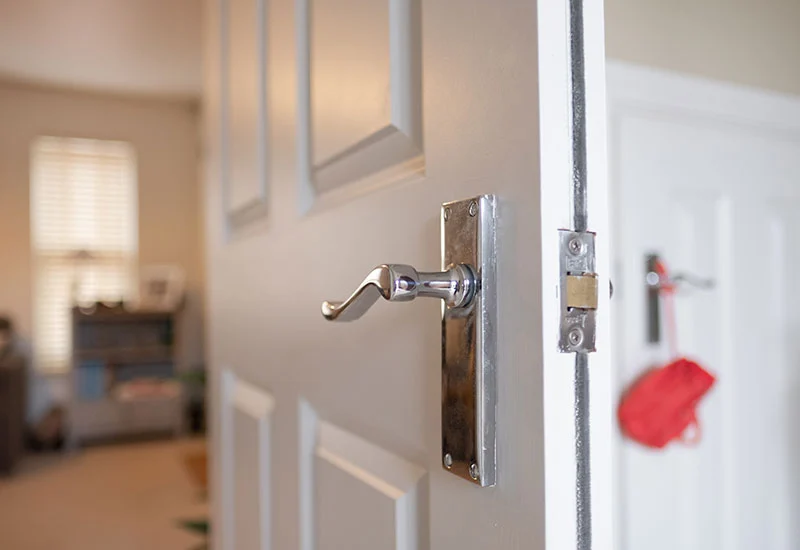
Yes. You can use regular decorative paint or varnish on fire doors without affecting how they perform. You don’t need special fire-resistant paint.
What to avoid when painting:
- Don’t use heat or chemical paint strippers near intumescent seals
- Don’t paint over hinges, hardware or seals
- Don’t apply so many coats that the door can’t close properly
What about style?
You don’t have to sacrifice looks. Fire doors come in various finishes: real wood veneer (oak, walnut, ash, sapele), Formica laminate and pre-painted RAL colours.
Can I Leave Fire Doors Open Legally?
Only if you use approved devices like a fire door retainer or hold-open free-swing door closer.
Never prop or wedge fire doors open. It’s dangerous and illegal. Fire doors have self-closing devices so they shut automatically if fire breaks out. If you wedge a fire door open, it can’t stop fire spreading.
Legal Ways to Hold Fire Doors Open
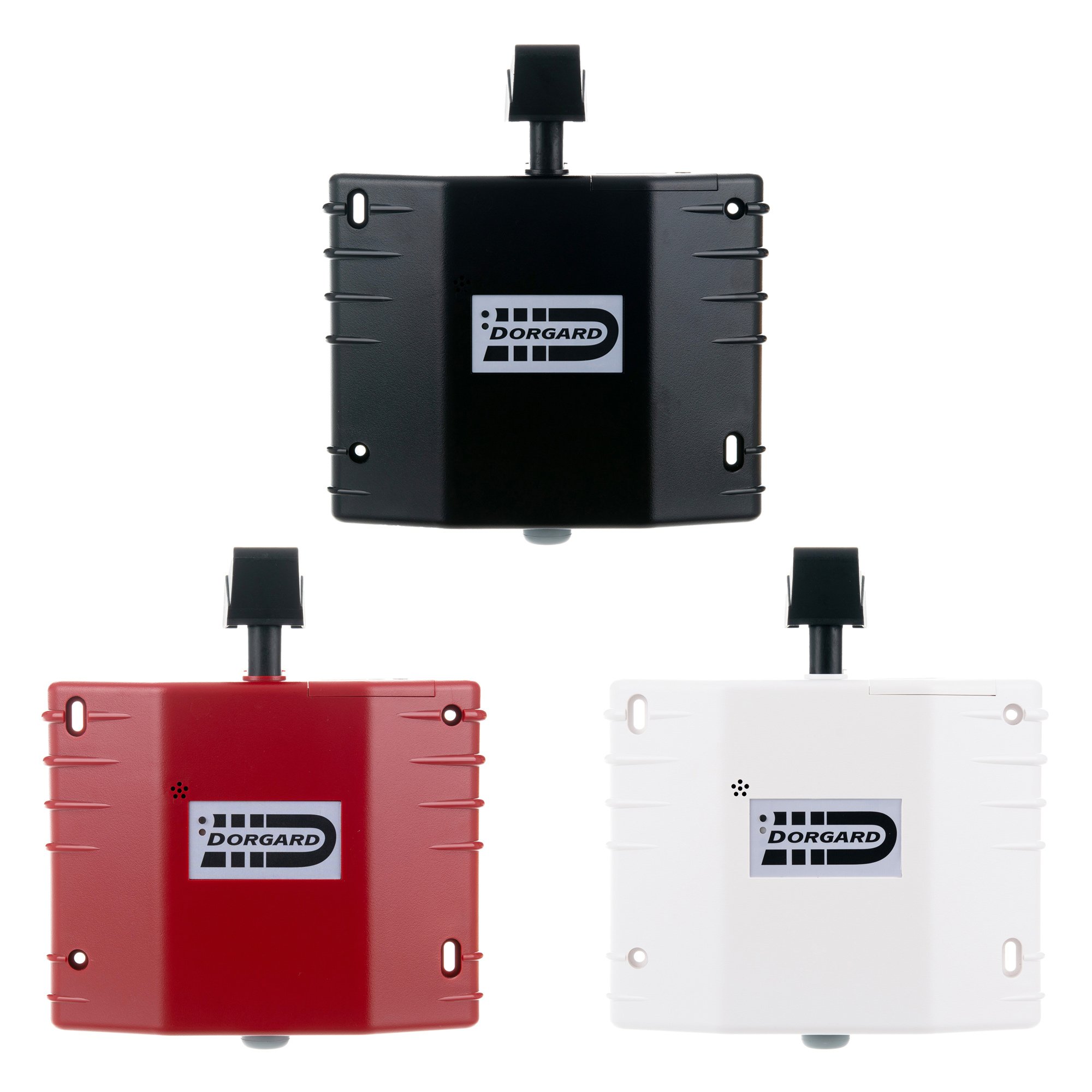
Fire door retainers like Dorgard give you a practical, legal solution when you need fire doors to stay open for accessibility or ventilation:
| Product | How It Works | Best For |
|---|---|---|
| Dorgard Fire Door Retainer | Plunger releases at 65dB when fire alarm sounds | Retrofitting existing doors |
| Free-swing door closer | Door moves freely but closes automatically when alarm activates | High-traffic areas, care homes |
| Electromagnetic holders | Wired to fire alarm panel and releases when power cuts | New builds, noisy environments |
Dorgard Fire Door Retainers
- Hold fire doors open legally at any angle
- Wire-free plunger-based design
- BS EN 1155:1997 and BS EN 1634-1
- Triggered acoustically at 65dB
- FREE extended 5-year warranty
- FREE shipping
£89.58 ex VAT | £107.50 inc VAT
Who Can Install Fire Doors?
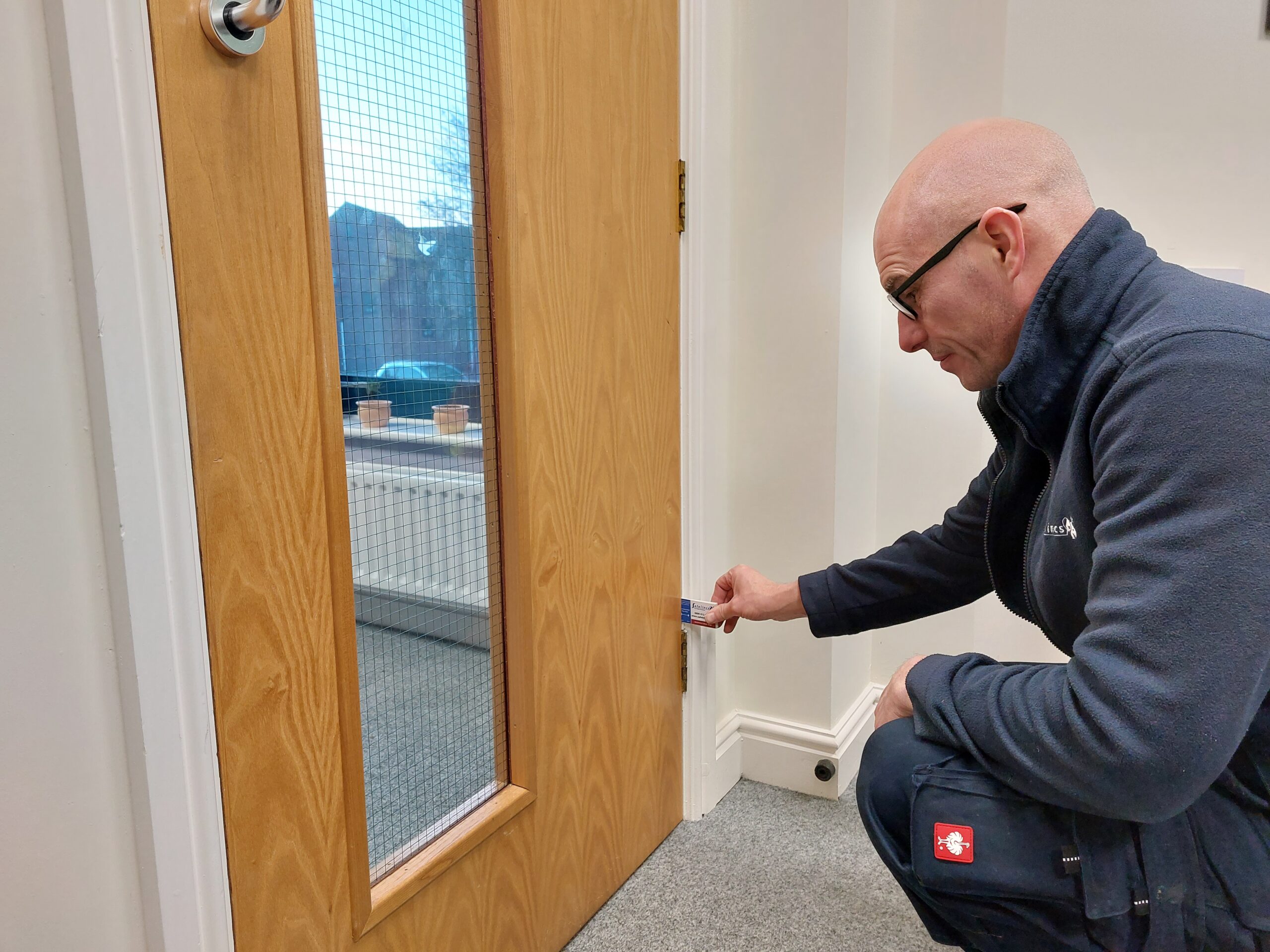
A competent person with relevant training, experience and joinery skills must fit fire doors. Whatever a fire door’s rating, poor installation could mean it fails within five minutes.
Key installation requirements:
- Gap between fire door and frame: no more than 4mm at the top and sides (with 2-4mm being the industry standard)
- Intumescent seals positioned correctly
- Fire-rated hinges and hardware fitted properly
- Door closes fully and latches correctly
The Code of Practice for Fire Door Assemblies doesn’t require installers to hold specific certification. But the Fire Safety Order says a competent person must carry out the work: someone with the right training, experience, qualifications and knowledge.
Professional Fire Door Installation
Using qualified installers gives you confidence that everything meets requirements and your fire door will work when it matters.
Our Fire Door Installation Service
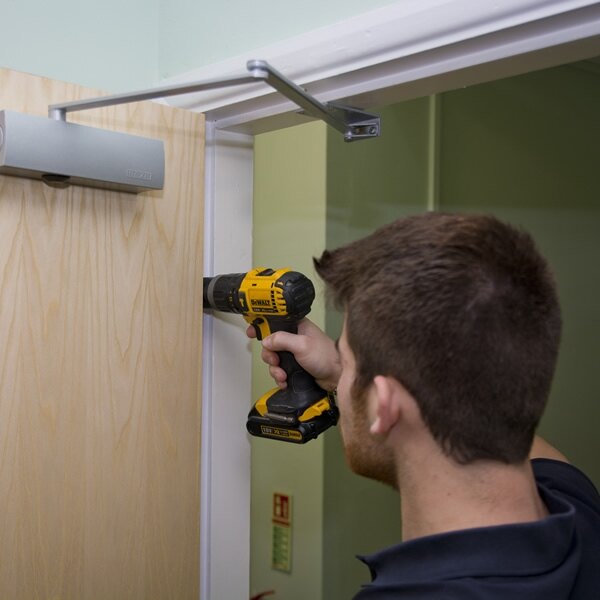
- Nationwide service by certified fire door installers
- We install all fire door sets and hardware purchased from Safelincs
- Complete fire door and frame installation available
- Experienced installers who know what they’re doing
£719.79 ex VAT | £863.75 inc VAT
Frequently Asked Questions
What is the difference between FD30 and FD60 fire doors?
How often should I inspect fire doors?
Can I fit a fire door myself?
What happens if someone props fire doors open illegally?
Do fire doors need intumescent strips?
Ask a Question
Still got questions about fire doors? Ask one of our experts on our fire safety forum.
All information correct at time of publication.
All information correct at time of posting.