Monday 16th February 2026
A flammable store is required when you store flammable liquids that exceed specific threshold quantities in your workplace. The Dangerous Substances and Explosive Atmospheres Regulations 2002 (DSEAR) require flammable substances to be stored safely to prevent fire, explosion, and harm to people. Proper storage in flammable liquid cabinets helps you comply with these legal requirements and protects your workplace.
Estimated reading time: 5 minutes
Key Takeaways
- A flammables store is required when storing flammable liquids above specific quantities in the workplace.
- DSEAR 2002 requires risk assessments and safe storage of all dangerous substances.
- HSE guidance recommends 50 litres as a maximum for extremely flammable, highly flammable, and flammable liquids with a flashpoint below ambient temperature in workroom cabinets.
- Your workplace type, substance classification and risk assessment determine specific storage needs.
- Flammable stores must meet construction standards, be appropriately located, and be adequately ventilated
Disclaimer: This guide provides general information about flammable storage requirements in the UK. It doesn’t constitute legal or professional advice. Always consult relevant regulations, conduct proper risk assessments, and seek professional guidance for your specific circumstances.
What Are the Legal Requirements for Storing Flammable Liquids?
The primary legal requirement is compliance with DSEAR 2002. This requires you to eliminate or reduce the risks posed by dangerous substances. You must conduct a risk assessment, provide appropriate storage, ensure proper ventilation and put control measures in place.
The Health and Safety Executive (HSE) enforces these requirements and provides guidance on compliance. Failure to comply can result in prosecution and fines. More importantly, it can lead to serious consequences if an incident occurs.
DSEAR applies to nearly all workplaces and covers any substance that could cause fire or explosion. If you store petrol, solvents, paints or other flammable liquids, you need to follow these rules.
What Storage Thresholds Trigger the Need for a Flammables Store?
Storage thresholds vary depending on the flashpoint and quantity of your liquids. HSE guidance recommends that 50 litres is a maximum for extremely flammable, highly flammable, and flammable liquids with a flashpoint below ambient temperature when stored in workroom cabinets. For flammable liquids with a higher flashpoint (up to 60°C), the recommended maximum is 250 litres.
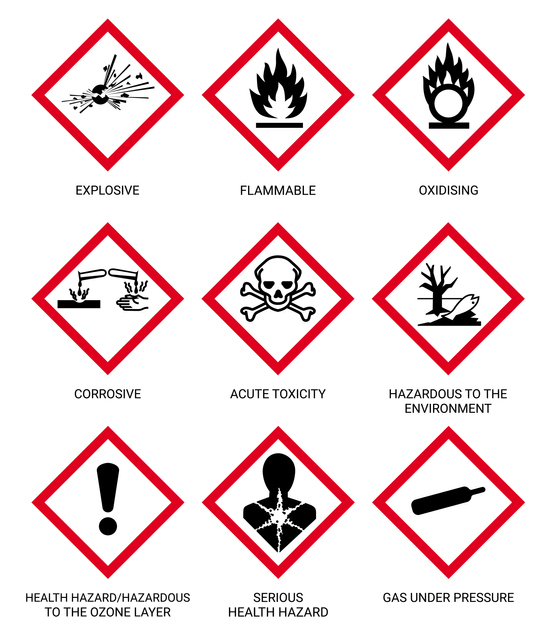
Understanding how substances are classified helps you determine your storage needs. Under the current GB CLP Regulation, flammable liquids are classified into three categories:
| Classification | Flashpoint | Examples | Storage Considerations |
|---|---|---|---|
| Category 1 | Below 23°C and boiling point ≤35°C | Diethyl ether, pentane | Requires dedicated storage even in small quantities |
| Category 2 | Below 23°C and boiling point >35°C | Petrol, acetone, methanol, white spirit, and many solvents | Dedicated storage recommended; maximum 50 litres in workroom cabinets |
| Category 3 | 23°C to 60°C | Paraffin (kerosene), diesel, and some oils | Storage requirements based on quantity and risk assessment; maximum 250 litres in workroom cabinets for those with flashpoint above ambient |
(Note: The table above reflects current GB CLP classification. Older terminology such as “extremely flammable” and “highly flammable” may still be encountered but refers to the now-superseded CHIP Regulations.)
But that’s guidance, not a rigid rule. Your specific circumstances matter. The type of building, proximity to ignition sources and other factors all play a role.
Your risk assessment determines the appropriate storage method. It considers the specific substances, quantities and workplace conditions. Two workplaces storing the same liquid might need different solutions based on their circumstances.
Which Workplaces Need Flammables Stores?
Any workplace that stores flammable liquids, solvents, paints, adhesives, or chemicals in quantities above safe levels requires appropriate storage. Manufacturing facilities, workshops and laboratories are prominent examples. Maintenance areas, schools, hospitals and even retail environments might need them too.
Small offices aren’t exempt. Even small quantities in communal areas may require proper storage if your risk assessment identifies significant hazards. A cleaning cupboard full of spirit-based cleaners could pose a real risk.
The deciding factor isn’t your workplace type. It’s the substances you store and the risks they present. A school art department with litres of white spirit needs the same care as an industrial paint shop. Same substance, same risks.
What Makes a Proper Flammables Store?
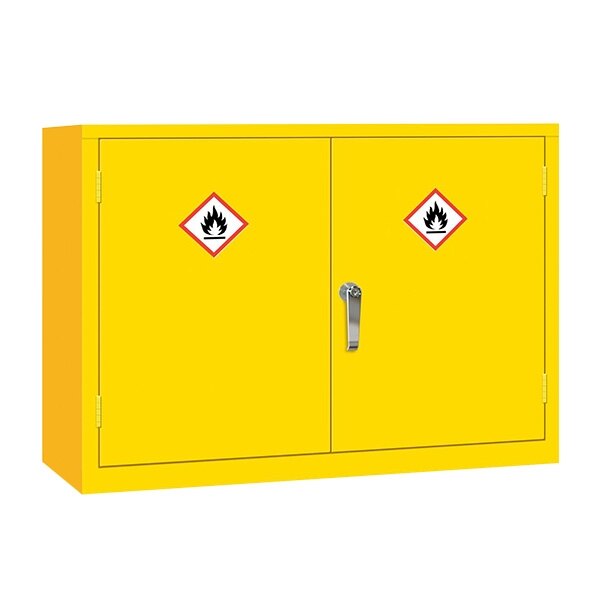
A proper flammables store is a cabinet constructed from steel with fire-resistant properties. It needs secure locking mechanisms to prevent unauthorised access. You don’t want untrained people handling dangerous substances.
The cabinet must provide spill containment capable of retaining 110% of the volume of the largest container stored inside. Flammable liquids that leak can spread quickly and create a significant hazard. Adequate ventilation prevents vapour accumulation inside the cabinet. The vapours are often more dangerous than the liquid itself.
Clear labelling matters. Everyone needs to know what’s inside and what hazards they’re dealing with. Position the cabinet away from ignition sources, escape routes, and high-traffic areas. You don’t want a flammables store blocking your fire exit or sitting next to a boiler.
Size and capacity should match your storage needs without encouraging overstocking beyond safe limits.
How Do COSHH Regulations Affect Flammable Storage?
The Control of Substances Hazardous to Health Regulations 2002 (COSHH) overlap with DSEAR requirements for many flammable substances. COSHH focuses on health risks from substances, while DSEAR focuses on fire and explosion risks. Many flammable liquids are covered by both sets of regulations.
You must assess the health risks posed by your substances and prevent or control exposure. That means maintaining your control measures and providing your staff with proper information and training. Not optional extras.
A flammable liquid that emits harmful vapours requires storage that addresses both concerns. Your cabinet must prevent fire risks under DSEAR and health risks under COSHH. That’s why proper ventilation is so important. It tackles both vapour accumulation and exposure in one go.
Need Help With Flammable Storage?
Choosing the proper storage solution can feel complicated. The regulations overlap, and your specific needs depend on many factors. Getting it right protects your people and your premises, though.
We’ve helped thousands of businesses find the right flammable storage solutions. Our team understands the regulations and can guide you through your options. Contact us for expert advice on keeping your workplace safe.
All information correct at time of posting.