Sunday 15th February 2026
Key Takeaways
- A continuous alarm may mean smoke, dust, dirt, damage or an alarm that’s passed its 10 year lifespan.
- Intermittent beeping or chirping usually signals a low battery, and this is more common at night when temperatures drop.
- Mains powered smoke alarms have backup batteries that can chirp when they run low.
- You should replace smoke alarms every 10 years because the sensors deteriorate over time.
- Placing your alarm in the wrong spot (near kitchens, bathrooms or draughty areas) can trigger false alarms.
- We offer replacement options for discontinued models, often without needing an electrician.
Is your smoke alarm beeping in the night and keeping you awake? Or perhaps it’s disturbing your day? Whether you’ve got mains powered interlinked smoke alarms or battery powered ones, follow our guidance below to troubleshoot the beeping and get some peace back.
What Type of Sound Is Your Smoke Alarm Making?
Before you start troubleshooting, work out what type of sound your smoke alarm is making. This’ll help you pinpoint the cause and find the right fix.
Note: Beep patterns vary by manufacturer and model. Always check your alarm’s user manual for the specific meanings of different sounds.
| Sound Type | Pattern | Likely Cause | Urgency |
|---|---|---|---|
| Continuous loud alarm | Non-stop sounding | Smoke or fire detected, dust or fault | High: check for fire straight away |
| Intermittent chirping | Single beep every 30 to 60 seconds | Low battery | Medium: replace battery soon |
| Rapid beeping | Multiple quick beeps | End of life warning or malfunction | Medium: replace alarm |
Why Is My Smoke Alarm Sounding Continuously?
A smoke alarm that won’t stop sounding needs your attention straight away. Follow these steps to work out what’s going on.
First, check there’s no smoke or fire in your property.
If there’s no fire, look into these common causes:
Could it be another alarm? Make sure the beeping is definitely coming from your smoke alarm. Other alarms in your home, such as a carbon monoxide alarm or burglar alarm, could be making the noise.
Is dust or dirt setting it off? Give the alarm a clean if it’s dusty or dirty. Vacuum around the alarm or use a hairdryer on a cool setting to blow out any dust from the sensor chamber.
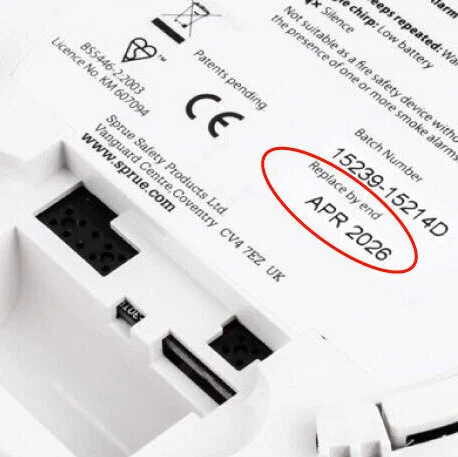
Has your smoke alarm reached its expiry date? Check the “replace by” or manufacture date on the back of your alarm. Smoke alarms last a maximum of 10 years. If the manufacturing date is approaching or past 10 years, it’s time for a new one. The sensors inside deteriorate after this point, making the alarm less effective at detecting fires.
Is your alarm in the wrong spot? Different sensor types work best in different locations. An optical smoke alarm in a kitchen, for example, may go off from cooking fumes.
Could the alarm be damaged or faulty? Water, fire, grease and certain paints can all cause faults. If you think there’s damage, replace your smoke alarm straight away to keep your home and family safe.
Why Is My Battery Smoke Alarm Chirping Intermittently?
An intermittent chirp or beep (typically once every 30 to 60 seconds) almost always means a low battery. Here’s what to do.
Replace the battery. Make sure you’re using the right battery type and inserting it the right way round. A low battery is more likely to sound at night because a drop in room temperature reduces its ability to power the alarm.
Check how old your alarm is. Smoke alarms last a maximum of 10 years. If the manufacturing date on yours is approaching or past 10 years, it’s time for a replacement. Even with a fresh battery, an old alarm may chirp because the sensors are wearing out.
Look for signs of damage. Water, fire, grease and certain paints can cause faults. If you suspect a problem, replace your smoke alarm straight away.
| Battery Type | Typical Lifespan | When To Replace |
|---|---|---|
| Alkaline 9V (PP3) | 12 to 18 months | We recommend annually, or every 6 months for maximum safety |
| Alkaline AA | 12 to 18 months | We recommend annually |
| Lithium 9V | Up to 5 years | When it starts chirping |
| Sealed lithium (10 year) | 10 years | Replace the entire alarm |
Buy replacement smoke alarm batteries so your family gets alerted if there’s ever a fire in your home.
Why Is My Mains Powered Smoke Alarm Chirping Intermittently?
All new or recently extended homes should have mains powered interlinked alarms fitted. These also contain a backup battery to keep you protected during power cuts. Some makes/models contain replaceable batteries, whereas some have sealed batteries which cannot be replaced. Please check your user manual for more information.
The most common cause of chirping in mains powered alarms is a low backup battery.
Even though your alarm connects to the mains electricity, you’ll still need to replace the backup battery from time to time. Here’s how to stop the chirping:
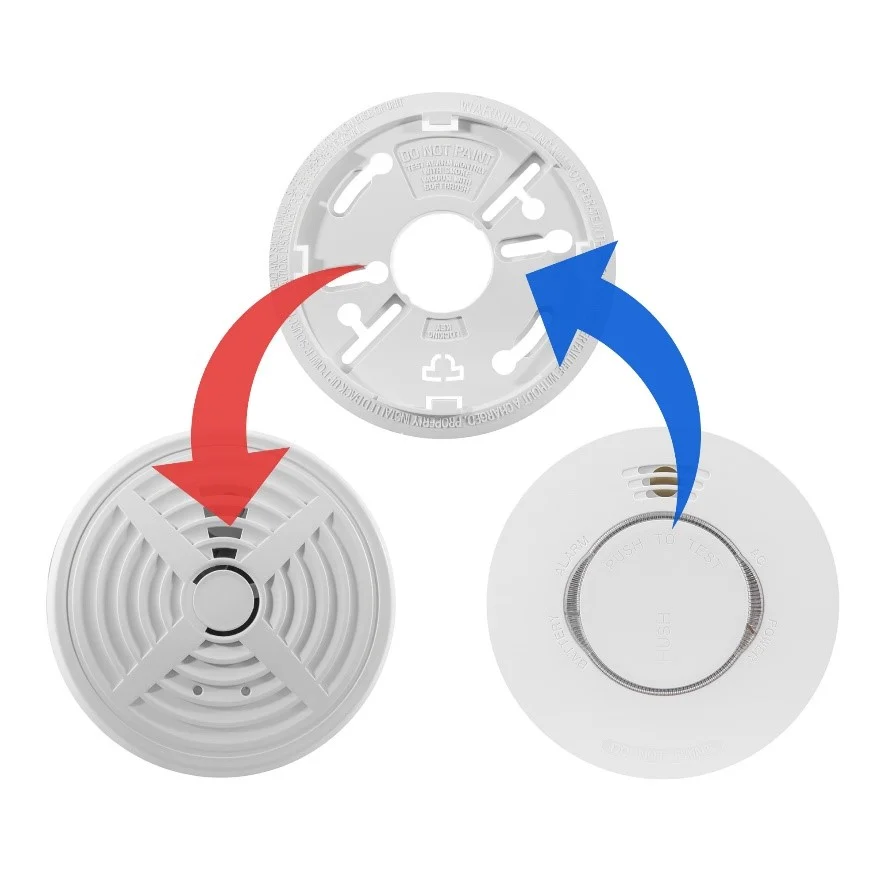
- Locate the battery compartment (usually by twisting the alarm off its base)
- Replace the backup battery with the correct type for your alarm
- Press the test button to check it’s working
If your alarm keeps chirping after you’ve replaced the backup battery, it may have reached the end of its 10 year lifespan and need replacing altogether.
What Replacement Batteries Do Smoke Alarms Need?
Smoke alarms typically need one of these battery types:
- Alkaline AA batteries (usually two)
- Alkaline 9V battery (PP3)
- Lithium 9V battery (lasts longer)
Check the label on your smoke alarm or look in the user manual to confirm the right type. Using the wrong battery can cause problems or void your warranty.
How Do I Replace a Mains Powered Smoke Alarm?
You should replace smoke alarms after 10 years, whether they’re mains powered or battery powered. The sensors deteriorate over time. Battery alarms are easy to swap out, but what about mains powered ones?
Good news: you can replace most mains powered alarms without calling an electrician if you buy the exact same model (if it’s still available) or an Easichange® replacement.
What If My Smoke Alarm Model Has Been Discontinued?
Need a replacement but can’t find your model anymore? We offer a dedicated collection of replacement smoke and heat alarms. We’ve chosen these specifically to be the simplest, most direct replacements, and you can often fit them without needing an electrician.
How Can I Prevent False Alarms?
The sensor type in your alarm determines where you should put it. False alarms often happen because the wrong alarm type is too close to a steamy, dusty or smoky area.
| Alarm Type | Best Locations | Keep Away From |
|---|---|---|
| Heat alarms | Kitchens, garages, dusty workshops | Bedrooms, hallways (use smoke alarms there instead) |
| Optical smoke alarms | Bedrooms, living rooms, hallways | Kitchens, bathrooms, garages |
| Ionisation smoke alarms (discontinued) | Landings, hallways | Areas near kitchens or bathrooms |
Spots to Avoid When Fitting Smoke Alarms
To prevent false alarms or poor performance, don’t fit alarms in these spots:
- Next to doors, windows, air vents or fans that create a draught
- Outside or in unheated spaces
- Anywhere curtains or furniture would block the airflow
- Steamy or humid rooms like shower rooms
- In kitchens (use a heat alarm instead of a smoke alarm)
| Problem | What To Do |
|---|---|
| Continuous alarm with no fire | Clean the alarm, check its position or replace it if it’s over 10 years old |
| Intermittent chirping (battery alarm) | Replace the battery straight away |
| Intermittent chirping (mains alarm) | Replace the backup battery – if your unit has a replaceable battery inside. |
| Alarm over 10 years old | Replace the whole unit |
| Frequent false alarms | Check where it’s positioned and consider a different alarm type |
| Discontinued alarm needs replacing | Use an Easichange® or compatible replacement |
Don’t wait to change or replace a faulty smoke alarm. It’s one of the most important things you can do to keep your home and family safe. If you need any help, call our customer service team on 0800 612 6537 or email us.
All information correct at time of posting.