Wednesday 22nd July 2026
A factory isn’t an office. A warehouse isn’t a shop. The fire risks are different, the legal duties are more layered, and the consequences of getting it wrong are far greater.
Industrial fires account for around a quarter of all workplace fires in England (the highest proportion of any commercial sector), and the hazards that drive that figure aren’t always the obvious ones. Safelincs has put together this guide to walk you through industrial fire safety from the ground up: the regulations you’re responsible for, the risks you face, the equipment that keeps people safe, and the practical steps that keep your site compliant. Whether you manage a manufacturing plant, oversee a warehouse or run a distribution facility, you’ll find what you need here.
What Is Industrial Fire Safety?
Industrial fire safety is the full set of measures, systems and procedures put in place to prevent fires and explosions in factories, warehouses, manufacturing plants and similar premises, limiting harm to people and property when a fire does occur.
What separates industrial fire safety from general workplace fire safety is the scale and variety of risk. An industrial site typically combines multiple hazard types at once: combustible raw materials, flammable liquids, electrical systems and battery storage systems under sustained load, high-temperature processes, heavy machinery, and large numbers of workers who may be spread across a complex layout. Throw in the possibility of explosive atmospheres and you have an environment that demands a more detailed, layered approach than most other buildings.
Industrial fire safety covers physical equipment (fire extinguishers, detection systems, emergency lighting and safety signs) alongside the strategy and management processes that keep risks under control: fire risk assessments, staff training, maintenance schedules and hot works permits. The responsible person for the premises, usually the employer or anyone with day-to-day control of the site, carries the legal duty to make sure all of that is in place. That’s a significant responsibility, and it’s one we can help you manage.
Causes of Industrial Fires and Explosions
Understanding what causes industrial fires is the foundation of preventing them. The causes aren’t always the dramatic ones you might expect.
Electrical Faults: The Most Common Ignition Source
Electrical distribution failures are the single largest identifiable cause of workplace fires, responsible for approximately 18% of all incidents. In factories and warehouses, the scale of electrical systems is far greater than in a standard office: large machinery drawing sustained loads, complex distribution boards, and extensive wiring across wide floor areas. Overloaded circuits, damaged wiring and poorly maintained equipment can all start a fire inside walls, with no visible warning until it’s too late.
Regular electrical testing is essential. The Electricity at Work Regulations 1989 place a duty on employers to maintain electrical systems in a safe condition, and Electrical Installation Condition Reports (EICRs) are the standard tool for doing so.
Flammable Liquids, Gases and Dangerous Substances
Many industrial processes rely on flammable liquids and gases: solvents, fuels, propane, acetylene, paints and coatings. If these leak onto hot surfaces or accumulate in a poorly ventilated space, fire or explosion can follow quickly. Proper storage, formal handling procedures and a DSEAR risk assessment (covered in the regulations section below) are the key controls.
Combustible Dust: An Often Overlooked Hazard
Combustible dust is one of the more underestimated fire hazards in the workplace. Wood dust, flour, sugar, grain and metal powders can form explosive clouds when suspended in air. A single ignition source, whether a spark, a hot surface or even a static discharge, is all it takes. Regular dust extraction and good housekeeping are among the most effective preventive measures available in any premises where these materials are processed.
Hot Works
Welding, cutting and grinding are a persistent source of industrial fires. Sparks and slag can travel several metres and ignite materials that seem well out of range. A formal hot works permit system, requiring a clear-area check before work begins and a fire watch period after it ends, is standard practice and often a requirement of your insurance policy.
Machinery and Equipment Failure
Furnaces, boilers, kilns and production machinery all generate heat. Poorly maintained equipment, bearing failures and friction events can all generate enough heat to cause ignition. Planned preventive maintenance, combined with keeping flammable materials away from heat sources, goes a long way.
Human Error and Arson
Human error remains a significant cause of industrial fires, whether through mishandling materials or failing to follow established procedures. Arson is also a persistent risk: warehouses and industrial premises are among the most commonly targeted properties for deliberate fire-setting. Good perimeter security, restricted access to storage areas and prompt waste removal all reduce exposure
Lithium-Ion Battery Fires
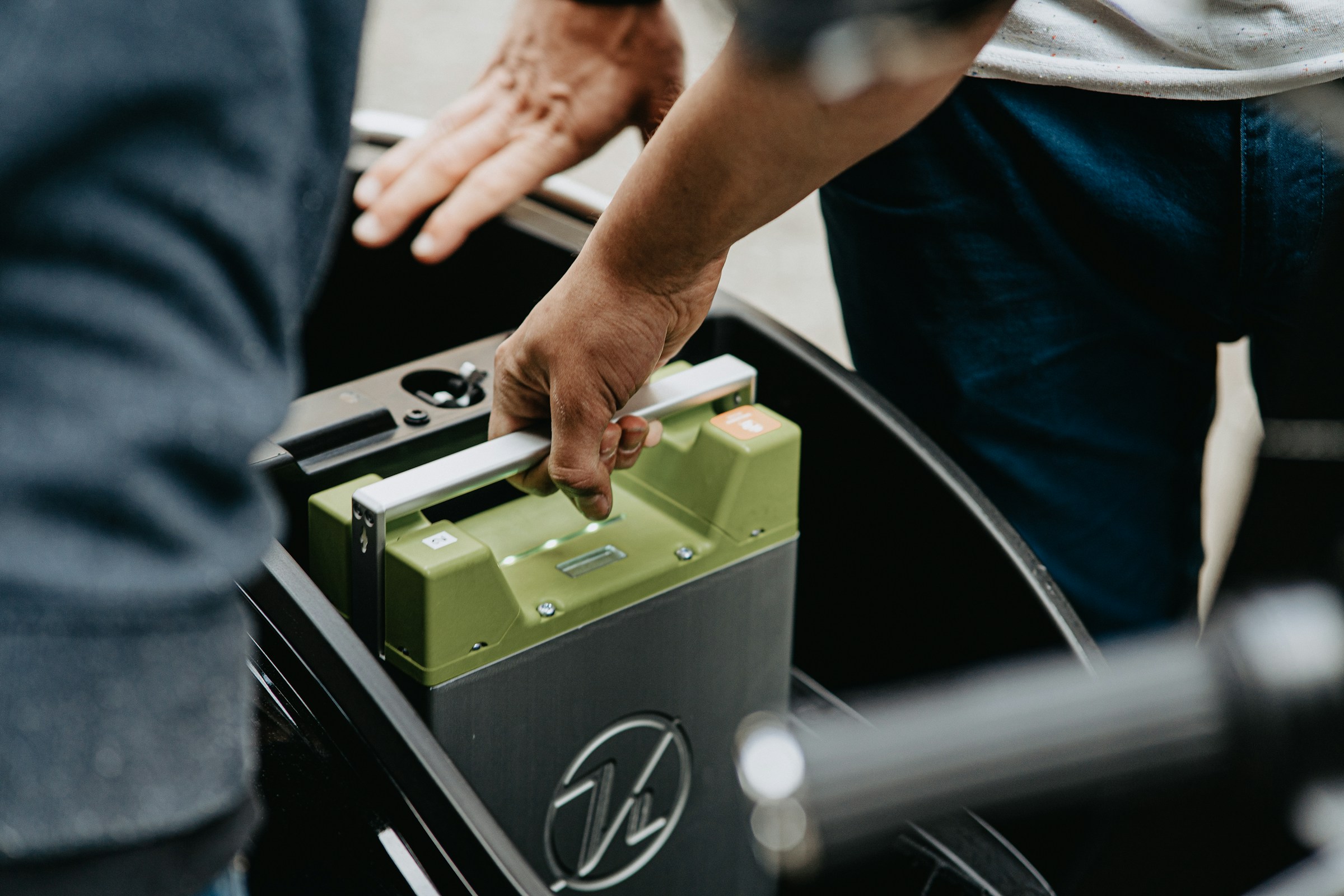
This is a fast-growing risk category in UK warehouses and industrial sites, and one we’re asked about often. Electric forklift trucks and other materials handling equipment rely on lithium-ion batteries, and so do newer additions to the warehouse floor: robotic picking and logistics equipment, and solar PV energy storage batteries installed on site to manage power. Any of these can enter thermal runaway, a self-sustaining internal reaction that generates its own heat and is extremely difficult to stop once it starts.
Storage brings its own version of the risk. Many warehouses and manufacturing sites hold lithium-ion batteries that aren’t currently in use: stock awaiting sale, spares for equipment, or units returned as faulty or of unknown condition. Any battery that’s damaged, swollen or has an uncertain history needs to go into quarantine, physically separated from other stock, until it can be assessed and removed by a competent contractor. Treating these batteries with the same care as the ones in active service is a key part of managing the risk.
Conventional suppression struggles against this type of fire at scale. In large-format installations, such as racking systems or energy storage units, the fire service’s own guidance is that water-based systems are generally used to limit the spread of fire between units rather than to extinguish it outright, and full suppression often can’t be relied on once thermal runaway is underway. Specialist media and containment strategies matter more here than in a single-device fire, and this makes prevention the most important line of defence: physical protection, careful charging practices, early detection and sound storage discipline all count for more than the choice of extinguisher once a large-format fire has taken hold.
Standards and Regulations: What the Law Requires
Fire safety regulations for industrial premises aren’t a single document. They’re a layered framework, and understanding which parts apply to your site is the starting point for compliance.
The Regulatory Reform (Fire Safety) Order 2005 (England and Wales)
The Regulatory Reform (Fire Safety) Order 2005 (the RRO or Fire Safety Order) is the primary piece of fire safety legislation in England and Wales. It applies to virtually all non-domestic premises, including factories and warehouses, and replaced a patchwork of around 70 older laws with a single, risk-assessment-based framework.
Under the Fire Safety Order, the employer is the responsible person in workplaces under their control. The responsible person must carry out a suitable and sufficient fire risk assessment, put general fire precautions in place, and review those precautions regularly. Where five or more people are employed, the assessment must be recorded in writing.
The Fire Safety Order has been strengthened in recent years. The Fire Safety Act 2021 clarified its scope in relation to building structures and flat entrance doors. Section 156 of the Building Safety Act 2022 introduced additional coordination duties for responsible persons in multi-occupied buildings.
Scotland operates under the Fire Safety (Scotland) Regulations 2006. Northern Ireland operates under the Fire Safety Regulations (Northern Ireland) 2010. The core obligations are broadly similar across all jurisdictions, but the responsible person should always refer to the legislation that applies to their specific location.
HSE Fire Safety Regulations: DSEAR and Explosive Atmospheres
For many industrial sites, the Dangerous Substances and Explosive Atmospheres Regulations 2002 (DSEAR) are just as important as the Fire Safety Order. Enforced by the Health and Safety Executive (HSE), DSEAR requires employers to assess the risks from fire, explosion and similar events arising from dangerous substances in the workplace, and to eliminate or reduce those risks as far as reasonably practicable.
DSEAR applies wherever dangerous substances are present, used, stored or produced. That scope is broader than many employers realise. It covers obvious high-risk environments, but it also catches woodworking shops where fine dust accumulates, food manufacturers producing flour or sugar dust, and warehouses storing aerosol products. If a flammable substance is present on your site in any meaningful quantity, DSEAR almost certainly applies.
A specific requirement of DSEAR is hazardous area classification: identifying and mapping zones where explosive atmospheres may form, and ensuring that only appropriately rated (ATEX-certified) equipment is used within them. Omitting a hazardous area classification from a DSEAR assessment is one of the most commonly cited compliance gaps, and a DSEAR assessment without one is generally considered incomplete by enforcement authorities.
Work Process Fire Safety and Supporting Legislation
Beyond the Fire Safety Order and DSEAR, many industrial processes are subject to additional controls. The Management of Health and Safety at Work Regulations 1999 require employers to assess all workplace risks. The Electricity at Work Regulations 1989 cover electrical safety. Hot works are covered by HSE guidance and industry body recommendations, and are frequently specified in insurance policies as requiring formal permit-to-work systems. Work process fire safety, meaning the specific risks arising from what your site actually does rather than just how it’s built, is a distinct element of any industrial fire risk assessment.
British Standards for Industrial Fire Safety
British Standards are codes of practice. They’re not laws themselves, but can be a good point of reference when creating your management processes.
The key standards for industrial fire safety are worth knowing:
| Standard | What it covers |
|---|---|
| BS 5839-1:2025 | Design, installation, commissioning and maintenance of fire detection and alarm systems in non-domestic premises |
| BS 5306-3:2017 | Commissioning and maintenance of portable fire extinguishers |
| BS 5306-8:2023 | Selection and positioning of portable fire extinguishers |
| BS EN 3 | Manufacture and colour coding of portable fire extinguishers |
| BS EN 2 | Classification of fires (Classes A, B, C, D and F) |
How to Prevent Fires and Explosions in Manufacturing Plants
Prevention is always better than response. Fire safety for factories and industrial sites is built on a small number of consistent principles, applied consistently.
Control Ignition Sources
Every fire needs fuel, oxygen and an ignition source. The most practical way to prevent most industrial fires is to control those ignition sources: separating them from flammable materials and explosive atmospheres. In practice, that means hot works permit systems, anti-static measures in dusty environments, ATEX-rated equipment in classified zones and regular checks of electrical equipment for signs of damage or overheating.
Manage Flammable and Combustible Materials
Flammable liquids and gases should be stored in dedicated, ventilated, fire-resistant storage areas, with the quantity in working areas kept to a minimum. This ties into your COSHH duties. The Control of Substances Hazardous to Health Regulations require you to assess and control the risks from hazardous substances and where those substances are flammable the Dangerous Substances and Explosive Atmospheres Regulations (DSEAR) apply alongside COSHH to manage the specific fire and explosion risk. Combustible materials (packaging, pallets and waste) shouldn’t be allowed to accumulate near heat sources or in areas with limited suppression. Good housekeeping is one of the most cost-effective fire safety control measures available to any site.
Manage Hot Works Rigorously
Hot works need a formal permit-to-work system. Before any welding, cutting or grinding begins, the area should be cleared of combustible materials, appropriate fire-fighting equipment should be positioned nearby, and a fire watch should be maintained for at least an hour after work is completed. Many industrial fires occur hours after hot works have finished, as smouldering materials finally ignite.
Maintain Your Equipment: All of It
Machinery, electrical systems, fire detection equipment and suppression equipment all need regular maintenance. A fire extinguisher that hasn’t been serviced, or a detector clogged with industrial dust, is no protection at all. Our BAFE-certified fire extinguisher servicing and fire alarm maintenance services are designed to keep your equipment in working order and your documentation in shape for inspection.
Fire Risk Assessments for Factories and Warehouses
A fire risk assessment is the legal and practical foundation of fire safety on any industrial site. Under the Fire Safety Order, the responsible person must make sure a suitable and sufficient assessment is carried out, either by themselves if they’re competent to do so, or by appointing someone else to do it. In practice, most responsible persons bring in a professional fire risk assessor rather than tackling it themselves. It’s a specialist job, and getting it wrong can leave gaps that put people and the business at risk. The assessment must always be documented in full, whether on paper or digitally.
The government’s fire safety risk assessment guide for factories and warehouses, published under Article 50 of the Fire Safety Order, sets out a five-step process. Each step matters, and skipping any of them is likely to leave gaps that an enforcement officer, or a fire, will find.
Step 1: Identify Fire Hazards
Walk the premises systematically. Look for sources of ignition (electrical equipment, hot works, heating systems), sources of fuel (raw materials, products, packaging, flammable liquids) and sources of oxygen, which includes not just the air but also ventilation systems and stored oxidising materials. For industrial sites, this step must account for the specific materials and processes on site, not just the generic risks found in any building.
Step 2: Identify People at Risk
This includes employees, contractors, visitors and anyone in the vicinity who could be affected by a fire. Industrial sites often present specific challenges: shift workers unfamiliar with evacuation routes, contractors working in areas not normally accessible to others, workers in isolated plant rooms or roof spaces, and anyone with mobility or disability requirements.
Step 3: Evaluate, Remove, Reduce and Protect from Risk
Once hazards and people at risk have been identified, the assessment moves to risk reduction. Remove hazards where you can. Introduce controls to reduce the likelihood of ignition. Make sure that adequate fire precautions are in place to protect people if a fire does occur: detection systems, means of escape, fire doors and trained staff.
Step 4: Record, Plan, Inform, Instruct and Train
The written record should document all significant findings, the actions taken and the controls in place. This step also covers preparing and communicating an emergency plan, making sure staff are trained, and ensuring that everyone on site (contractors included) receives the relevant fire safety information.
Step 5: Review Regularly
A fire risk assessment isn’t a document you file and forget. Review it at a minimum annually, and whenever there’s a significant change to the premises, processes, materials or staffing. Any fire or near-miss event should also trigger a review.
Should You Use a Professional Fire Risk Assessor?
The responsible person can carry out the assessment themselves if they have the competence to do so. For many industrial sites, the complexity of the risks makes it advisable to bring in a professional. We offer fire risk assessments carried out by experienced assessors who understand the specific demands of industrial and commercial environments, and who can produce documentation that stands up to scrutiny.
Fire Alarm Systems for Industrial and Manufacturing Premises
A reliable fire alarm system gives people the time they need to get out safely. In industrial settings, choosing the right system is more involved than it might be for a small office: large floor areas, noisy environments, dusty atmospheres and complex layouts all affect how detection works and where devices need to be placed.
Conventional, Addressable or Wireless: Which System Type?
The three main types of fire alarm system each suit different premises.
Conventional systems group detectors and call points into zones. When a device activates, the control panel indicates the zone, not the specific device. They work well for smaller or straightforward premises.
Addressable systems assign a unique address to each device. When any device activates, the panel shows the exact location. In a large factory or warehouse, this dramatically reduces the time taken to find a fire and assess the situation. For most industrial settings of any meaningful size, an addressable system is the right choice.
Wireless systems use radio communication between devices and the control panel, removing the need for extensive cable runs. They’re particularly suited to older industrial structures or sites where cabling isn’t practical.
Fire Alarm Categories Under BS 5839-1
BS 5839-1:2025 is the current code of practice for fire detection and alarm systems in non-domestic premises. It defines three categories of system, each serving a different purpose.
Category M systems are manual: there’s no automatic detection, and the alarm relies entirely on someone discovering a fire and operating a call point. These are rarely appropriate for industrial sites of any complexity.
Category L systems are designed to protect life, using automatic detection to provide early warning. Sub-categories run from L1 (automatic detection throughout the entire building) to L5 (detection in specific defined areas). Occupied industrial sites almost always require an L-category system.
Category P systems are designed to protect property. They’re appropriate for unoccupied warehouses or storage areas where the priority is alerting the fire service, not triggering an evacuation.
For many industrial sites, a combined approach works best: an L-category system to protect life during working hours, alongside a P-category system for property protection overnight. Many modern control panels can be configured to meet both requirements simultaneously. The right category for your premises should always be determined through your fire risk assessment.
Keeping False Alarms Under Control
False alarms are a significant operational problem in industrial environments. Dust, steam, fumes and process heat can all trigger conventional smoke detectors, leading to unnecessary evacuations and, over time, a dangerous tendency for staff to treat alarms as background noise. Selecting the right detector type for each area is the key: heat detectors, aspirating systems, multi-sensor devices and beam detectors are all better suited than standard ionisation detectors in many industrial settings.
Fire Alarm Maintenance to BS 5839-1
BS 5839-1 requires weekly test activations by the user, monthly checks and periodic inspection by a competent engineer. We offer fire alarm maintenance to BS 5839-1, with scheduled servicing and full documentation so you can demonstrate compliance at any time.
Types of Fire Extinguisher for Industrial Sites
Getting fire-fighting equipment right in an industrial setting means matching it to the actual fire risks on your site, and those risks are usually more varied than in a standard commercial building.
Classes of Fires in Industrial Environments
UK fires are classified under BS EN 2 according to what’s burning. In a factory or warehouse, you may encounter several classes within the same site.
Class A fires involve solid combustible materials: wood, paper, textiles, card and most plastics. These are present in almost every industrial premises.
Class B fires involve flammable liquids: petrol, diesel, solvents and oils (excluding cooking oils). They’re common in manufacturing, vehicle workshops and storage areas.
Class C fires involve flammable gases such as butane, propane and methane. They’re relevant wherever gas-fired equipment or gas cylinders are in use.
Class D fires involve combustible metals: magnesium, titanium and aluminium swarf, among others. This is a specialised and serious risk in certain manufacturing processes, requiring specialist Class D powder extinguishers matched to the specific metal involved.
Class F fires involve cooking oils and fats. They’re relevant to canteen or kitchen facilities within industrial premises.
It’s worth being clear on one point: electricity is not a fire class in UK classification. It’s a source of ignition and a continuing hazard, not a fuel. Extinguishers used near live electrical equipment must carry a dielectric test rating (typically 1,000 V at 1 metre), which confirms the agent won’t conduct current back to the user.
A note on lithium-ion battery fires: BS ISO 3941:2026, published in January 2026, introduced a new fire classification, Class L, specifically for lithium-ion battery fires. These fires involve thermal runaway, a self-sustaining internal reaction that generates its own heat, can re-ignite after apparent extinguishment, and releases toxic gases. Class L is not yet incorporated into the BS EN 3 extinguisher rating system, so extinguisher certification requirements haven’t changed, but fire risk assessments on sites with lithium-ion batteries should now identify this hazard explicitly under Class L.
Choosing the Right Extinguisher Type
With the fire classes in mind, here’s how the main extinguisher types map to industrial settings.
Water extinguishers are suited to Class A fires. Simple, reliable and low-cost, they’re a standard choice for general storage areas with no flammable liquid risks.
Foam extinguishers cover Class A and Class B fires, providing both cooling and a smothering layer that prevents re-ignition of flammable liquids. They’re widely used in areas where solid materials and flammable liquids are both present.
CO2 extinguishers are the standard choice for electrical risks and Class B fires. They leave no residue, making them appropriate for machinery, control rooms and sensitive equipment areas. Their effective range is shorter than other types, so positioning is particularly important.
Dry powder extinguishers cover Class A, B and C fires, making them versatile for mixed-risk outdoor areas and certain industrial processes. Their use indoors is generally avoided: the powder causes serious contamination of machinery and equipment and significantly reduces visibility during use.
Wet chemical extinguishers are required if there are deep fat fryers or large quantities of oil present. They’re specifically effective on Class F fires and, on some models, Class A as well.
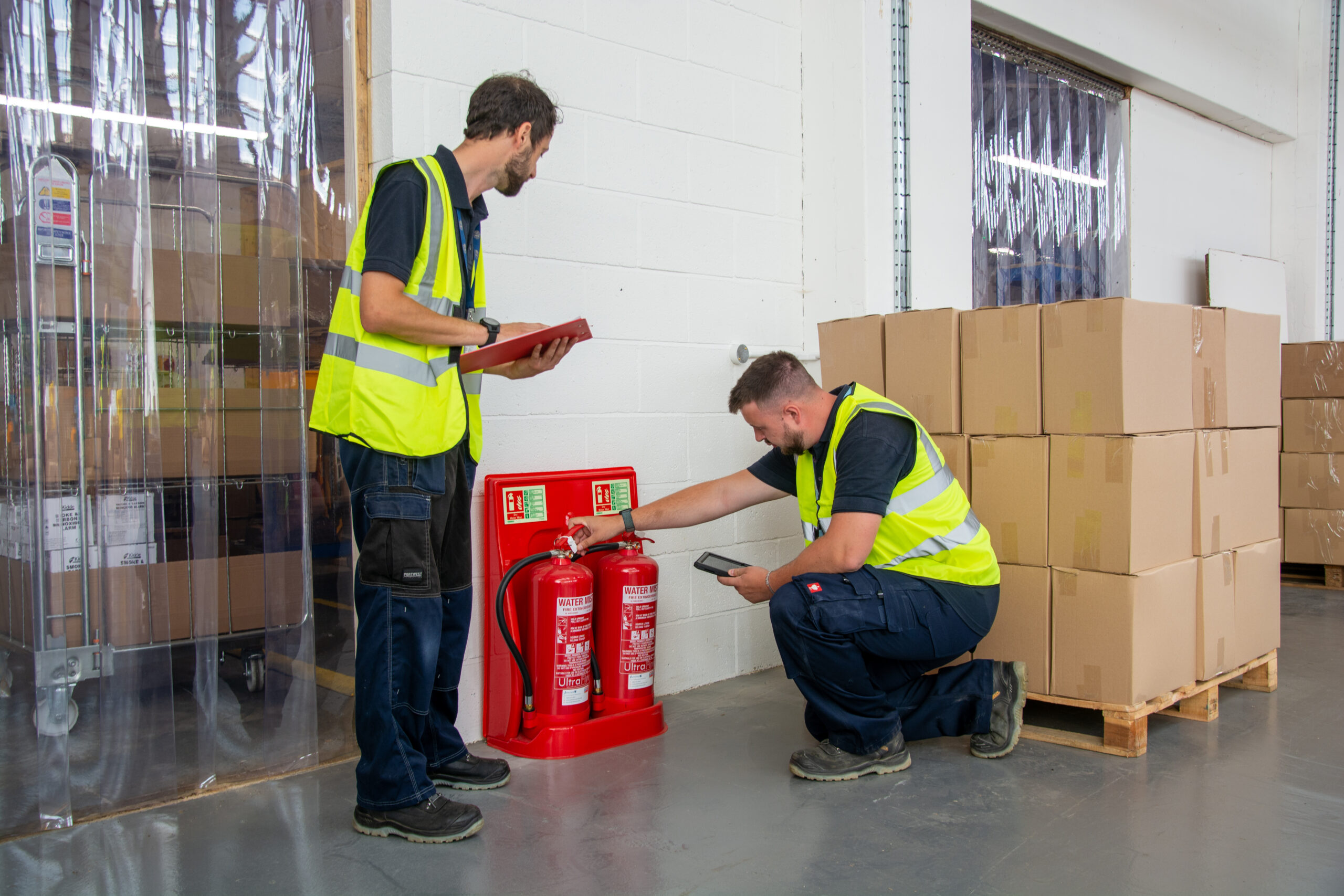
Water mist extinguishers use de-ionised water delivered as a fine mist. Effective on Class A fires, they’re also dielectrically tested on many models, making them safe near electrical equipment. Our UltraFire water mist extinguishers offer a versatile, environmentally responsible option: no dangerous residues, no ozone impact from discharge and no cleanup problem after use.
Lithium-Ion extinguishers – these are specially developed for the unpredictable behaviour and extreme temperatures of class L fires.
Specialist Class D extinguishers are essential wherever combustible metals are processed or stored. There’s no universal Class D agent; the correct powder must be matched to the specific metal present on site.
A Comparison of Industrial Extinguisher Types
| Extinguisher type | Class A | Class B | Class C | Class D | Class F | Class L (li-ion) | Electrical (dielectric) |
|---|---|---|---|---|---|---|---|
| Water | Yes | No | No | No | No | No | No |
| Foam | Yes | Yes | No | No | No | No | No |
| CO2 | No | Yes | No | No | No | No | Yes |
| Dry powder (ABC) | Yes | Yes | Yes | No | No | No | No |
| Wet chemical | Some models | No | No | No | Yes | No | No |
| Water mist | Yes | No | No | No | No | Cooling effect only | Yes (dielectrically tested models) |
| Specialist Class D | No | No | No | Yes | No | No | No |
Safelincs now sells extinguishers suitable for Class L fires. Class L (lithium-ion battery fires, BS ISO 3941:2026) has no single certified extinguishing agent. Our AVD media is the most suitable for this type of fire, or any of the extinguishers in our Lithium-Ion Battery Fire Extinguishers range.
P50 Service-Free Extinguishers for Large Sites
For industrial sites with extinguishers spread across a wide area, the cost and disruption of annual engineer servicing can add up quickly. Our P50 service-free extinguishers are Kitemarked to BS EN 3 and require no engineer service for ten years. Your own staff carry out a straightforward annual visual inspection, and full records are kept in your fire safety log and documented on the back of the extinguisher unit. The result is lower ongoing costs and no need for engineer access across a busy site every year. P50 extinguishers also have superior fire ratings making them ideal for providing coverage for large open spaces.
Positioning and Selecting Extinguishers: BS 5306-8
The selection and positioning of portable fire extinguishers in UK premises is governed by BS 5306-8:2023. Extinguishers must be visible, accessible and positioned along escape routes and near identified risk points. For Class A risks, the maximum travel distance to an appropriate extinguisher is 30 metres. Your fire risk assessment should always drive extinguisher selection: the types, numbers and locations required will vary considerably between a general warehouse and a chemical manufacturing plant.
Our fire extinguisher site survey service surveys the premises and specifies which extinguishers are needed for the risks.
Managing Fire Safety Risks in Manufacturing
Managing fire safety risks in manufacturing is an ongoing process. The nature of manufacturing means that processes, materials, equipment and staffing change regularly, and each change has the potential to introduce new hazards or render existing controls ineffective.
Effective ongoing management requires documented procedures, clear responsibilities, maintained equipment and regular review. The responsible person should keep a fire safety log book recording inspections, tests, maintenance activities and training dates. We offer digital fire safety log books, free on the Safelincs website, as a straightforward way to keep those records accurate and accessible.
Check evacuation routes regularly to ensure they are clear and well maintained, and have regular fire drills to ensure all staff are clear on the process.
Specialised Solutions for Complex Industrial Sites
Some industrial sites require specialised solutions that go beyond standard extinguishers and detection systems. Fixed suppression systems may be appropriate for specific high-risk processes. Aspirating smoke detection can perform better than conventional detectors in environments where standard devices struggle. Beam detection covers large open spaces, such as high-bay warehouses, where conventional point detectors would require impractical numbers of devices. Emergency lighting and safety signage designed for complex, multi-level facilities are also part of the complete picture.
Whatever the specific demands of your site, the right starting point is always the same: a thorough, well-documented fire risk assessment that identifies the real risks and drives the selection of appropriate industrial fire protection measures.
Industrial Fire Safety: A Practical Summary
The essential elements of industrial fire protection, taken together, look like this.
- Carry out and record a fire risk assessment specific to your premises and processes.
- Install and maintain a fire alarm system appropriate to your site’s size, occupancy and risk profile, in line with BS 5839-1.
- Provide the right types and numbers of extinguishers in the correct positions, as determined by your risk assessment and BS 5306-8.
- Train your staff in fire safety procedures specific to your site.
- Implement a formal hot works permit system wherever welding, cutting or grinding takes place.
- Maintain clear escape routes, emergency lighting and exit signage at all times.
- Review all fire safety arrangements at least annually, and after any significant change to your site.
Industrial fire safety in manufacturing is not a compliance exercise you complete once and move on from. It’s a management discipline. Get the foundations right, keep them under review, and the risk to your people, your property and your business stays manageable.
All information correct at time of posting.