Emergency Lighting & Signs
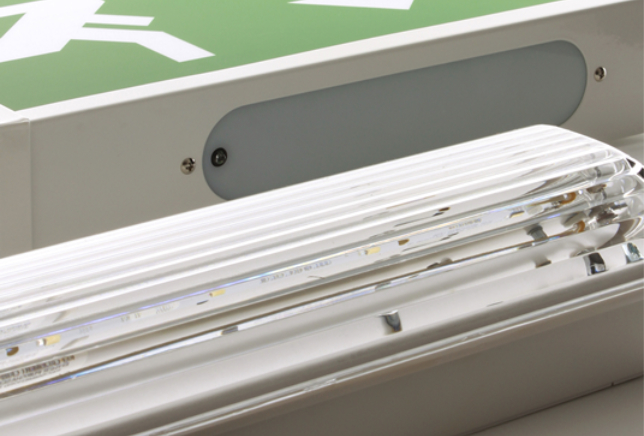
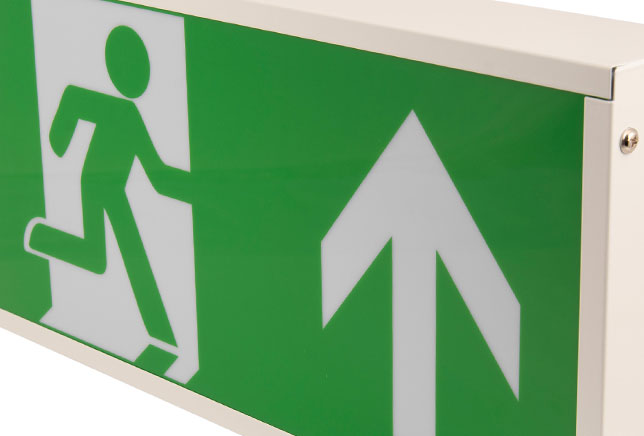
Emergency lighting and signs are safety solutions designed to guide occupants safely during power outages, fires, or other emergencies. They include exit signs, escape route lighting, and emergency luminaires that ensure visibility and compliance with fire safety regulations. Together, they provide clear direction for safe evacuation. For business managers, facilities managers, and building owners, having fully compliant emergency lighting and signage is critical for protecting staff, visitors, and assets. These systems help reduce risk during emergencies, support regulatory compliance, and improve building safety audits. Homeowners with larger properties, home offices or rental properties also benefit from clear exit signage and backup lighting in case of power failures.
Read more about emergency lighting and signs...
What Types of Emergency Lighting and Signs Are Available?
This category includes a wide range of solutions, including:
- Emergency luminaires and exit lights
- Fire exit signs and directional signage
- Escape route lighting for stairwells, corridors, and exits
- Combined systems with backup power or battery operation
How to Choose the Right Emergency Lighting and Signage
Selecting the correct emergency lighting and signs depends on building layout, occupancy type, and compliance requirements. Consider visibility, battery backup duration, and whether signage is photoluminescent or illuminated. Proper selection ensures clear evacuation routes and adherence to fire safety standards.
Emergency Lighting
Maintained and non-maintained bulkhead lights, spotlights and fire exit signs for indoor and outdoor use.
Self-Testing Emergency Lighting and Signs
Reduce manual maintenance with programmable self-testing emergency lighting and signs.
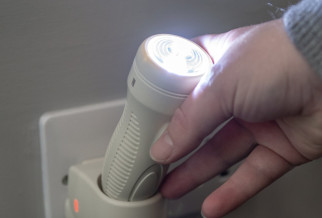
Emergency Torches
Reliable LED and rechargeable torches for home, vehicle or workshop emergencies.
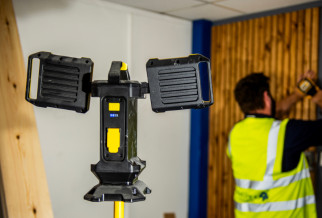
Site Work Lights
Robust torches for close work, and work lights to illuminate larger areas where there is little or no natural light.
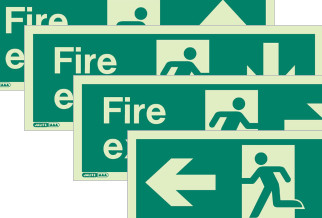
Fire Exit Signs
Fire exit signs and route guidance including illuminated and glow-in-the-dark directional signs.
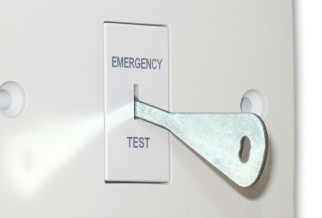
Emergency Light Test Switch and Key
Test emergency lighting without interupting power with these emergency switches and test keys.
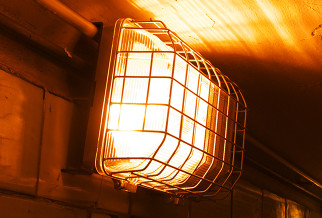
Emergency Light Guards
Protective galvanised steel covers to protect emergency light fixtures from vandalism, damage or tampering.
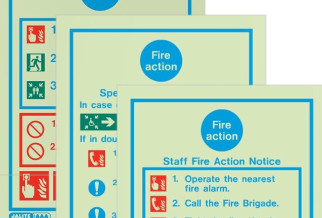
Safety Signs
Extinguisher ID signs, warning signs, safety equipment signs, fire exit and fire door signs.

Health & Safety Posters
H&S posters to provide guidance for a range of workplace risks and emergency situations.
Maintained & Non-Maintained Lighting
Maintained emergency lights remains on all the time. This mode is primarily applied in places of assembly such as cinemas, theatres, clubs and halls preventing total darkness if the room lighting gets dimmed as part of the function of the building. Non-maintained emergency lights only come on when the electrical power supply fails. Typically used in workplaces.
LED Emergency Lights
Where possible non-maintained emergency lights should be used to reduce power consumption. LED emergency lights reduce electricity consumption even further. Not only is the lighting using less power when switched on but the trickle charge for the topping-up of the back-up battery inside the unit is reduced. The maintenance cost for LED lighting is also lower, as the LED elements last significantly longer than ordinary emergency lighting fluorescent tubes.
Maintenance Frequencies
Emergency lighting connected to the mains wiring should be tested monthly by interrupting the power supply to the emergency lights and verifying the correct function of the lights. An annual test is required to check the lights AND the batteries. To do this the power supply is interrupted and the emergency lights are left on for a specified period (often 3 hours). At the end of this period the lights still have to be on or the battery (and possibly tube) must be replaced.
These tests should preferably be carried out out of hours to prevent a potential emergency situation after all emergency lights have been drained. Alternatively, every second light can be tested or some temporary battery powered lighting be provided.