Saturday 17th January 2026
Fire alarm maintenance is a legal requirement for all commercial premises in the UK. It involves routine testing, professional servicing and proper record-keeping to ensure your system works correctly in an emergency. The Regulatory Reform (Fire Safety) Order 2005 places responsibility on the ‘responsible person’ to maintain all fire detection and warning systems. For compliant servicing carried out by certified engineers, we offer nationwide fire alarm system servicing in accordance with BS5839-1.
Estimated reading time: 7 minutes
Key takeaways:
- Fire alarm maintenance is a legal obligation under UK fire safety legislation, with specific requirements outlined in BS5839-1.
- Commercial fire alarm systems consist of multiple interconnected components that all require regular inspection and testing.
- A competent engineer must carry out professional servicing at least every six months.
- Weekly testing and monthly visual inspections are routine checks that building occupants should perform themselves.
- Houses in Multiple Occupation and residential blocks have specific fire alarm requirements that differ from standard domestic properties.
- You need to keep detailed documentation and records to demonstrate compliance during inspections.
Disclaimer: This guide provides general information about fire alarm maintenance for commercial premises in the United Kingdom. Fire safety requirements vary depending on your specific premises, use and local authority guidance, so you should always consult a qualified fire safety professional and refer to the latest British Standards and legislation for advice tailored to your circumstances.
Why Is Fire Alarm Maintenance a Legal Requirement?
The Regulatory Reform (Fire Safety) Order 2005 makes fire alarm maintenance a legal obligation for virtually all non-domestic premises in England and Wales. Scotland has the Fire (Scotland) Act 2005, and Northern Ireland has the Fire and Rescue Services (Northern Ireland) Order 2006.
So who’s responsible? The ‘responsible person’ is typically the employer, building owner or facilities manager. They must ensure fire detection and warning systems remain in good working order. If you don’t comply, you could face enforcement notices, prosecution and fines. But more importantly, a poorly maintained fire alarm system puts lives at risk.
British Standard BS5839-1 sets out the code of practice for fire detection and alarm systems in non-domestic premises. It covers system design, installation, commissioning and maintenance. Fire risk assessments generally reference this standard, and compliance is considered best practice.
What Does a Commercial Fire Alarm System Consist Of?
A commercial fire alarm system is a network of interconnected components that detect fire conditions and alert building occupants. Understanding these components helps you see why regular maintenance matters.
The fire alarm panel is the central hub of the system. It receives signals from detection devices and controls the alarm outputs. Modern panels can be conventional or addressable: addressable systems tell you precisely which device has been triggered.
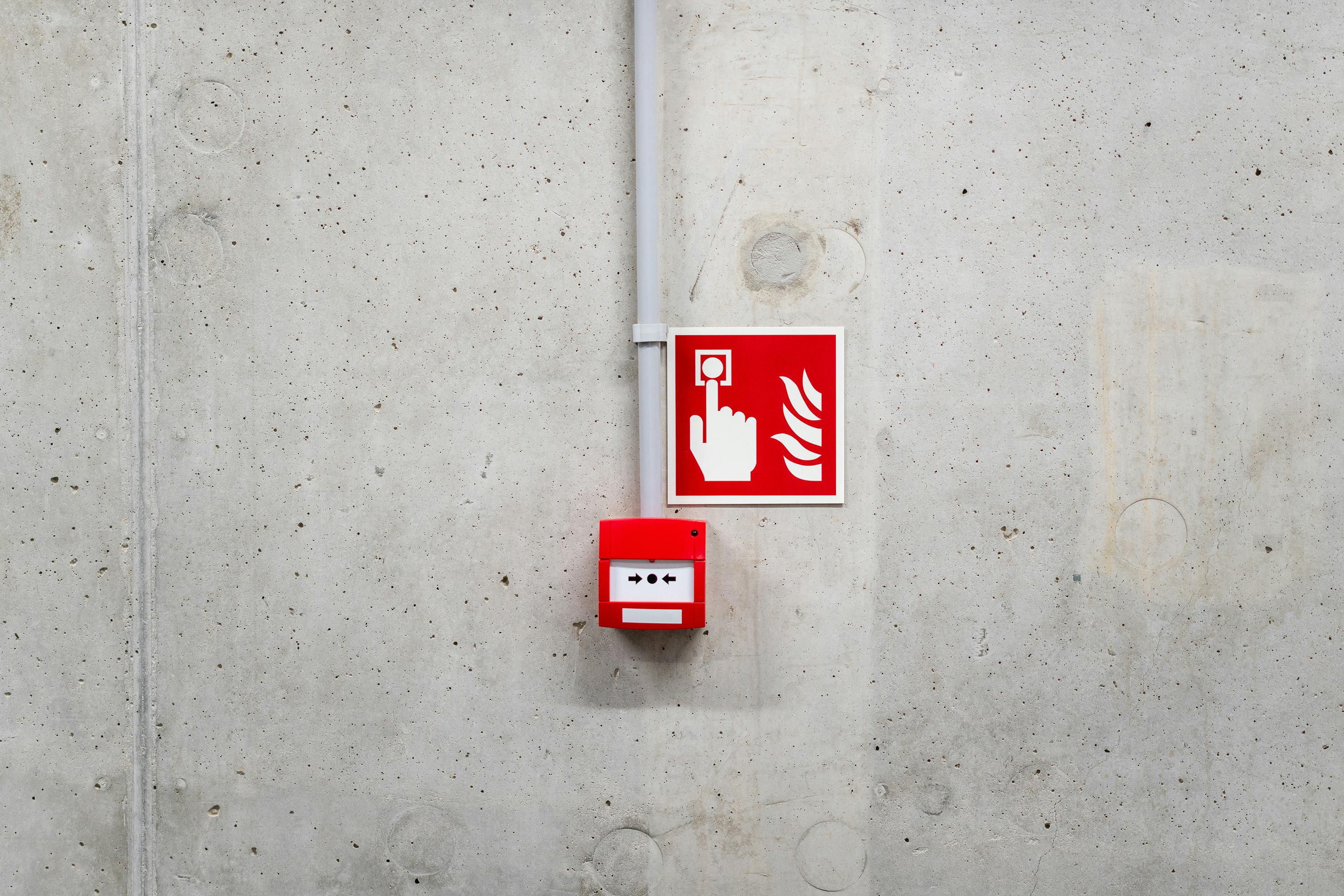
Detection devices include smoke detectors, heat detectors and multi-sensor detectors positioned throughout the building. Manual call points let occupants trigger the alarm manually when they discover a fire. Sounders and visual alarm devices ensure the warning reaches everyone, including those with hearing impairments.
You might also have door release mechanisms, interfaces with automatic fire suppression systems and connections to monitoring services or the fire brigade. Each component needs specific maintenance procedures to stay functional.
How Often Should You Service Fire Alarm Systems?
BS5839-1 recommends professional servicing at intervals of no more than six months. A competent person with appropriate training and qualifications must carry out this work.
What does a service involve? Engineers test every device in the system, check all connections, verify panel functions and ensure the system operates correctly as an integrated whole. They also check battery conditions, test backup power supplies and assess whether any environmental changes affect detector performance.
Some premises need more frequent servicing based on their fire risk assessment. High-risk environments, buildings with complex systems or premises where detectors face challenging conditions may need quarterly inspections. Your fire risk assessment should specify the right servicing frequency for your situation.
Between professional services, you must ensure routine testing and checks take place. These regular checks are just as important as professional maintenance.
What Happens During a Fire Alarm Maintenance Visit?
A professional maintenance visit involves a thorough inspection and test of your entire fire detection and warning system. Certified engineers follow structured procedures to verify every aspect of system performance.
Engineers start by reviewing the fire alarm log book and any reported faults or false alarms since the last service. They then carry out a visual inspection of all system components, checking for physical damage, contamination or environmental factors that might affect performance.
Functional testing forms the core of the visit. Engineers test a proportion of detection devices at each service, ensuring they test all devices at least annually. They verify that signals reach the control panel correctly, that sounders operate at appropriate volumes and that any ancillary functions work as intended. This includes things like door release or lift recall.
Once complete, engineers provide documentation confirming they’ve carried out the service in accordance with BS5839-1. You’ll need this certification to demonstrate compliance during fire safety inspections, so keep it with your fire safety records.
What Weekly and Monthly Checks Should You Carry Out?
Don’t overlook weekly testing: it’s a critical responsibility. The responsible person or a designated competent individual must test the fire alarm system every seven days. Use a different manual call point each week and work through all call points over time.
During weekly tests, verify that the alarm sounds throughout the building and that the control panel registers the activation correctly. Record the date, time, call point tested and the name of the person conducting the test in your fire alarm log book.
Monthly visual inspections add another layer of assurance. Check that no detectors are obstructed, damaged or contaminated. Look at the control panel for fault indicators, make sure manual call points are accessible and clearly visible, and confirm that fire exit routes remain clear.
Found a fault during routine checks? Address it promptly. You might resolve minor issues in-house, but significant faults need attention from a qualified engineer. Never ignore fault indicators or silence alarms without investigating the cause.
What Are the Requirements for Fire Alarms in HMOs and Residential Blocks?
Houses in Multiple Occupation and residential blocks of flats are a special category. These properties may require fire alarm systems rather than simple domestic smoke alarms, and they fall under different regulatory frameworks.
Under the Housing Act 2004, an HMO is generally a property occupied by people from two or more separate households who share basic amenities such as a bathroom, toilet or cooking facilities. Depending on size and layout, HMOs may require Grade A fire alarm systems (commercial-standard systems designed to BS5839-1) or Grade D systems (interlinked mains-powered smoke alarms with battery backup to BS5839-6).
Residential blocks with common areas typically require fire detection in those shared spaces. The extent of provision depends on the building’s fire strategy: whether it operates a ‘stay put’ or simultaneous evacuation policy and what the fire risk assessment recommends.
Landlords and managing agents must ensure fire alarm systems in these properties receive the same standard of professional maintenance as commercial premises. Poor fire detection in residential properties has contributed to several fatal fires, which has led to increased regulatory scrutiny.
What Documentation Do You Need for Fire Alarm Maintenance?
Good record-keeping is essential for demonstrating compliance with fire safety legislation. Your documentation should provide a complete history of system installation, testing, servicing and any modifications or repairs.
The fire alarm log book is your most important document. Record all weekly tests, false alarms, faults and any actions taken. BS5839-1 specifies what information you should record, and pre-formatted log books are available to simplify this.
Keep service certificates from professional maintenance visits and make them available to fire safety inspectors on request. These certificates should confirm the scope of work, any defects identified and remedial actions taken or recommended.
You should also keep:
- The system design certificate
- The commissioning certificate
- As-fitted drawings showing device locations
- Zone plans
- Operating instructions and emergency procedures for relevant staff
Maintaining your fire alarm system protects lives and shows your commitment to fire safety compliance. Our fully certified engineers provide fire alarm servicing throughout the UK, handling everything from routine maintenance to emergency call-outs with transparent, competitive pricing. To discuss your fire alarm maintenance requirements or arrange servicing for your commercial premises, please contact our expert team today.