Friday 13th November 2026
Are you ready if an emergency were to happen? Do you have enough water, food, and essentials to last for 72 hours until help can arrive? An emergency or disruption can happen at any time and to anyone. This blog will explain why having an emergency pack matters and what should be included.
What is Be Ready and Why it matters?
Launched by the UK Government Cabinet Office in October 2026, the ‘Be Ready’ campaign, asks all households to take small, simple steps for them to cope for three days if an emergency disrupts power, water, food supplies, phones, or the internet.
Five Simple Steps to Get Started
Getting started doesn’t have to be expensive and everything does not need to be purchased immediately. Here are five simple steps to get started with little to no cost.
- See what you already have in your cupboards
- Plan for your household, including medical supplies. Include baby formula and pet food (if it is applicable to you)
- Build your kit gradually as part of your normal shopping
- Check your emergency kit every 6 months, ensuring the food is still in date and batteries are still viable
- Talk to your neighbours and swap contact details
Developing an emergency pack means that you and your family have the basics for up to 3 days and ensures that elderly or impaired neighbours are looked out for until assistance can arrive.
What to Include in your Emergency Pack
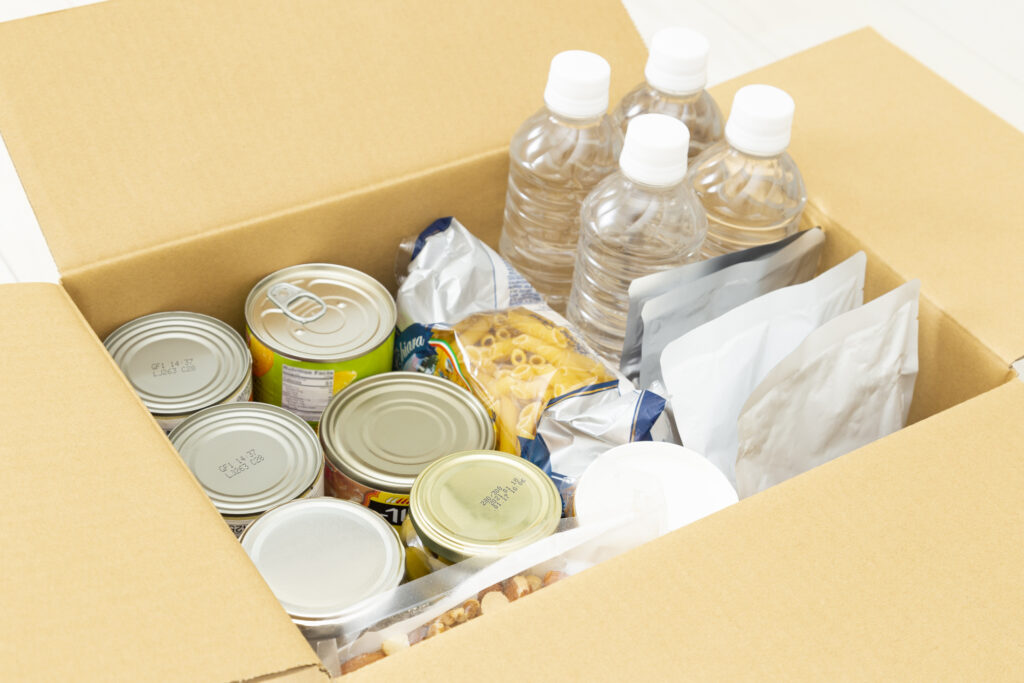
Developed by the UK Government and the British Red Cross, the emergency pack contains essentials for your household to cope for up to 3 days.
Things to include:
- Water – 3 days drinking water (3 litres per person per day)
- Food – 3 days long-life or ready to eat food and a tin opener, ensuring it is food that your family regularly eats
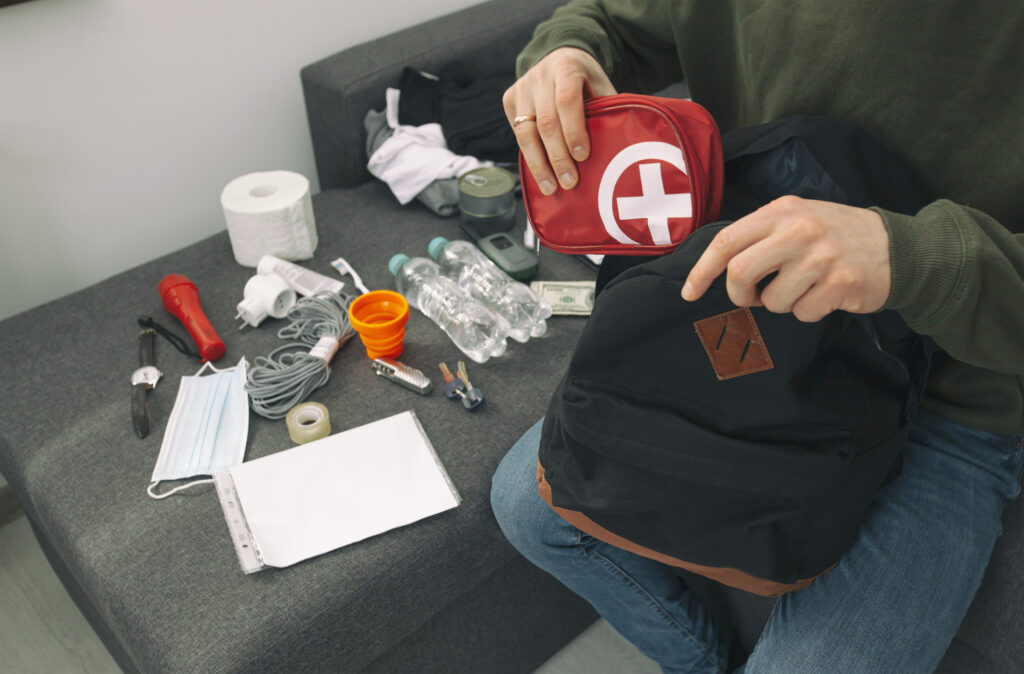
- Light source – Torches and spare batteries
- Communication – Battery or wind-up radio, phone charger and power bank, and a paper copy of contact numbers
- First aid and medical supplies – Basic first aid kit, essential medication, copies of prescriptions
- Hygiene – Hand sanitiser, wet wipes and other toiletries
- Money & Documents – Mixture of notes and coins, copies of important documents kept in a waterproof pouch
- Other – Pen and paper, and spare keys to your home and car
Other useful extras would include sleeping bags, blankets, and spare clothing. Ensure that household specific items are included for babies and children, pets, and elderly or vulnerable individuals.
What Type of Emergency Should you Prepare for?
Emergencies are unpredictable and could encompass many different challenges. Here is a list of possible emergencies, with some practical suggestions on what to include in addition to Government guidance:
- Extreme cold – blankets, warm clothing, heat retaining blankets
- Flooding – waterproof pouches, change of clothing
- Power outage – power banks, source of light (avoiding candles and matches where possible)
- Extreme heat / Wildfire – fireproof boxes / chest or pouch, wildfire beater, fire extinguisher, fire blanket, burns kit, sun cream
Where to Store your Emergency Pack
Where you keep your emergency pack matters as much as what’s inside it. Keeping your documents in waterproof / fireproof pouches or boxes ensures that your important documents such as, Passports, birth certificates etc are safe from the effects of a disaster.
Things to consider
- Choose a spot that’s easy to reach in a hurry, ideally near your main exit, and make sure everyone in your household knows where it is.
- If your home is at risk of flooding, store it up high, such as on a top shelf or upstairs, so it stays dry and usable.
- Keep it somewhere cool and dry, away from direct sunlight and heat sources, as this helps protect batteries, food and medication.
- Avoid tucking it behind clutter or at the back of a cupboard, and check it every few months to replace anything that’s out of date.
Other Useful Free Tools
To assist those that are risk during an emergency there is a Priority Services Register. Free to sign up and many households are eligible, especially those with children under the age of 5. You can also complete an online Home Fire Safety Check for general advice on how to improve your home fire safety.
All information correct at time of posting.