Toni is one of our Product Manager at Safelincs, responsible for ensuring product information and website content remain accurate, informative, and up to date. She regularly contributes to the Safelincs blog and supports the company's environmental, community, and charitable initiatives, including volunteering and fundraising activities.
Most people never expect a fire to start in their home or caravan. However, accidents can happen in seconds, whether it’s a pan left on the hob, a toaster overheating, or a small electrical fault. That’s why having the right fire safety equipment nearby can make a real difference.
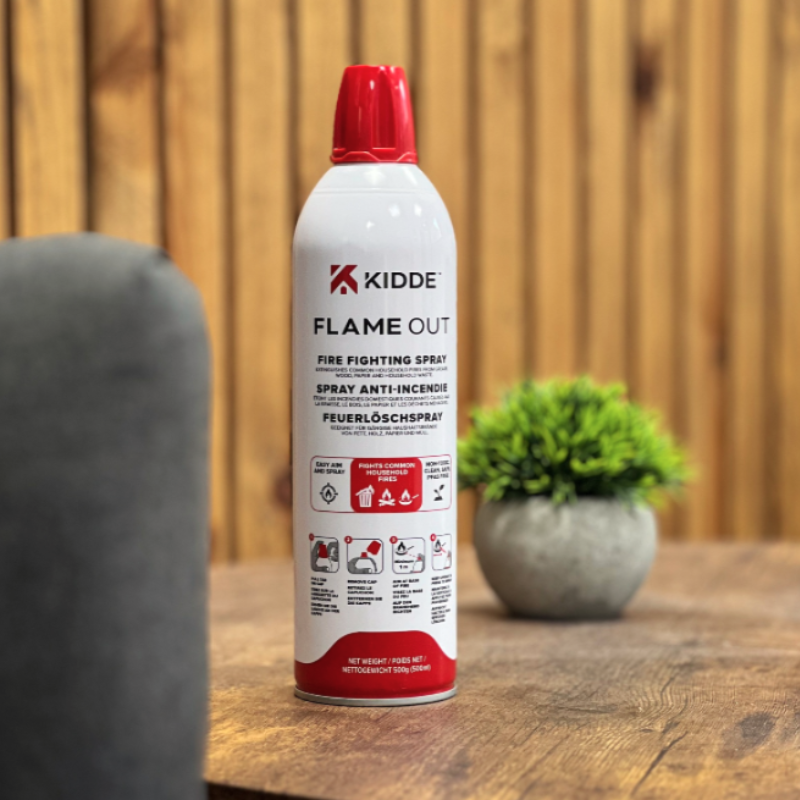
If you’re looking for an easy-to-use way to deal with small household fires, you may have come across the Kidde Flame-Out Fire Fighting Spray. But what exactly is it used for, and is it something you should have in your home?
A Simple Way to Tackle Small Fires
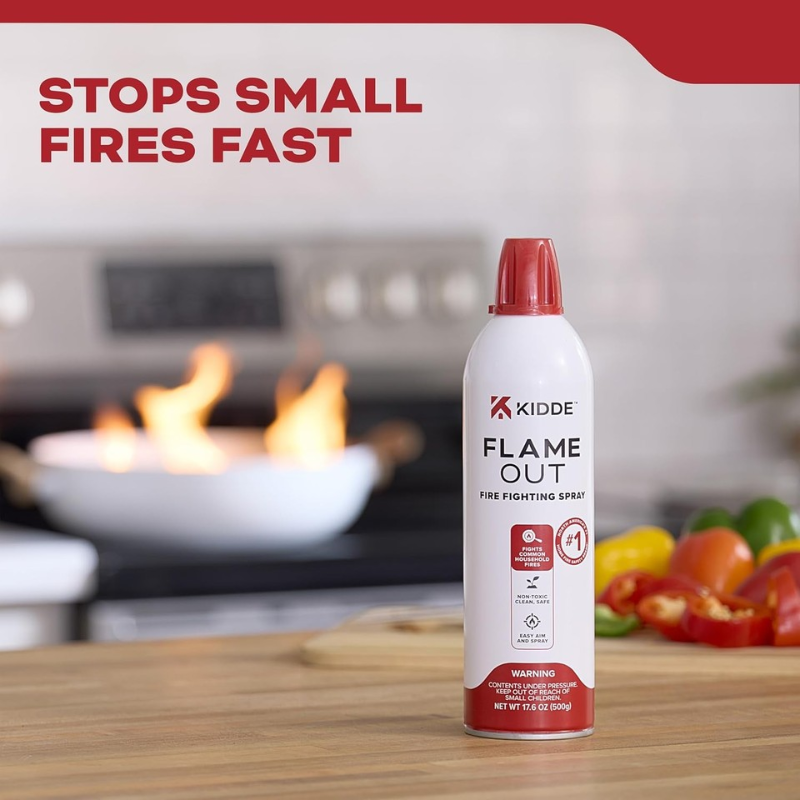
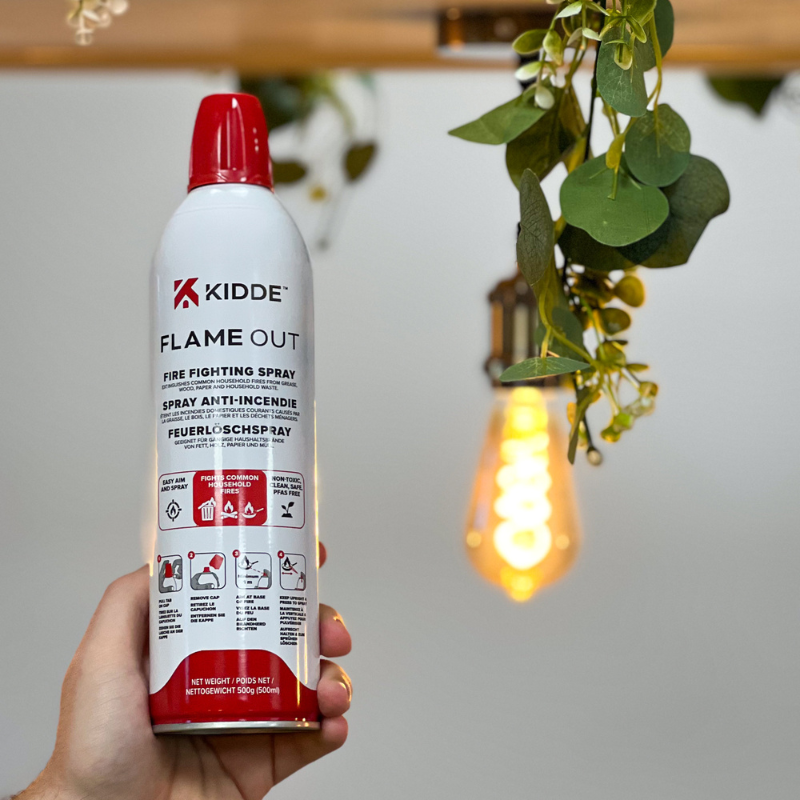
The Kidde Flame-Out Fire Fighting Spray is designed to help you extinguish small fires quickly before they have the chance to spread. Unlike a traditional fire extinguisher, which can sometimes feel heavy or complicated to operate, the Flame-Out spray is lightweight and works much like an aerosol can.
This means that if a small fire starts, you can react quickly without needing special training. Simply remove the safety cap, aim at the base of the flames, and spray according to the manufacturer’s instructions.
While no one wants to think about experiencing a fire, being prepared can give you greater confidence if an emergency does occur.
What Types of Fires Can You Use It On?
The Kidde Flame-Out Fire Fighting Spray is suitable for several common household fires. This includes fires involving:
Cooking oils and grease
Paper and cardboard
Wood
Fabrics
Household rubbish
These are some of the most common causes of fires in UK homes, particularly in kitchens where cooking accidents happen every day.
It’s important to remember that the spray is intended for small, contained fires only. If the fire is spreading quickly, producing a lot of smoke, or blocking your escape route, your priority should always be to leave the building safely and call the fire and rescue service.
Why Might You Choose the Kidde Flame-Out Spray?
One of the biggest reasons people choose the Kidde Flame-Out spray is because it’s designed with everyday users in mind.
Traditional fire extinguishers can seem intimidating, especially if you’ve never used one before. In an emergency, remembering exactly how to operate one can be difficult.
The Flame-Out spray offers a much simpler solution. Its familiar spray-can design makes it easier to use under pressure, helping you respond quickly if a small fire starts.
Another benefit is that it uses a water-based foam, which generally leaves less mess than many dry powder extinguishers. That means cleaning up afterwards is often much easier if you’ve successfully put out a small fire.
Where Should You Keep It?
A firefighting spray is only useful if you can reach it quickly.
Consider storing your Kidde Flame-Out Fire Fighting Spray somewhere that’s easy to access, such as:
Your kitchen
Utility room
Garage
Caravan or motorhome
Workshop
Avoid storing it in cupboards that are difficult to reach or close to areas where a fire could block access.
You should also make sure everyone in your household knows where it’s kept and understands how to use it safely.
Is It a Replacement for a Fire Extinguisher?
The Kidde Flame-Out Fire Fighting Spray is an excellent addition to your home or caravan safety equipment. If you have a deep fat fryer or more specific fire risks, another fire extinguisher may be required.
Think of the Kidde Flame-Out as part of your overall fire safety plan. Working smoke alarms, carbon monoxide alarms, a clear escape plan, and suitable fire safety equipment all work together to help protect you and your family.
Be Prepared Before You Need It
Hopefully, you’ll never have to use your Kidde Flame-Out Fire Fighting Spray. However, having one ready means you’ll be better prepared if a small fire starts unexpectedly. Remember, your safety should always come first. Only attempt to tackle a fire if it’s small, you have a clear escape route, and you feel confident it’s safe to do so. If you’re ever unsure, leave the building immediately, close the door behind you if possible, and call the emergency services. Investing in simple fire safety products today could help protect your home, your belongings, and most importantly, the people you care about. Taking a few minutes now to prepare could make all the difference in an emergency.
Toni is one of our Product Manager at Safelincs, responsible for ensuring product information and website content remain accurate, informative, and up to date. She regularly contributes to the Safelincs blog and supports the company's environmental, community, and charitable initiatives, including volunteering and fundraising activities.
Plastic Free July geometric shape pattern background template with turtle picture.
Every July, Plastic‑Free July invites people across the globe to rethink everyday habits and say no to single‑use plastic. What started with just 40 people in Australia has now grown into the world’s largest plastic‑avoidance movement, with 174 million people across 190 countries taking part in 2025.
The world produces over 400 million tonnes of plastic every year, and only around 9% is recycled globally
An estimated 11 million tonnes of plastic enter the ocean every year, harming marine life and ecosystems
In the UK alone, households throw away around 90 billion pieces of plastic packaging every year
The challenge isn’t about being perfect—it’s about making small, consistent changes that add up over time. In fact, Plastic Free July reports that 87% of participants make at least one long‑lasting behaviour change.
“Plastic Free July has the power to create a widespread cultural shift—turning off the tap of plastic waste one choice at a time.”
– Rebecca Prince‑Ruiz, founder of Plastic-Free July
So, how can I make a difference? Here are some practical and achievable ways to ditch those single-use plastics this July!
What Can You Do?
1. Switch to a Refillable Water Bottle 🚰
Globally, around 500 billion plastic bottles are used each year, and 91% are not recycled. Many end up in landfill, incinerators, or the environment. Using a refillable bottle can eliminate hundreds of disposable bottles per person each year.
What can you do? 👉 Choose a reusable bottle you love and commit to zero bottled water this July.
2. Pack a Plastic‑Free Lunch 🍜
Snack packaging and food wrappers are among the most common single‑use plastic items in UK household waste.
Simple swaps including using reusable lunch boxes or containers, reusable cutlery and napkins.
Did you know? Cooking and packing food at home reduces plastic waste and cuts food costs.
What can you do? 👉 Pick one regular meal this week and make it completely plastic‑free, by using an alternative to food wrapping such as beeswax wraps
3. Embrace the Soap Bar and ditch Disposable Toiletries 🧼
Bathrooms are a hotspot for single‑use plastic: toothbrushes, razors, cotton pads, and travel minis all add up quickly. Including liquid soaps, shampoos, and shower gels are typically packaged in plastic, and many are not recycled. Solid soap and shampoo bars often come in recyclable cardboard and last longer.
Make simple swaps to bamboo toothbrushes, refillable deodorants, reusable cotton pads etc.
“The most environmentally friendly product is the one you didn’t buy.” — Joshua Becker
What can you do? 👉 When your next toiletry runs out, replace it with a plastic‑free alternative—no need to throw anything away early.
4. Use Reusable Bags and Straws 🛍️
Globally, people still use around 5 trillion plastic bags every year. While bags and straws may seem small, they’re some of the most common items found during beach clean‑ups.
The good news: the UK carrier bag charge reduced supermarket bag use by 97%—proof that behaviour change works.
What can you do? 👉 Keep reusable options easily available, such as by the door or in your bag so saying “no” becomes automatic.
5. Cut Back on Convenience Foods 🍔
Convenience foods often come with multiple layers of plastic packaging, contributing to the UK’s massive household plastic waste problem.
Choosing fresh, loose produce or cooking simple meals helps reduce plastic at the source.
What can you do? 👉 Try one plastic‑light grocery shop this week—buy loose where you can and skip unnecessary packaging.
6. Reduce Microplastics (The Plastic You Can’t See) 👖
Microplastics are now found in human blood, lungs, and even brains. Shockingly, humans are estimated to ingest around 5 grams of microplastics per week—roughly the weight of a credit card.
Around 35% of primary microplastics in the ocean come from synthetic clothing fibres shed during washing.
You can reduce microplastic pollution by:
Choosing natural fibres like cotton, linen, and wool
Washing clothes less often and at lower temperatures
Avoiding cosmetics with plastic microbeads
What can you do? 👉 Check the labels on your next clothing or skincare purchase—small choices matter.
What Safelincs Are Doing
Working towards a greener future by focussing on a number of ongoing projects aimed to make our business environmentally friendly.
🔌100% Renewable Electricity
1000sqm Solar PV installation producing 60% of our energy
Majority of our company vehicles are electric models
📦Recycled Packaging
Eliminated 95% of plastic from our parcels
Reusing cardboard which come in from our suppliers
Padding material created from shredding old cardboard boxes
Working with our suppliers to reduce plastic waste
🪫WEEE Distributor Take-Back Scheme
We are part of the Valpak Waste Electrical and Electronic Equipment Distributor Take-Back Scheme
🌳Tree Planting
Improving our own biodiversity around our headquarters by planting more trees and wildflowers
♻️Battery Recycling
We use rechargeable batteries where possible, and recycle the old non-rechargeable ones
Progress Over Perfection
Plastic‑Free July isn’t about guilt or giving up everything at once. It’s about awareness, experimentation, and connection. Over the past seven years, participants have collectively avoided 15 million tonnes of waste—proof that individual choices do add up.
But the solution starts close to home, participants reduce their household waste by an average of 13kg per person during the challenge.
The most powerful step? Starting. So, what will you refuse this Plastic‑Free July?
Toni is one of our Product Manager at Safelincs, responsible for ensuring product information and website content remain accurate, informative, and up to date. She regularly contributes to the Safelincs blog and supports the company's environmental, community, and charitable initiatives, including volunteering and fundraising activities.
Toni is one of our Product Manager at Safelincs, responsible for ensuring product information and website content remain accurate, informative, and up to date. She regularly contributes to the Safelincs blog and supports the company's environmental, community, and charitable initiatives, including volunteering and fundraising activities.
Care homes present unique fire safety challenges that demand exceptional attention to detail, particularly when it comes to fire proof doors. With vulnerable residents who may have mobility issues, cognitive impairments or require assistance during emergencies, every second counts during an evacuation. Fire doors equipped with proper fire door closers, fire door strips and fire door retainers can mean the difference between a safe evacuation and tragedy.
Why Fire Doors Are Critical in Care Home Environments
Unlike typical commercial buildings where occupants can evacuate quickly and independently, care homes rely on phased or horizontal evacuations. Many residents cannot evacuate simultaneously due to mobility restrictions, medical conditions or cognitive impairments. This makes effective fire compartmentation absolutely essential, and fire proof doors in care homes serve as the primary defence against fire and smoke spread.
Fire doors in care settings must balance two competing needs: maintaining strict fire safety standards while ensuring accessibility for residents and staff. The weight of fire doors, combined with the force required from a standard fire door closer, can create significant barriers for elderly residents, those using mobility aids, or staff pushing wheelchairs and beds through doorways.
The typical care home fire door requires a 60-minute fire rating (FD60), though specific requirements depend on your fire risk assessment. These heavier doors provide crucial additional time for staff to implement evacuation procedures, but they also present greater accessibility challenges. This is where selecting the right door closers with appropriate power sizes becomes essential – they must be strong enough to close these substantial doors reliably while not creating insurmountable barriers for daily use.
Essential Components: Fire Door Strips and Seals
The effectiveness of any fire proof door in a care home depends significantly on its fire door strips and fire door seal systems. These intumescent strips remain dormant under normal conditions but expand dramatically when exposed to heat, sealing the gaps between the door and frame. In care homes, where evacuation times are extended, these fire door strips provide vital protection by preventing smoke and flames from bypassing closed doors.
Every fire door must have properly fitted and maintained intumescent strips on three sides – the top and both verticals. For care homes, combined fire and smoke seals are particularly important, as smoke inhalation poses a severe risk to residents who may be slow to evacuate or have respiratory conditions. The smoke seal component works immediately when the door closes, preventing cold smoke from spreading, while the intumescent element activates at higher temperatures.
Regular inspection of these fire door seals is crucial in care settings. Daily use by staff, residents, and visitors, combined with the passage of wheelchairs, trolleys and medical equipment, can damage or dislodge strips. Any compromised seal reduces the door’s fire resistance rating, potentially endangering lives during an emergency.
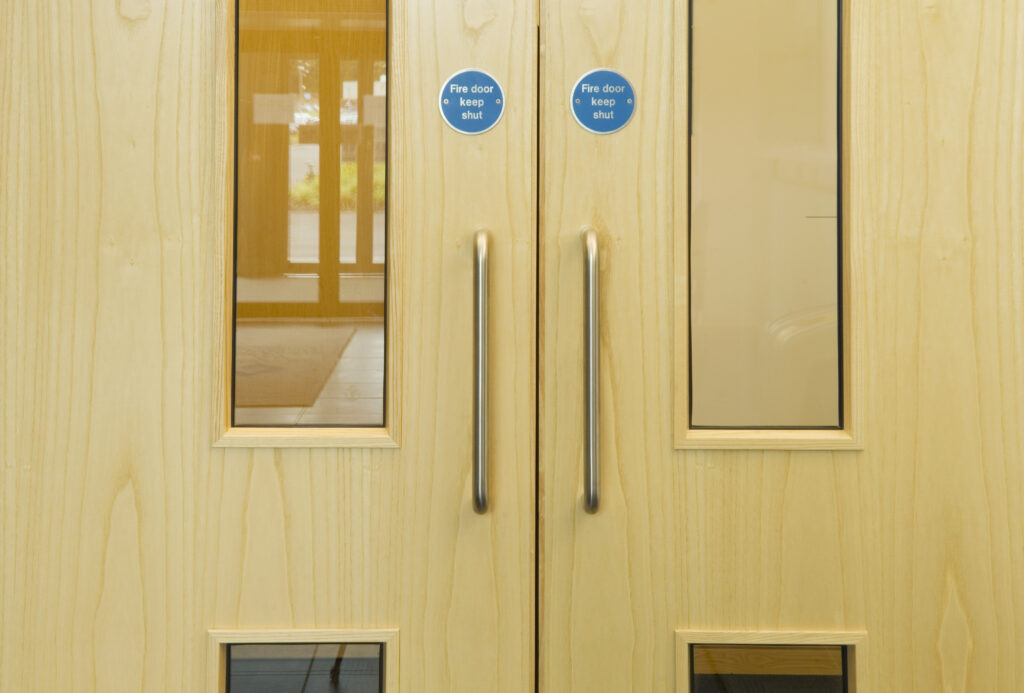
Close up of modern wooden care home doors.
The Role of Fire Door Closers in Care Settings
A fire door closer serves a critical function in care homes by ensuring doors return to their closed position after use, maintaining compartmentation integrity. However, standard overhead closers can create significant challenges for care home residents and staff. The force required to open a door against a traditional closer can be prohibitive for elderly or frail residents, potentially limiting their independence and quality of life.
Free-swing door closers offer an innovative solution specifically suited to care environments. These devices allow fire doors to operate like standard doors with no resistance during normal use, while automatically engaging to close the door when the fire alarm activates. This technology removes the physical barrier that traditional closers present and maintains full fire safety compliance.
When selecting a fire door closer for care homes, consider the EN power size carefully. While EN3 is the minimum for fire doors, care homes often require higher power sizes due to heavier door construction and the need for reliable closure despite potential obstructions. Variable power closers allow fine-tuning to achieve the perfect balance between accessibility and safety.
Fire Door Retainers: Improving Accessibility and Safety
Fire door retainers represent one of the most significant advances in making care homes both safer and more accessible. These devices safely hold fire doors open during normal operations, improving ventilation, easing movement for residents and staff, and reducing the temptation to prop doors open illegally. When the fire alarm sounds, the fire door retainer releases automatically, allowing the door closer to shut the door completely.
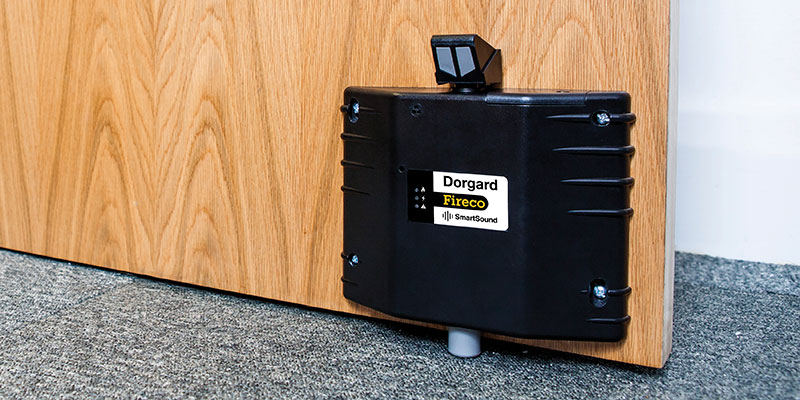
For care homes, different types of retainers offer various benefits. Acoustic retainers like the Dorgard system work independently, listening for the fire alarm sound and releasing when triggered. These wireless, battery-powered units are ideal for retrofitting existing doors without complex wiring. Electromagnetic retainers connected to the fire alarm panel provide fail-safe operation, releasing doors when power shut-off is triggered by the fire alarm panel.
The Fireco Pro System offers particular advantages for care facilities, allowing multiple doors throughout the building to be controlled centrally. This networked approach ensures all doors close simultaneously during an alarm, crucial for maintaining compartmentation across large care home complexes. The system’s ability to integrate with existing fire alarm infrastructure makes it especially suitable for comprehensive fire safety strategies.
Maintenance and Inspection Requirements
In care homes, where residents rely heavily on phased evacuations, maintaining fire doors in perfect working order is paramount. Every component – from fire door strips to closers and retainers – must function flawlessly when needed. The maintenance requirements for care home fire doors often exceeds those of standard commercial buildings due to the vulnerability of residents.
Fire door inspections by qualified professionals should occur annually, with functionality checks by competent persons every six months. However, in care settings, more frequent informal checks are advisable. Staff should be trained to identify obvious issues like damaged fire door seals, malfunctioning closers, or doors that don’t close properly. Any problems must be addressed immediately – there’s no room for delayed maintenance when vulnerable lives are at stake.
Documentation of all inspections, maintenance, and repairs is essential for legal compliance and best practice. Care homes should maintain detailed records showing that fire doors, including all fire door strips and closers, meet required standards. This documentation proves due diligence and helps identify recurring issues that might indicate the need for door replacement or system upgrades.
Meeting Accessibility Needs Without Compromising Safety
The Equality Act 2010 requires care homes to make reasonable adjustments for disabled residents, but this must never compromise fire safety. Installing appropriate fire door furniture and accessories that improve accessibility and maintain fire integrity requires careful planning and expert advice.
Electronic door closers with adjustable opening forces can reduce the effort needed to open doors during normal use while ensuring reliable closure during emergencies. Hold-open devices eliminate the need for residents to struggle with heavy doors, improving their independence and dignity. These solutions demonstrate that accessibility and safety aren’t mutually exclusive when properly implemented.
For residents with specific mobility needs, consider the door’s full opening cycle. A fire door retainer might hold the door open, but if residents need to close it for privacy, they still face the resistance of the door closer. Free-swing closers address this by removing resistance entirely during normal use, allowing residents to operate doors independently.
Legal Responsibilities and Best Practices
The Regulatory Reform (Fire Safety) Order 2005 places clear obligations on care home operators regarding fire doors. Failure to maintain fire doors, including ensuring functional fire door strips, appropriate closers, and proper fire door seals, can result in prosecution, especially if inadequate maintenance contributes to injury or death during a fire.
Beyond legal compliance, care homes have a moral duty to protect their vulnerable residents. This means going beyond minimum requirements where necessary. If your risk assessment specifies FD30 doors, consider whether FD60 doors would provide better protection given your residents’ evacuation capabilities. Similarly, while basic fire door strips meet regulations, combined fire and smoke seals offer superior protection for those who cannot evacuate quickly.
Staff training is crucial for maintaining fire door effectiveness. All staff should understand why fire doors must never be wedged open, how to identify problems with doors or their components, and the importance of reporting issues immediately. Regular fire drills should include checking that all fire doors close properly when retainers release, ensuring the entire system works as intended.
Creating a Comprehensive Fire Door Strategy
Developing an effective fire door strategy for care homes requires careful consideration of resident needs, building layout, and evacuation procedures. Start with a thorough fire risk assessment that considers your specific resident population, including their mobility levels, cognitive abilities and medical needs. This assessment should inform decisions about door ratings, the type of fire door closer systems to install, and where fire door retainers would be most beneficial.
Consider creating zones within your facility with different fire door specifications based on risk levels and resident capabilities. High-dependency units might require FD60 doors with sophisticated retainer systems, while independent living areas might manage with FD30 doors and standard closers. This targeted approach optimises both safety and cost-effectiveness.
Regular reviews of your fire door strategy ensure it remains appropriate as resident needs change. What works for today’s resident population might be inadequate tomorrow. Building modifications, changes in care levels or new regulations all necessitate strategy updates. Maintaining flexibility while ensuring compliance requires ongoing attention and expert guidance.
Fire doors in care homes represent a critical life safety system that must balance stringent fire protection requirements with the practical needs of vulnerable residents. Through careful selection and maintenance of fire door closers, fire door strips, fire door seals and fire door retainers, care homes can create environments that are both safe and accessible.
The investment in proper fire proof door systems for care homes, including high-quality components and regular maintenance, pays dividends in resident safety, regulatory compliance and operational efficiency. When every second counts during an evacuation, properly functioning fire doors with appropriate closers, intact fire door strips and reliable retainers provide the time needed to ensure every resident reaches safety.
Remember, fire safety in care homes isn’t just about meeting regulations – it’s about protecting society’s most vulnerable members. By understanding and implementing comprehensive fire door systems, care home operators demonstrate their commitment to resident welfare while creating environments where safety and quality of life coexist harmoniously.
Toni is one of our Product Manager at Safelincs, responsible for ensuring product information and website content remain accurate, informative, and up to date. She regularly contributes to the Safelincs blog and supports the company's environmental, community, and charitable initiatives, including volunteering and fundraising activities.