Wednesday 6th May 2026
Estimated reading time: 8 minutes
Choosing the right fire extinguisher is more complex than most people realise. You’re weighing up different types, understanding fire classifications and matching the correct extinguisher to your environment. This guide provides practical guidance to help you navigate the fire extinguisher market with confidence, avoid costly mistakes and make decisions that could save lives and property.
What specific features should you consider when selecting a fire extinguisher?
Making the right choice requires a systematic evaluation of your environment and fire risks. Use this framework to identify the most suitable extinguisher type for your needs:
Step 1: Identify Your Fire Risks
- Class A fires (solid combustibles): Wood, paper, cardboard, fabrics and coal
- Class B fires (flammable liquids): Petrol, oils, paints and spirits
- Class C fires (flammable gases): Propane, butane and natural gas
- Class D fires (combustible metals): Magnesium, aluminium and titanium
- Class F fires (cooking oils): Deep fat fryers, cooking fats and oils
- Electrical fires: Live electrical equipment such as computers, servers and appliances
- Class L fires: Fires involving lithium-ion
Step 2: Assess Your Environment
What’s around you? Indoor or outdoor spaces matter. So does sensitive equipment like computers and electronics. Think about areas where people gather: schools, offices, public spaces. Consider confined spaces too: vehicles, boats, caravans.
And don’t forget commercial kitchens, residential cooking areas and industrial settings with flammable liquids or gases.
Step 3: Consider Practical Factors
- Maintenance requirements: Service-free P50 extinguishers need no engineer visits for 10 years. Traditional extinguishers require annual servicing.
- Environmental impact: Water mist and eco-foam options contain no PFAS chemicals.
- Residue and clean-up: CO2 and water mist leave minimal residue. Powder creates extensive mess.
- Electrical safety: Look for dielectric testing certification (typically 5kV) for use near live equipment.
- Portability: Weight and size matter, especially for elderly users or in domestic settings.
Step 4: Determine Size and Coverage
Calculate coverage based on floor area: 0.065 litres per square metre for Class A risks. Travel distance must not exceed 30 metres for Class A and C risks, or 10 metres for Class B and F risks. Multiple smaller units often provide better coverage than one large extinguisher.
Step 5: Verify Compliance
- BS EN3 certification (red body with coloured label)
- BS Kitemark for quality assurance
- MED approval for marine use if required
- BAFE certification for maintenance operations
How do fire extinguisher comparisons help you choose the right type?
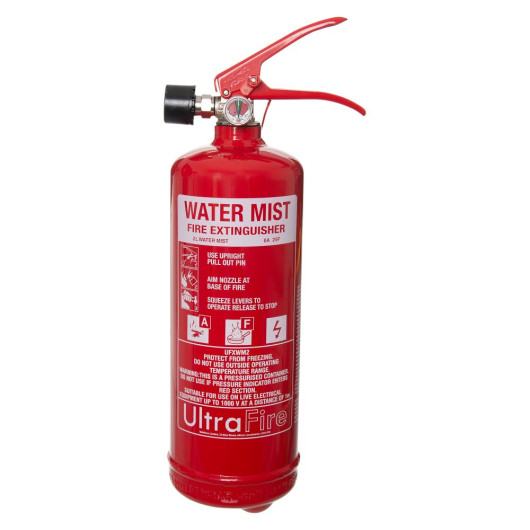
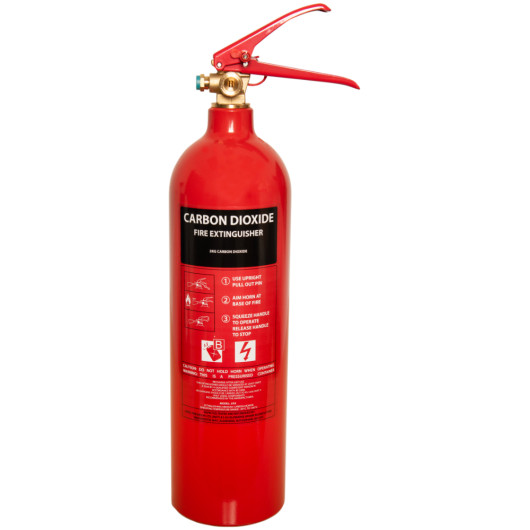
Understanding each extinguisher type reveals their strengths and limitations.
Water extinguishers excel at tackling Class A fires with solid combustibles. They’re economical for offices and warehouses. However, you must never use them on electrical equipment or burning liquids.
Water mist extinguishers represent a significant advancement. They offer versatility across Class A, B, C, F and electrical fires through de-ionised water that’s safe around sensitive equipment. No damaging residue either.
CO2 extinguishers provide residue-free firefighting for electrical and flammable liquid fires. Perfect for server rooms and laboratories. However, the gas disperses quickly, which can allow re-ignition.
Foam extinguishers tackle Class A and B fires effectively. They provide a cooling effect that prevents re-ignition. Traditional AFFF foams contain harmful PFAS chemicals, so we stock fluorine-free eco-foam alternatives exclusively.
Dry powder extinguishers offer the broadest fire class coverage: A, B and C. They work well in outdoor environments and vehicles. But discharge creates vision-blocking clouds unsuitable for indoor use or escape routes.
Wet chemical extinguishers target Class F cooking oil fires specifically. They work through a chemical reaction that creates a soapy layer preventing re-ignition. Essential in commercial kitchens with deep fat fryers.
Service-free P50 extinguishers provide a 10-year maintenance-free guarantee in water mist and eco-foam variants. They dramatically reduce lifetime costs compared to traditional extinguishers requiring annual engineer visits and five-yearly pressure testing.
Which fire extinguisher types are best for specific applications?
One consideration cuts across almost every environment on this list. Lithium-ion batteries are now everywhere: laptops, tablets, smartphones, power tools, e-bikes and scooters. When these batteries fail, they can enter thermal runaway: a self-sustaining reaction that generates intense heat and is notoriously difficult to extinguish with a standard unit. Wherever lithium-ion devices are regularly charged or stored, a specialist lithium-ion extinguisher must be considered.
Homes
Domestic homes benefit most from 1-3 litre water mist extinguishers. They handle the majority of household fire risks including electrical equipment. Add a fire blanket for kitchen areas. Got a deep fat fryer? Include a wet chemical extinguisher alongside the water mist unit.
Offices
Office environments typically require water or foam extinguishers for paper fires paired with CO2 units near server rooms and electrical distribution boards. Position extinguishers along escape routes and near exits.
Commercial Kitchens
You’ll need wet chemical extinguishers rated for your specific fryer capacity. Size depends on the volume of cooking oil you’re dealing with.
Industrial Workshops and Garages
These perform best with dry powder extinguishers. They tackle flammable liquids and gases common in these settings, but adequate ventilation is essential.
Vehicle Protection
This varies by type. Cars and motorcycles suit compact powder extinguishers that fit easily into vehicles. Vans and small trucks benefit from larger powder units. HGVs and vehicles carrying dangerous goods require substantial capacity units with secure mounting.
Marine Applications
Server Rooms and Data Centres
These demand CO2 or water mist extinguishers that won’t damage sensitive electronic equipment. We prefer CO2 where equipment density is high.
Schools and Public Buildings
Prioritise water mist extinguishers for their broad-spectrum capability and minimal user risk. They’re non-toxic and safe around children.
Care Homes and Hospitals
You need extinguishers that residents and staff can operate easily. Lighter water mist units are ideal with clear signage and regular training.
What alternatives should you consider beyond standard fire extinguishers?
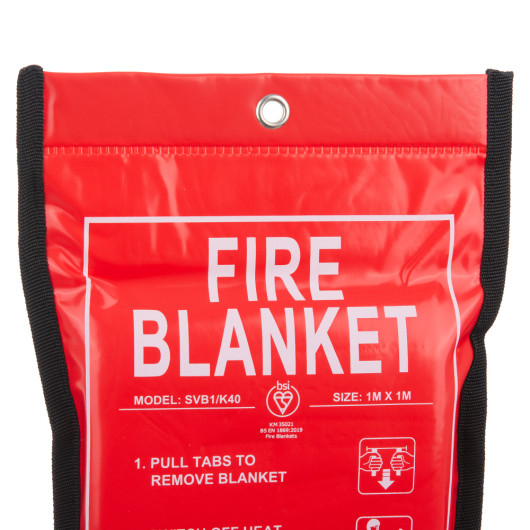
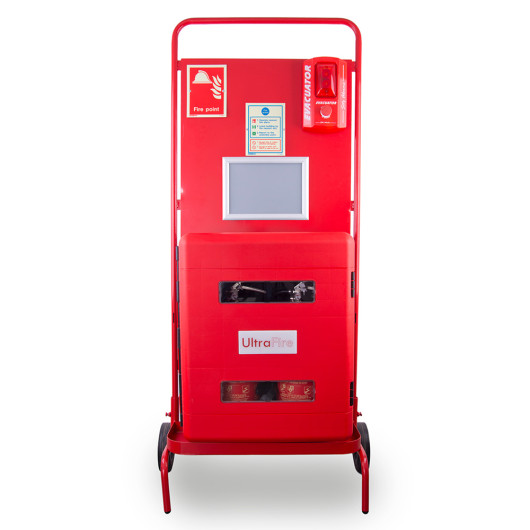
- Portable fire extinguishers form the foundation of fire safety. But several alternatives address specific challenges.
- Fire blankets provide an essential complement in kitchens. They smother small pan fires and provide wrap-around protection for clothing fires. They lack the range and power of extinguishers for larger incidents though.
- Automatic extinguishers suit unmanned areas: engine compartments, electrical cabinets and server racks. They activate when temperature thresholds are exceeded without human intervention.
- Wheeled extinguishers serve industrial premises, warehouses and car parks where fire loads are substantial. These heavy-duty units typically range from 25kg to 50kg, though larger capacity units are available for high-risk applications. They provide extended discharge times and greater firefighting capacity than portable units.
- Lithium-ion extinguishers represent new technology. They use Aqueous Vermiculite Dispersion (AVD) to cool battery fires and control thermal runaway. Essential for premises with electric vehicles, e-bikes or significant battery storage.
- Fire suppression systems provide automatic protection for commercial kitchens, computer rooms and industrial processes. They detect and suppress fires before they spread.
- Stainless steel fire extinguishers combine full functionality with premium aesthetics. They blend into modern offices and hospitality environments and offer complete corrosion resistance.
For landlords managing multiple properties, service-free P50 extinguishers eliminate the administrative burden and cost of coordinating annual maintenance visits across numerous sites.
Fixed installation systems using clean agent technology suit environments where water or powder damage would be catastrophic: museums, archives and telecommunications facilities.
What are the key indicators of quality when evaluating fire extinguishers?
| Quality Indicators (Green Flags) | Common Selection Mistakes (Red Flags) |
|---|---|
| BS EN3 certification with BS Kitemark confirming British Standards compliance | Choosing based solely on price without considering fire class suitability |
| Clear colour-coded labels (red body with colour-coded band) indicating extinguisher type | Selecting powder extinguishers for indoor domestic use despite visibility and respiratory risks |
| Fire rating clearly displayed (e.g. 13A, 55B) showing firefighting capacity | Installing only one extinguisher type when multiple fire risks exist |
| Dielectric testing certificate (5kV or 35kV) for electrical safety if required | Positioning extinguishers too far from high-risk areas (exceeding 30m for Class A, 10m for Class B/F) |
| 5-10 year manufacturer warranty demonstrating product confidence | Mixing old BS 5423 extinguishers (fully coloured bodies) with modern EN3 types |
| Pressure gauge visible on front for monitoring charge status | Purchasing without conducting a proper fire risk assessment |
| LPCB or similar third-party testing certification | Neglecting to train staff on correct extinguisher use for different fire types |
| Stainless steel valve and components resisting corrosion | Choosing extinguishers without considering clean-up and residue impact |
| Eco-friendly options (fluorine-free foam, water mist) with minimal environmental impact | Ignoring maintenance requirements and ongoing service costs |
| MED approval for marine applications if needed | Selecting oversized extinguishers that staff cannot lift or operate effectively |
We’ve established ourselves as the UK’s leading fire safety provider through an unwavering commitment to customer satisfaction, environmental responsibility and technical expertise. With ISO9001 certification, BAFE-certified engineers and membership in the Fire Industry Association, we deliver comprehensive fire safety solutions backed by award-winning customer service.
Our specialist team provides fire risk assessments, free test reminders, and log books. Our 100% renewable electricity operations and innovative service-free extinguisher range demonstrate genuine environmental stewardship. Whether you need a single smoke alarm or a nationwide contract, we combine competitive pricing with technical knowledge that’s secured partnerships with major institutions including the Church of England.
For personalised guidance on selecting the optimal fire extinguishers for your specific needs, contact our expert team. We’ll ensure your fire safety provisions meet both legal requirements and best practice standards.
Frequently Asked Questions
How many types of fire extinguisher are there in the UK?
There are six main types: water, foam, CO2, dry powder, water mist and wet chemical. More recently, specialist lithium-ion battery extinguishers using Aqueous Vermiculite Dispersion (AVD) have been introduced to address growing risks from e-bikes, electric vehicles and rechargeable devices. Service-free P50 extinguishers are also available in water mist and eco-foam variants, offering the same firefighting capability with significantly reduced maintenance requirements.
What is the most versatile fire extinguisher for home use?
A water mist extinguisher is generally the best all-round choice for domestic settings. It tackles Class A, B and C fires as well as electrical fires, and contains only de-ionised water, making it non-toxic, residue-free and safe to use around children and pets. For homes with a deep fat fryer, add a small wet chemical extinguisher and a fire blanket for full kitchen coverage.
Why are AFFF foam fire extinguishers being phased out?
AFFF foam contains PFAS chemicals, often called “forever chemicals”, which persist in the environment and are harmful to people and wildlife. UK legislation is progressively restricting their manufacture and use. Fluorine-free eco-foam and water mist extinguishers are the recommended replacements, offering equivalent fire class coverage without the environmental harm.
Do I need different fire extinguishers for different rooms?
Yes. The correct extinguisher depends on the fire risks present in each area. Offices typically need water mist or foam paired with CO2 near electrical equipment. Kitchens require wet chemical extinguishers for cooking oil fires. Garages and workshops suit dry powder for flammable liquid and gas risks. A fire risk assessment will identify exactly what’s needed and where.
What is a P50 service-free fire extinguisher and how does it save money?
P50 extinguishers are composite-construction units that don’t corrode and don’t require annual servicing by an engineer for 10 years. Traditional steel extinguishers need yearly professional servicing plus a discharge and refill at five years. P50s eliminate those recurring costs, and their 20-year total lifespan is double that of conventional extinguishers, making them significantly cheaper to own over time.
All information correct at time of posting.