Tuesday 3rd November 2026
Choosing the right fire alarm system feels straightforward until you actually start looking. Then come the grades, the categories, the system types, the British Standards references, and the quiet realisation that getting it wrong isn’t just an inconvenience, it’s a legal liability.
This guide is here to change that. Whether you manage a care home, a block of flats, a school, or a small commercial unit, we’ll walk you through exactly what fire alarm systems are available in the UK, how they differ and how to match the right one to your building. No jargon overload. No guesswork. Just clear, practical guidance that helps you make a confident decision.
Understanding Fire Alarm Systems: Conventional vs Addressable
There’s a question almost every responsible person asks at some point: what’s actually the difference between a conventional and an addressable fire alarm system? The answer shapes everything else, so it’s the right place to start.
How Conventional Fire Alarm Systems Work

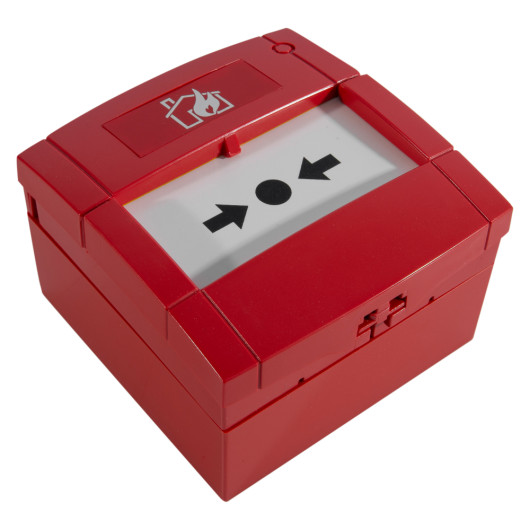
A conventional fire alarm system divides your building into zones, each wired back to a central control panel. When a detector or call point activates, the panel lights up to show which zone is triggered – but not which individual device caused it.
That’s fine in a small building. If your premises is a single-storey office or a compact shop, ‘Zone 2, Ground Floor’ tells you everything you need to respond quickly. The system is reliable, cost-effective and fully compliant with BS 5839-1 when correctly designed and installed.
The limitation shows up in larger or more complex premises. Searching an entire zone to find the source of an alarm costs time you may not have. For a building with multiple floors, separate wings, or vulnerable occupants, that gap between ‘zone’ and ‘exact location’ can matter enormously.
We stock conventional fire alarm panels and accessories with two zone fire alarm system and four zone fire alarm system configurations from Apollo, AlarmSense and Rafiki (all compliant with BS 5839-1). For smaller premises with straightforward layouts, conventional systems remain a proven and practical option.
How Addressable Fire Alarm Systems Work
Addressable systems take a different approach entirely. Every device on the system (every smoke detector, every heat detector, every manual call point) carries a unique electronic address. When one activates, the control panel doesn’t just show a zone. It shows exactly which device triggered and where it is, right down to the room.
An addressable fire detection system employs a loop of sensors and other devices, all individually addressed numerically. When a sensor activates, the address of that device, along with a textual description in most cases, is reported at the control panel. In practice, that means a display reading something like ‘Smoke detector, Room 12, Second Floor’ rather than ‘First Floor Zone.’
That single difference changes how quickly staff can respond, how precisely the fire service can act on arrival, and how easily an engineer can fault-find during maintenance. It also shapes how effectively you can implement cause-and-effect logic: releasing doors, triggering interfaces or controlling smoke ventilation in line with the fire strategy.
Wireless fire alarm control panels work on the same addressable principle. A wireless fire alarm system uses a secure wireless link between the sensors and the fire alarm panel, making it ideal for premises where cables may be unsightly, such as churches, listed buildings or spaces where interior decoration is valued and should not be disturbed. It’s also quick to install and minimises disruption. For a heritage building or an occupied premises where routing cables through walls isn’t practical, a wireless fire alarm system is often the most sensible route.
Why Addressable Fire Alarm Systems Are The Most Common
Addressable systems have become the standard across most commercial premises in the UK, and the reasons are straightforward.
Precision Reduces Risk
The precision of an addressable system means fire crews can go directly to the source instead of searching. Intelligent detectors can also be tuned to distinguish between nuisance smoke and genuine hazards, reducing false alarms and unnecessary evacuations.
Fewer false alarms matters more than it might initially seem. Every unnecessary evacuation disrupts operations, erodes confidence in the system and, over time, makes occupants less likely to take alarms seriously. Staff and visitors are more likely to trust an alarm that rarely gives false alerts, which helps ensure they respond correctly when it really counts.
Maintenance Becomes Simpler
Addressable systems simplify fault-finding and reduce downtime during maintenance. When a device develops a fault, the panel identifies it by address. An engineer doesn’t need to check every detector in a section. They go straight to the one with the problem. For a large building with dozens of devices, that’s a meaningful saving in time and cost.
The Cost Gap Has Narrowed
Addressable systems do carry a higher upfront cost than conventional alternatives, but that gap has closed considerably in recent years. With diminishing technology costs, the price differential between conventional and addressable systems has been dramatically reduced. Factor in reduced maintenance time, fewer disruptive false alarms, and a system that can expand without significant rewiring, and the value case becomes clear for most commercial premises.
For a small shop or office, a conventional system may still be adequate and cost-effective. But for multi-storey buildings, hospitals, schools, hotels or manufacturing sites, the case for addressable systems is strong.
What Is The Most Common Fire Alarm System?
The straightforward answer is: addressable. Rather than being limited to general zone information, addressable alarm systems can identify individual alarms and pinpoint the location of a fire or any fault. In alarm condition, the panel shows not only the zone number but also a text description to indicate the exact location of the triggered device.
That said, ‘most common’ isn’t the same as ‘always right’. The appropriate system for your building depends on its size, layout, occupancy type, risk level and the outcome of your fire risk assessment. Conventional fire alarm systems are compliant and legitimate in smaller, lower-risk premises. Conventional systems tend to fit smaller or lower-risk environments, while addressable systems are usually more appropriate for larger or higher-risk premises, including care settings, schools and hospitals, because the panel can tell you precisely where the activation occurred.
Wireless systems sit alongside both as a third option, delivering addressable-level precision without the cable runs. They’re popular in listed buildings, churches and occupied premises where installation work needs to be kept to a minimum.
Fire Alarm System Grades And Categories Explained
System type is one half of the picture. The other half is understanding how grades and categories define what level of protection your system must deliver. They’re often confused, but they answer two different questions.
What Do Fire Alarm System Grades Mean?
The grade describes the type of equipment and how the system is powered and controlled.
Grades range from A at the top to F at the bottom. Grades A to C typically apply in commercial settings, involving combinations of detectors, sounders, indicating devices and a control panel. In domestic settings, grades D, E or F are more common, often relying on battery power or a mains connection with battery backup.
For most commercial premises in the UK, a Grade A system is the standard: a dedicated control panel with zone indicators or an addressable display, wired to detectors and call points throughout the building, with a standby battery providing at least 24 hours of backup power followed by 30 minutes in alarm.
In domestic premises covered by BS 5839-6, you’ll encounter the fire alarm system grade D1 LD2 specification. This refers to mains-powered interlinked detectors covering escape routes and high-risk rooms in a dwelling. It comes up frequently for landlords navigating HMO licensing requirements, and understanding it saves a lot of confusion when reading a fire risk assessment report.
What Do Fire Alarm System Categories Mean?
If the grade tells you what kind of system it is, the category tells you where it covers and why. Choosing the right category depends on the level of risk within a building and how it’s used. Factors such as occupancy type, whether that’s offices, care homes or healthcare environments, play an important role in determining the level of protection required. Insurance requirements and regulatory expectations can also influence whether a higher category is needed.
Under BS 5839, fire alarm systems fall into three main category types: Category M (manual), Category L (life protection), and Category P (property protection).
Here’s how those categories break down in practice:
| Category | Coverage | Typical use |
|---|---|---|
| M | Manual only – call points, no automatic detection | Small, always-occupied premises |
| L1 | All areas of the building | Care homes, hospitals, high-risk buildings |
| L2 | Escape routes, high-risk rooms and sleeping areas | Hotels, care homes, buildings with known high-risk zones |
| L3 | Escape routes and all rooms opening directly onto them | Schools, offices, multi-storey commercial buildings |
| L4 | Escape routes only (corridors, stairways) | Low-risk ground-floor premises |
| L5 | Bespoke coverage for a specific fire risk objective | Server rooms, specialist environments |
| P1 | Whole building for property protection | Premises where early detection limits damage |
| P2 | Defined high-risk areas for property protection | Warehouses, storage areas |
Category M is the simplest form. There’s no automatic fire detection. The first person to find the fire operates a manual call point, which activates the system and warns everyone in the building. If a fire starts in an unoccupied part of the building, it could grow undetected for some time. That’s an acceptable risk in some very small, always-staffed premises, but it’s not appropriate for buildings with sleeping occupants or complex layouts.
The L categories are the most relevant for the majority of commercial buildings. An L1 system, installed throughout all areas of a building, aims to offer the earliest possible warning of fire so as to achieve the longest available time for escape. An L2 system includes the coverage of L3, with the additional objective of affording early warning in specified areas of high fire hazard. An L3 system is designed to give warning early enough for all occupants, other than possibly those in the room of fire origin, to escape safely before escape routes become impassable.
Fire alarm systems L1, L2, L3 are the categories most commonly specified for commercial and public buildings in the UK, with the appropriate choice determined by a fire risk assessment rather than personal preference.
Fire Alarm System Types And BS 5839-1
It’s worth being clear on one distinction that trips people up regularly. BS 5839-1 is the code of practice covering fire detection and fire alarm system design, fire detection and fire alarm system installation, fire detection and fire alarm system commissioning, and fire detection and fire alarm system maintenance in non-domestic premises. It provides the framework your installer works to. The Regulatory Reform (Fire Safety) Order 2005 is legislation produced by the UK Government, outlining the legal responsibilities of responsible persons. BS 5839-1 is a guide to best practice.
The Regulatory Reform (Fire Safety) Order 2005 applies in England and Wales. In Scotland, the equivalent legislation is the Fire (Scotland) Act 2005 and the Fire Safety (Scotland) Regulations 2006. In Northern Ireland, it’s the Fire and Rescue Services (Northern Ireland) Order 2006 and the Fire Safety Regulations (Northern Ireland) 2010. All four nations use BS 5839-1 as guidance for best practice.
Applications Of Addressable Fire Alarm Systems
With the foundations in place, it’s worth looking at how the right system choice plays out across different building types. The principles are consistent, but the specific requirements vary considerably.
Commercial And Business Fire Alarm Systems
Business fire alarm systems in office environments tend to follow a Grade A, addressable specification from medium size upwards. A compact single-floor unit might manage well with a conventional system, but a multi-storey building with separate tenancies, server rooms and plant areas needs device-level precision.
Types of fire alarm systems in the UK for commercial premises almost always fall into the L3 or L2 category, with addressable detection and cause-and-effect programming that can trigger door releases, control ventilation or enable staged evacuations depending on which zone activates first.


Fire Alarm System In A Care Home
A fire alarm system in a care home carries particular weight. Modern care home fire alarms are typically addressable systems. An addressable fire alarm panel can pinpoint the exact detector or call point that has been activated, displaying ‘Room 12 – Second Floor’ rather than a vague zone location. Knowing precisely where smoke or heat has been detected is vital when every second counts.
Even with addressable detection, the system groups detectors into zones on the panel for an overview. Typically, each floor or each fire compartment forms a separate zone, which helps both staff and firefighters assess the situation quickly. Care homes also generally require connection to an Alarm Receiving Centre so the fire service is alerted automatically, rather than depending on a staff member to make the call in a high-pressure moment. Under BS 5839-1:2025, the absence of remote monitoring in residential care premises is now an unacceptable variation from the standard.
Fire Alarm System For Flats And Residential Buildings
Fire alarm systems for residential buildings in the UK depend on whether you’re covering communal areas or individual dwellings, and the answer to that question changes the relevant standard.
- The communal areas of a block of flats (the corridors, stairwells, and entrance lobbies) typically require a Grade A commercial system to BS 5839-1.
- Individual flats fall under BS 5839-6.
- For most HMOs, BS 5839-6 recommends a Grade D, Category LD2 system as a minimum: mains-powered interlinked detectors covering escape routes and high-risk rooms.
- Larger or higher-risk HMOs may require Grade C with a panel-based system.

Local authorities licensing HMOs under the Housing Act 2004 will specify fire alarm requirements as licence conditions. Always check those licence conditions alongside the standard, and don’t assume a minimum specification will satisfy your local authority.
A fire alarm system for flats is one area where landlords often underestimate the complexity. If your block has a communal fire detection system, it needs professional design, installation and ongoing maintenance, not an off-the-shelf setup.

Schools, Hotels, And Healthcare Settings
Buildings with sleeping occupants, including hotels, care homes and student accommodation, demand a high level of life protection. An L1 or L2 system is typically recommended so that every bedroom and escape route has automatic detection.
Schools generally operate on an L3 addressable system. The cause-and-effect programming available in addressable panels is especially valuable here, enabling staged evacuations, zoned sounders and integration with other building systems. Healthcare settings follow a similar logic, often with additional requirements for phased evacuation and remote monitoring.
Fire Detection And Fire Alarm System Design: Getting The Specification Right
Getting the specification wrong at the design stage creates problems that are expensive to fix once a system is installed. The correct category is determined through a fire risk assessment. This considers the building layout, occupancy type and fire risks, helping ensure the system meets the required level of protection.
A fire risk assessment is where your legal obligation and your practical needs come together. It’s not a bureaucratic exercise. It’s the document that tells a competent designer what your building needs and gives them the information to specify it correctly.
When choosing a company to install or maintain your fire alarm system, look for BAFE registration. It demonstrates third-party verified competence that goes beyond basic qualifications. We offer fire alarm maintenance to BS 5839-1 with nationwide coverage and full test certification.
Fire alarm systems for residential buildings in the UK, commercial fire alarm systems and business fire alarm systems all follow the same fundamental principle: the right system is the one that matches your building’s risk, not simply the most familiar or the lowest-cost option available. Start with a fire risk assessment, work with a qualified installer and choose a system you can maintain properly for the long term.
All information correct at time of posting.