Wednesday 6th May 2026
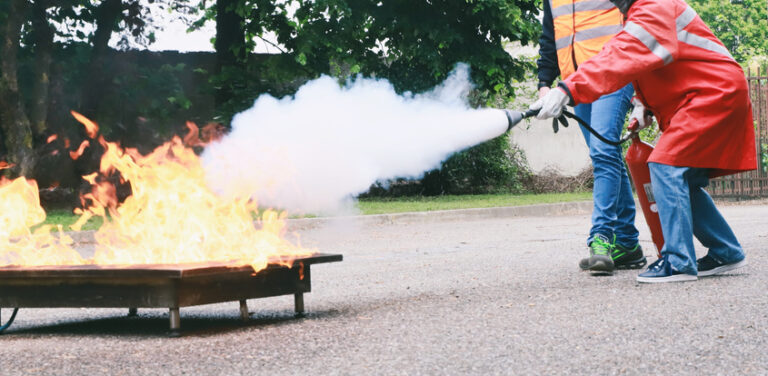
Never use water extinguishers on flammable liquids fires. They’ll cause the burning liquid to spread rapidly and can create an explosion hazard. Water and flammable liquids simply don’t mix, so the fuel floats on the water’s surface and spreads the flames across a wider area. For Class B fires involving petrol, oil, paint or other flammable liquids, you need extinguishers specifically designed for this fire class: foam, powder, CO2 or water mist.
Estimated reading time: 6 minutesKey Takeaways
Water extinguishers are dangerous on flammable liquids fires because water causes these liquids to spread, creating a larger fire area.
Proper fire extinguisher identification through colour coding and clear labelling prevents dangerous mistakes during emergencies.
Using the wrong extinguisher can result in rapid fire spread, explosions and serious injuries.
Foam, dry powder, CO2 and water mist extinguishers work on flammable liquids fires, each with specific advantages.
The density difference between water and most flammable liquids causes the burning fuel to float and spread when you apply water.
Flammable liquids fires are classified as Class B fires in the UK and include petrol, diesel, oils, paints, solvents and alcohols.
Disclaimer: This guide provides general information about fire extinguisher selection for flammable liquids fires and is intended for educational purposes only. It doesn’t replace professional fire safety training, a comprehensive fire risk assessment or adherence to current UK fire safety legislation. Always consult with qualified fire safety professionals to ensure your premises have appropriate fire safety equipment and that your staff receive proper training in its use.
What Are Flammable Liquids Fires?
Class B fires are classified under the European fire classification system used in the UK as fires involving flammable liquids or liquefiable solids that can ignite and burn readily.
Common examples? Petrol, diesel fuel, heating oil, cooking oils, paint thinners, solvents, methylated spirits, white spirit and various alcohols. You’ll find Class B fires in numerous settings: domestic garages and kitchens, industrial facilities, vehicle maintenance workshops and anywhere people store flammable liquids.
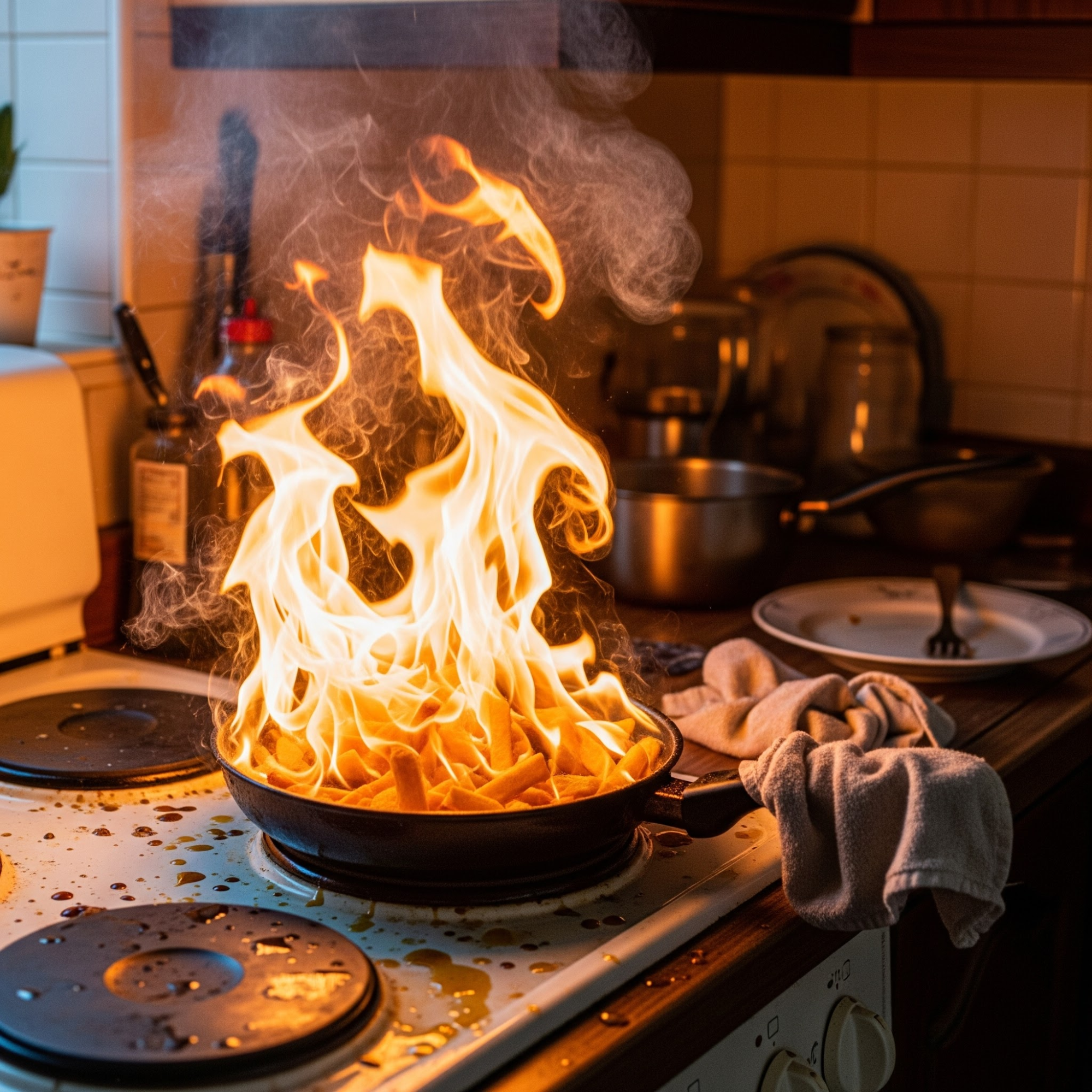
Flammable liquids fires behave very differently from solid combustible fires. The fuel source moves and spreads rapidly across surfaces. When a flammable liquid ignites, the fire burns at the liquid’s surface where the vapours meet oxygen. This creates a pool fire with intense heat and often thick black smoke. These fires escalate quickly if you don’t address them with the correct extinguishing agent.
Why Are Water Extinguishers Dangerous on Flammable Liquids Fires?
Most common flammable liquids like petrol, diesel and oils are less dense than water. They don’t mix with it. So the burning fuel floats on top of any water you apply.
Discharge a water extinguisher onto a flammable liquids fire and you won’t extinguish the flames. Instead, you’ll create a spreading layer of burning liquid that rides on top of the water, potentially carrying the fire across a much larger area than the original fire zone.
The force of water from an extinguisher causes violent splashing and spattering of the burning liquid. This projects flaming fuel in multiple directions. The splashing effect spreads fire to previously unaffected areas, ignites nearby combustibles and can even splash burning liquid onto you or other people nearby. In enclosed spaces, this rapid spread quickly makes escape routes impassable.
Another danger is the potential for a boilover or froth-over. When water contacts a flammable liquid burning at high temperature, the water can sink below the fuel layer and rapidly convert to steam. The expanding steam violently ejects the burning liquid upwards and outwards in an explosive manner, creating a fireball effect. This risk is particularly acute with heavier petroleum products and oils that burn at higher temperatures.
Which Fire Extinguisher Types Are Suitable for Flammable Liquids Fires?
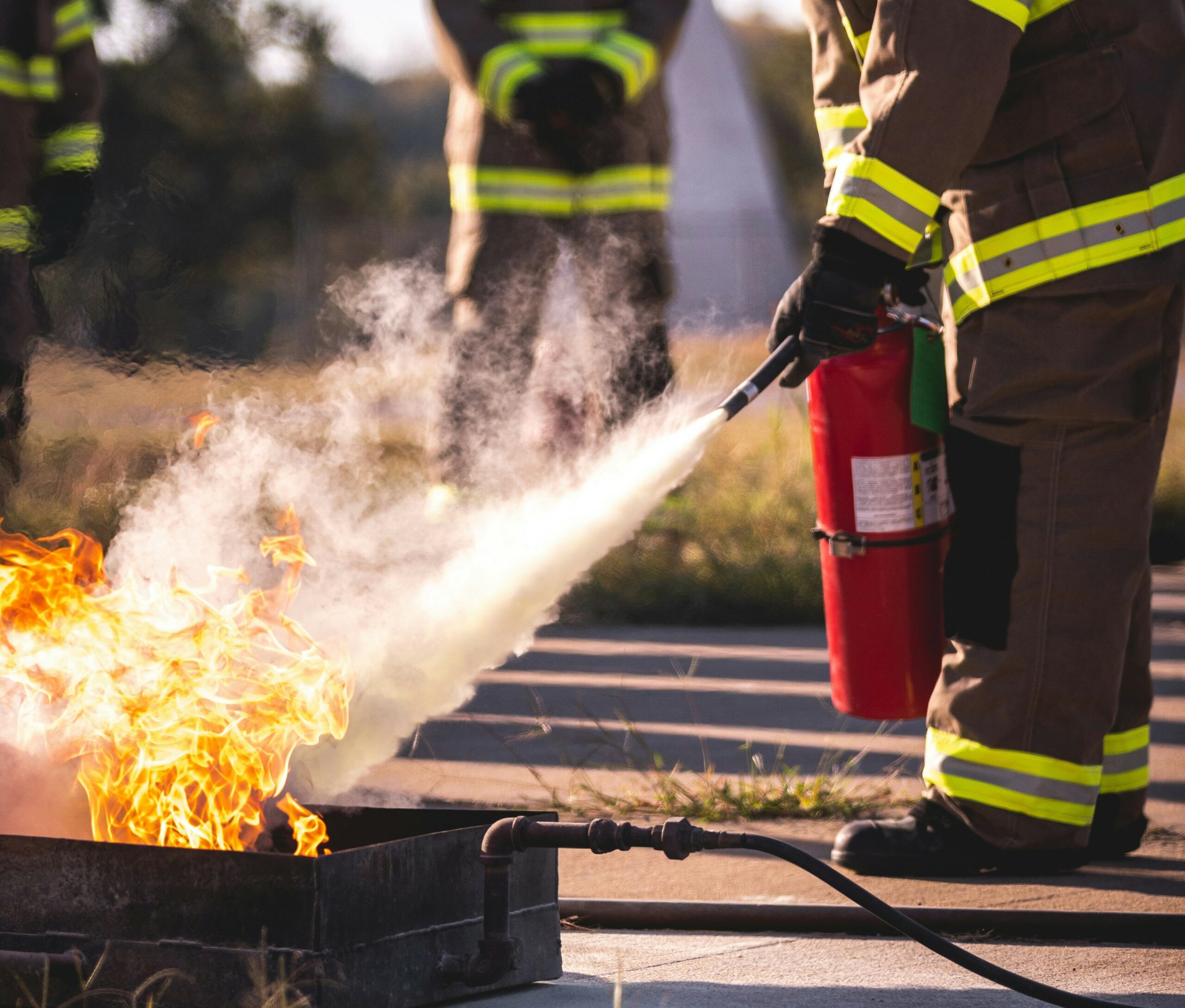
Foam extinguishers create a blanket over the fuel surface that smothers the flames by cutting off the oxygen supply. The foam also cools and forms a vapour-suppressing seal that prevents re-ignition.
Foam extinguishers work particularly well because they create a thin aqueous film between the fuel and the foam blanket. This provides excellent fire knockdown and burnback resistance. You can also use foam extinguishers on Class A fires, making them an excellent choice for mixed-risk environments.
Dry powder extinguishers (ABC or BC types) interrupt the chemical reaction of combustion. They create a barrier between the fuel and oxygen. These extinguishers discharge a cloud of fine powder that quickly knocks down flames. ABC powder works on Class A, B and C fires, or BC powder on just Class B and C fires.
However, powder extinguishers are messy. They may cause visibility issues and the powder can damage sensitive equipment. They’re best suited for outdoor areas, garages and industrial settings.
CO2 extinguishers displace oxygen around the fire and provide some cooling effect. They’re particularly suitable for flammable liquids fires involving electrical equipment because they leave no residue and don’t conduct electricity.
But CO2 extinguishers are less effective outdoors where wind can disperse the gas. They provide no cooling blanket over the fuel surface, so re-ignition is possible if hot surfaces or ignition sources remain.
Water mist extinguishers represent a modern solution. Despite being water-based, some models can be used on certain flammable liquids fires. These extinguishers discharge water as an ultra-fine mist of microscopic droplets that cool the fire and displace oxygen without causing the spreading problems associated with standard water extinguishers.
The mist evaporates quickly, absorbing heat and creating a steam barrier. Water mist extinguishers are versatile and many models are safe for use on electrical equipment. Always check the specific ratings and approvals for your particular extinguisher model.
How Do You Identify the Correct Extinguisher for Flammable Liquids Fires?
We use a standardised colour-coding system in the UK. Extinguishers have a red body with a coloured label or panel indicating the extinguishing agent type:
- Foam: cream-coloured label
- Powder: blue label
- CO2: black label
- Water mist: white label with specific markings
- Standard water: red label (clearly marked as unsuitable for flammable liquids fires)
Every fire extinguisher displays clear information about which fire classes it’s suitable for. Look for the letter classification system (A, B, C, D, F) along with pictograms. For flammable liquids fires (Class B), you need extinguishers with a “B” marking and a pictogram typically showing a container or fuel source.
Most extinguishers also include clear warnings about which fire types they should NOT be used on. Water extinguishers prominently display warnings against use on flammable liquids.
But here’s the thing: proper signage is essential for quick identification during emergencies when stress levels are high and decision-making time is limited. Mark fire extinguisher locations with photoluminescent or illuminated signs. Ideally, your fire safety signage should include simple guidance on extinguisher selection.
Regular training ensures that building occupants can quickly identify the appropriate extinguisher type, understand the colour-coding system and make safe decisions when confronted with different types of fires.
What Should You Do If the Wrong Extinguisher Is Used on a Flammable Liquids Fire?
Stop. Immediately.
If someone has already begun using a water extinguisher on a flammable liquids fire, evacuation is your immediate priority. The operator should stop discharging the extinguisher, alert others to the danger and evacuate the area without turning their back on the fire.
Move to a safe location. Ensure that exit routes remain accessible. Position yourself upwind of the fire to avoid smoke inhalation.
Once you’re at a safe distance, activate the fire alarm system if it’s not already activated. Contact the fire and rescue service by dialling 999. Don’t attempt to re-approach the fire or retrieve the incorrectly used extinguisher, even if you’ve identified a suitable extinguisher type. A flammable liquid fire that’s been exacerbated by water application escalates extremely rapidly.
Should you tackle the fire yourself? Only if:
- The fire is small
- You have immediate access to an appropriate extinguisher type (foam, powder or CO2)
- You’re trained and confident in its use
- You have a clear escape route
- The fire hasn’t yet spread significantly
However, the best course of action after someone uses an incorrect extinguisher is typically to evacuate, call the fire service and allow professionals to handle the situation with proper equipment and training.
What Are the Consequences of Using the Wrong Extinguisher Type?
Using a water extinguisher on a flammable liquids fire puts lives at risk. The burning liquid spreads rapidly across floors, work surfaces and into areas that weren’t previously involved in the fire. This spreading fire quickly cuts off escape routes, traps people in dangerous areas and creates multiple fire fronts that are impossible to control with portable extinguishing equipment.
The splashing and spattering of burning liquid causes severe thermal burns to the face, hands, arms and other exposed skin areas. If burning liquid makes contact with clothing, it ignites garments and causes catastrophic burn injuries. The violent boilover or explosive effects that occur when water contacts hot burning oil project flames and fuel several metres, potentially injuring multiple people simultaneously.
Property damage escalates rapidly when flammable liquids fires spread. The fire quickly involves building structures, stock, equipment and vehicles. In industrial or commercial settings, business interruption costs can be enormous. There may be additional consequences: environmental contamination from burning chemicals, loss of critical data or equipment and potential regulatory penalties if the incident reveals inadequate fire safety measures or training.
How Can You Prevent Extinguisher Selection Errors?
Training is everything. All employees and building occupants who may be expected to use fire extinguishers need proper training that includes:
- Understanding fire classes
- Hands-on practice with different extinguisher types
- Scenario-based learning that helps them identify which extinguisher to use for different fire situations
Refresh training annually and whenever you introduce new fire risks to the workplace.
2. Fire Risk Assessments
Conduct thorough fire risk assessments to ensure you position the correct types and quantities of extinguishers appropriately throughout your premises. Your fire risk assessment should identify all areas where you store, use or may have flammable liquids present. Make sure suitable Class B fire extinguishers are readily accessible in these locations.
Consider whether you should completely remove water extinguishers from certain high-risk areas to eliminate the possibility of incorrect selection during emergencies.
Position foam, powder or CO2 extinguishers in prominent, easily accessible locations near areas with flammable liquids risks. Ensure that water extinguishers are clearly labelled with their limitations.
Some organisations use simple decision aids or pictorial guides posted near extinguisher locations. These help users make quick, correct choices during the stress of a fire emergency.
Selecting the correct fire extinguisher for flammable liquids fires is crucial for safety and effective fire control. At Safelincs, we understand that navigating fire safety requirements can be complex. That’s why our expert team is here to help you choose the right fire safety equipment for your specific needs. Whether you need guidance on extinguisher selection, fire risk assessments or comprehensive fire safety solutions for your premises, contact our specialists today for professional advice tailored to your requirements.
Frequently Asked Questions
What is a Class B fire?
A Class B fire involves flammable liquids or liquefiable solids such as petrol, diesel, oils, paints, solvents and alcohols. Under the European fire classification system used in the UK, these fires are categorised separately from solid combustible fires (Class A) and cooking oil fires (Class F).
Can you use a CO2 fire extinguisher on a petrol fire?
Yes. CO2 extinguishers are suitable for Class B flammable liquids fires including petrol. They work by displacing oxygen around the fire and leave no residue, making them particularly useful where electrical equipment is also present. However, they offer no cooling blanket over the fuel surface, so re-ignition is possible if hot surfaces remain.
Why does water make a flammable liquid fire worse?
Most flammable liquids are less dense than water and don’t mix with it. The burning fuel floats on the water and spreads, carrying flames across a wider area. Water can also sink beneath hot fuel and rapidly convert to steam, expanding by up to 1,700 times its volume and causing an explosive boilover that ejects burning liquid in all directions.
Can you use a foam fire extinguisher on a petrol fire?
Yes. Foam extinguishers are one of the most effective options for Class B fires like petrol. The foam creates a smothering blanket over the fuel surface that cuts off the oxygen supply, cools the liquid and forms a vapour-suppressing seal to prevent re-ignition. Aim the foam at a nearby vertical surface rather than directly into the liquid to avoid splashing.
Is a dry powder extinguisher suitable for flammable liquids fires?
Yes. ABC dry powder extinguishers work on Class B flammable liquids fires by interrupting the chemical reaction of combustion and creating a barrier between fuel and oxygen. However, they create a mess, can reduce visibility and may cause breathing difficulties in enclosed spaces, so they’re best suited for outdoor areas, garages and industrial settings.
All information correct at time of posting.