Friday 31st July 2026
How to Stay Safe While Camping
Camping safety tips are essential for any trip – whether you’re heading out for a weekend or a longer adventure. A few simple steps can make your time outdoors far more enjoyable. Below, we break down the key areas every camper should think about, covering tent safety, fire safety, carbon monoxide risks, emergency prep, and electrics.
Did you know: Tents can catch fire surprisingly quick and burn down in less than 60 seconds.
Tent Safety: Setting Up
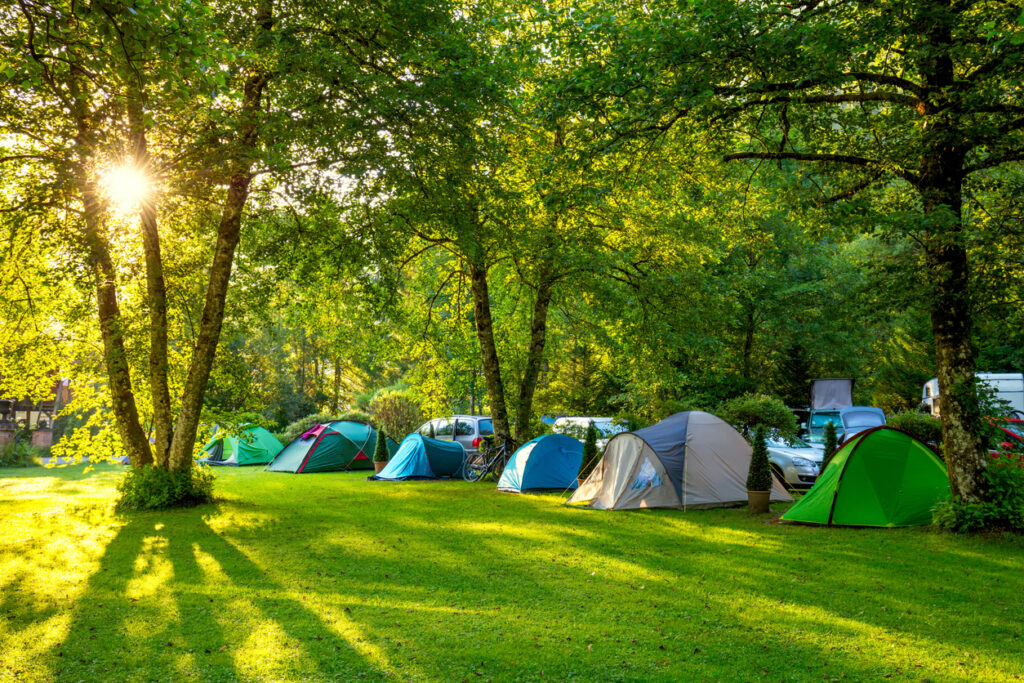
A well-positioned pitch is the foundation of a safe camping trip. When you arrive, look at the layout of the campsite and choose a spot that gives you enough space and visibility.
Keeping around 6 metres between tents helps reduce fire risks and gives everyone room to move. Inside your tent, avoid candles or open flames – they’re one of the most common causes of tent fires. Instead, use battery‑powered torches or lanterns.
To reduce night‑time accidents, reflective markers on guy ropes and clear pathways make a huge difference. A well‑lit route to the toilet block or water point can prevent trips and falls after dark.
Key tent safety tips:
- Maintain 6m spacing between tents
- Avoid candles; use battery‑powered lights
- Add reflective markers to guy ropes
- Keep exits clear
- Light pathways with solar stake lights
Fire Safety Tips While Camping
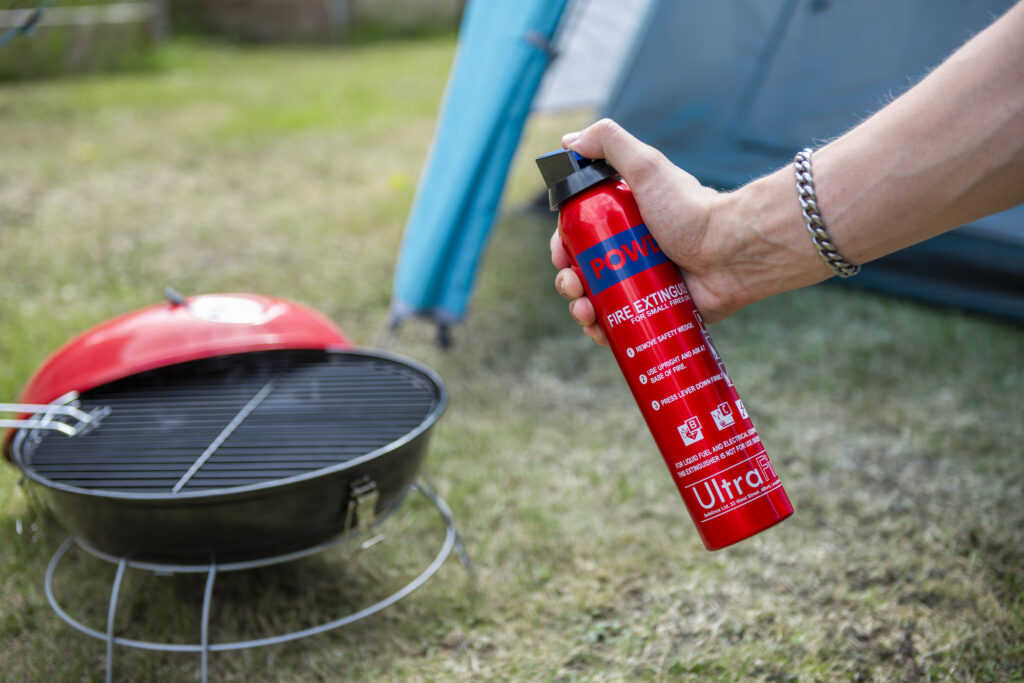
Cooking outdoors is part of the camping experience – but it’s also one of the biggest risks. Whether you’re using a portable stove or a charcoal BBQ, always cook well away from tents and sleeping areas.
Practising simple BBQ safety is key: never bring a BBQ inside a tent or awning, even when it’s cooling down. The risk of carbon monoxide poisoning is extremely high, and CO can linger for hours. When you’re finished cooking, dispose of coals safely using designated bins or sand buckets.
Fire safety reminders:
- Cook far from tents
- Never bring BBQs indoors
- Dispose of coals safely
- Keep a small fire extinguisher or bucket of water nearby
Carbon Monoxide: The Hidden Camping Danger
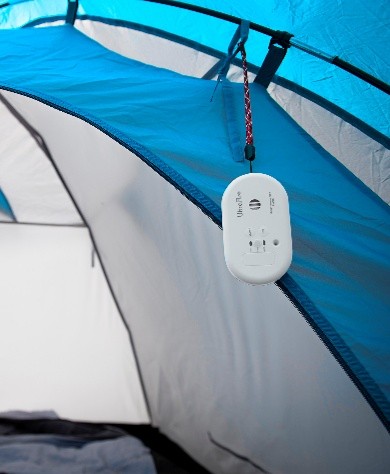
Carbon monoxide (CO) is invisible, odourless, and deadly – and unfortunately, many campers don’t realise how easily it can build up. CO can linger inside tents and awnings long after a stove or BBQ has been switched off.
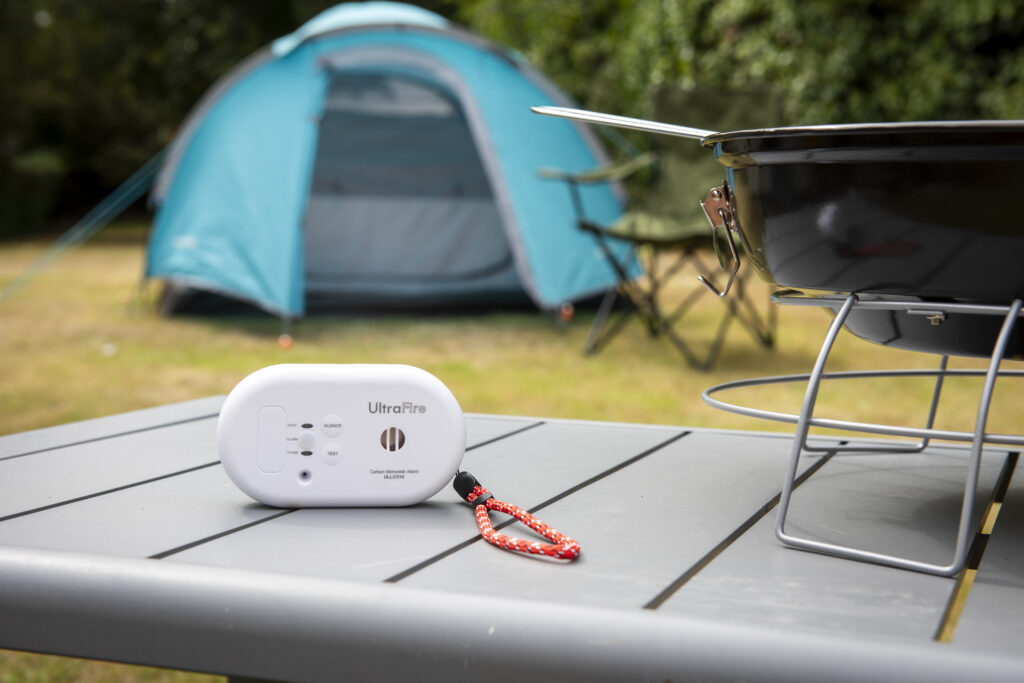
To stay safe, never use fuel‑burning devices inside enclosed spaces. Always cook and heat outdoors, in open, well‑ventilated areas. A portable CO alarm adds an extra layer of protection.
CO safety tips:
- No fuel‑burning devices in tents or awnings
- Cook outdoors only
- Keep in mind CO can linger for hours
- Use a portable CO alarm
Emergency Prep: What to Pack
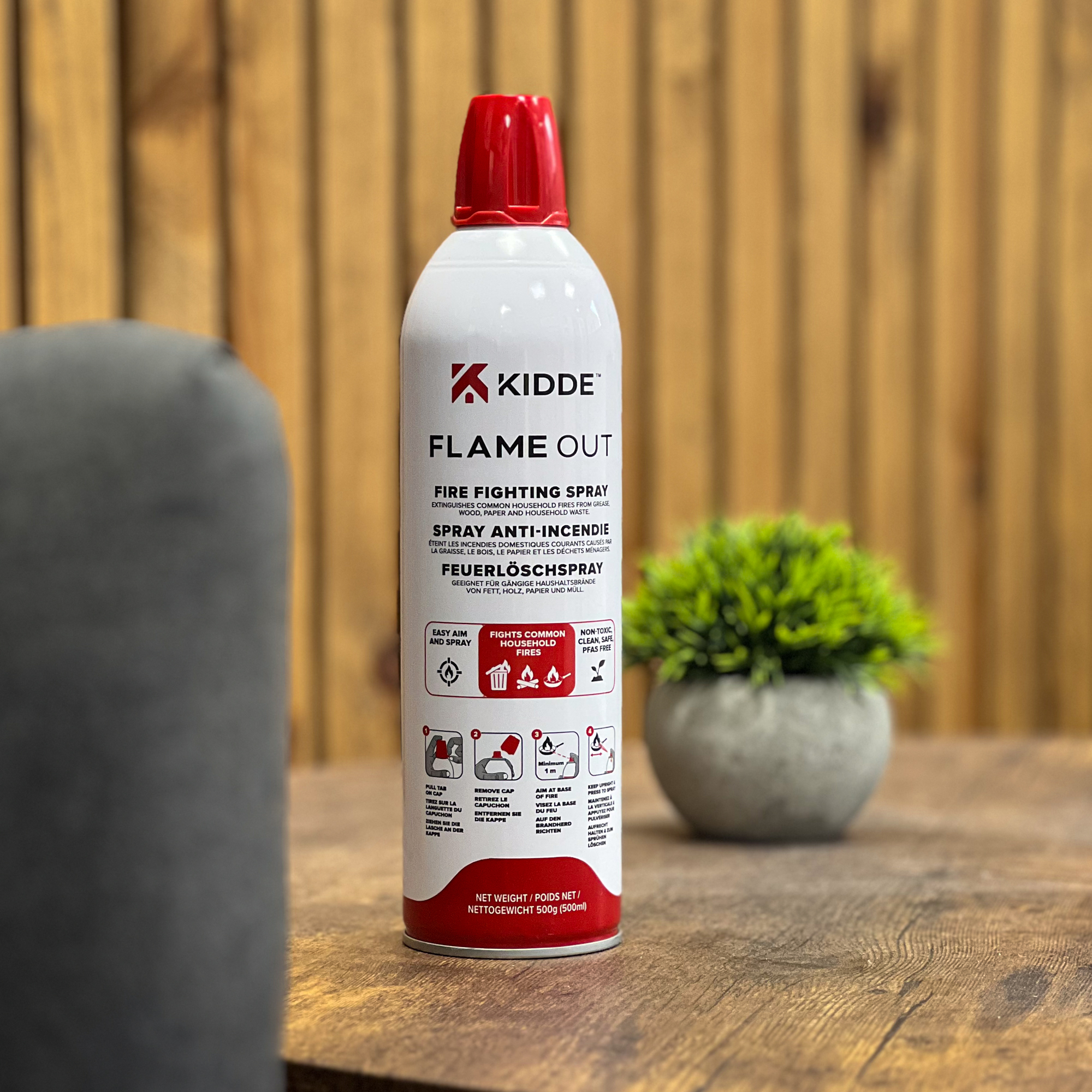
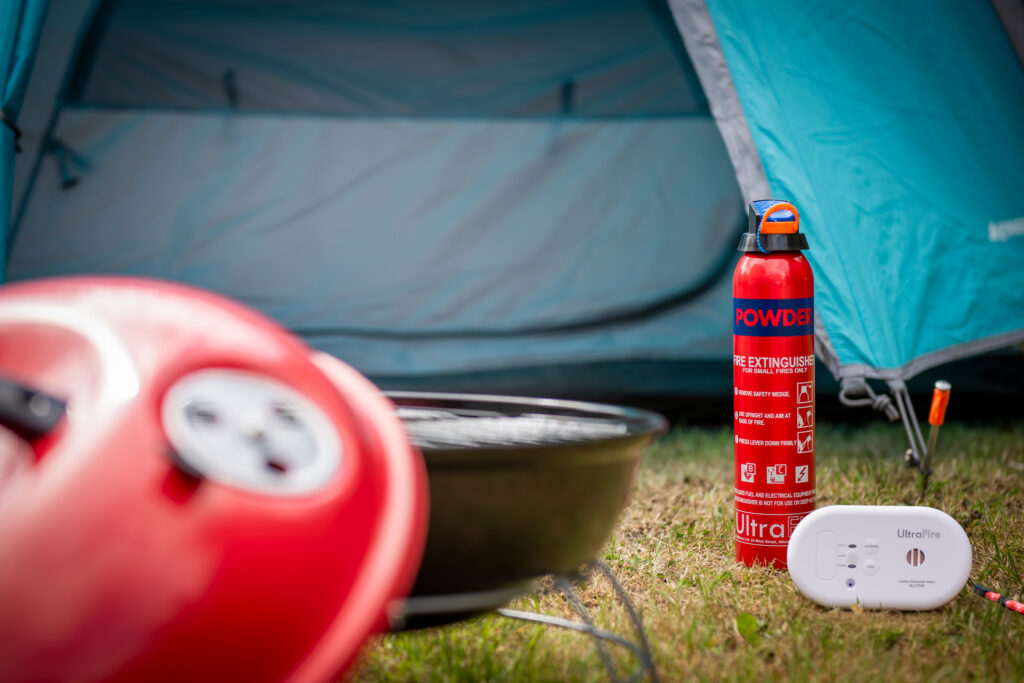
Even the most relaxed camping trip can throw in some surprises, so having a few emergency essentials on hand is always a good idea. A well‑stocked camping emergency kit is a great place to start, a first aid kit is a must – look for one that includes burn dressings, plasters, bandages, and antiseptic wipes.
Emergency lighting, a compact fire extinguisher, and a CO alarm are also smart additions. Keeping emergency contact information accessible can help in situations where phone signal is limited.
Camping essentials:
- First aid kit
- CO alarm
- Fire extinguisher
- Emergency lighting
- Emergency contact info
Electrics & Safe Charging
Modern camping often involves more tech than people expect – phones, GPS devices, lanterns, speakers, vapes, and power banks all need charging at some point. But unsafe charging is one of the most overlooked fire risks on campsites, especially in tents where heat can build up quickly. Practising safe charging camping habits is essential, helping reduce overheating and fire risks no matter what you’re powering up.
To stay safe, always use certified power banks and avoid cheap or unbranded chargers, which are far more likely to overheat or fail. It’s also important to think about where you charge things. Never charge devices under bedding, inside sleeping bags, or tucked into piles of clothes – these can trap heat and cause chargers or batteries to overheat.
If you’re charging multiple items – phones, vapes, head torches, or portable speakers – try to spread them out and keep them on a firm, flat surface with good airflow.
Safe charging tips:
- Use certified power banks
- Avoid unbranded chargers
- Don’t charge devices under bedding
For more advice on travel safety, speak to our team on 0800 433 4291 or email support@safelincs.co.uk.
All information correct at time of posting.