Friday 19th December 2025
Key Takeaways
- Chip pan fires remain one of the most dangerous kitchen hazards in the UK, causing around 1,200 incidents annually and resulting in thousands of injuries.
- Overheated oil, combined with common mistakes like adding water or wet chips, creates explosive conditions that can engulf a kitchen in seconds.
- Most chip pan fires happen between 10pm and 4am, often involving alcohol, unattended cooking and overfilled pans.
- Never throw water on a chip pan fire, as it can cause a violent fireball that spreads rapidly throughout your kitchen.
- Thermostat-controlled deep fat fryers and oven chips offer much safer alternatives to traditional chip pans, eliminating the risk of oil overheating.
- If a chip pan fire breaks out, your priority is getting everyone out safely and calling 999 rather than attempting to fight the fire yourself.
That golden basket of crispy chips might be a British staple. But the traditional chip pan remains one of the most dangerous items in UK homes.
Chip pan fires continue to cause serious injuries and property damage across the country, despite decades of fire safety campaigns.
Why are chip pans so risky? What causes these fires? And most importantly, how can you protect yourself and your family?
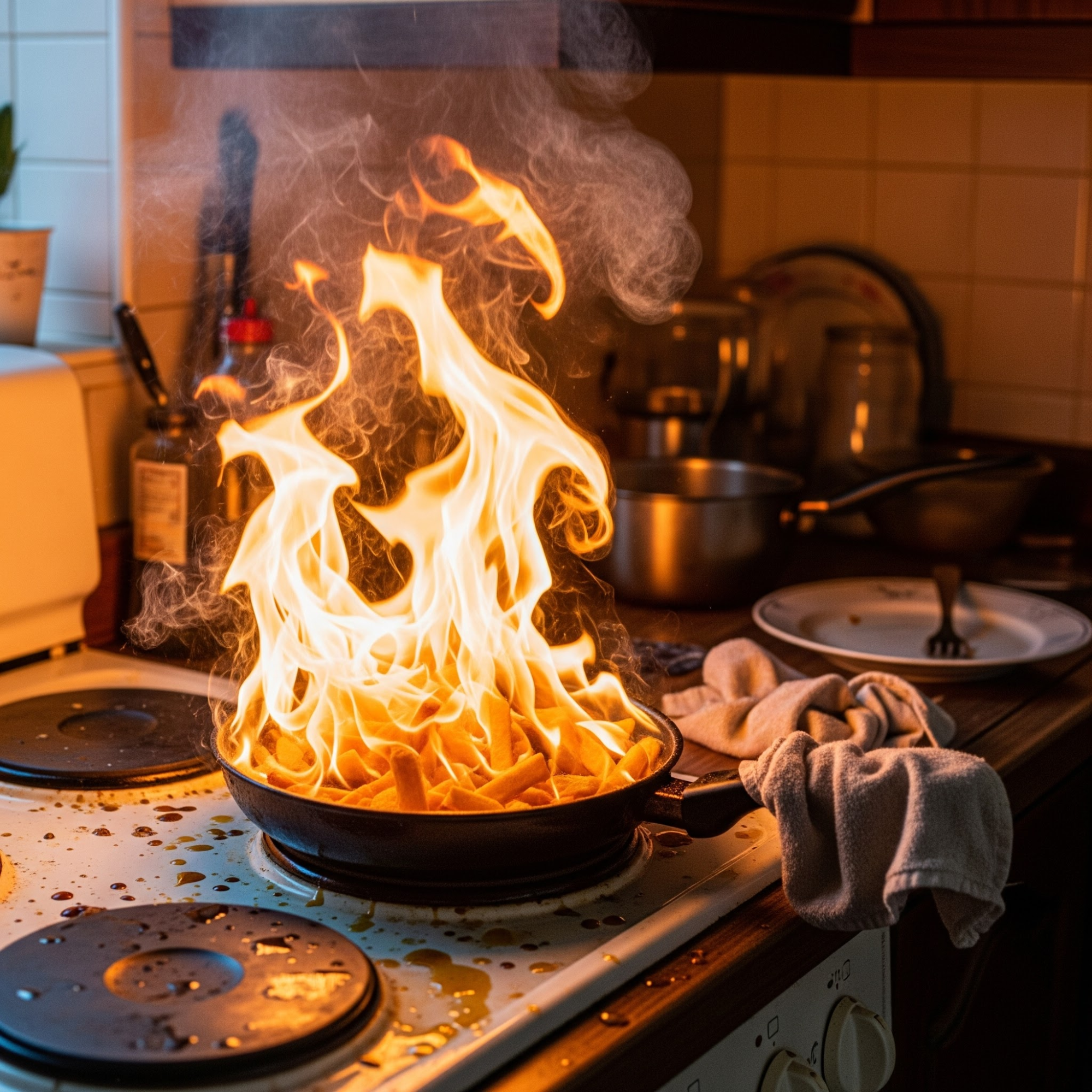
Why Chip Pan Fires Are So Dangerous
Chip pan fires aren’t your average kitchen mishap.
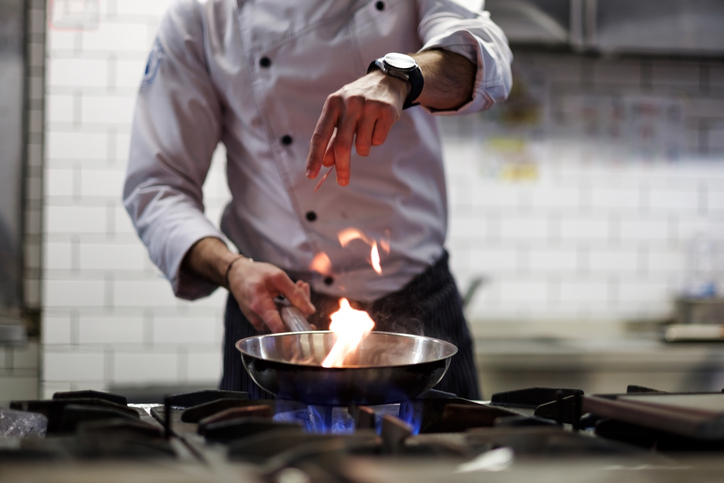
What makes chip pan fires particularly frightening is how quickly they develop and how intensely they burn. You’re heating several pints of oil to temperatures between 160°C and 190°C. At these temperatures, cooking oil becomes ideal fuel. Once it ignites, it burns hot and spreads fast.
The real danger comes from how people react. Your instinct might be to throw water on the flames or move the pan to the sink. Both actions create explosive results.
Water and burning oil don’t mix. They explode. The water vaporises instantly when it hits the superheated oil, expanding to roughly 1,700 times its original volume. This explosive expansion sends a fireball of burning oil shooting upwards and outwards. You could suffer severe burns. Kitchen cabinets, curtains and anything else nearby can catch fire within seconds.
Common Causes of Chip Pan Fires in UK Homes
Understanding what triggers chip pan fires helps you avoid the pitfalls. Here’s what causes most incidents:
- Overheated oil is the number one cause. When oil reaches its smoke point (around 230°C for most cooking oils), it’s dangerously close to its flash point: the temperature at which it ignites on its own. See smoke rising from your pan? It’s already too hot. You’re moments away from a fire.
- Leaving the pan unattended leads to a large number of incidents. You pop the chips in. The phone rings. The doorbell goes. You nip to the loo, just for a minute. That’s all it takes. Fire brigades across the UK report that most chip pan fires are caused by unattended cooking.
- Alcohol and late-night cooking create a dangerous mix.
- Overfilling the pan is another common mistake. When you drop chips into an overfilled pan, the oil can overflow onto the hot hob and ignite immediately. The safe rule? Never fill a chip pan more than one-third full.
- Adding wet or frozen chips to hot oil can cause violent splattering and cause the oil to overflow. Ice crystals on frozen chips vaporise instantly, causing the oil to bubble up. Always dry chips thoroughly before frying.
How to Prevent Chip Pan Fires
You can dramatically reduce your risk. Here’s how:
✓ Ditch the chip pan. This is what every fire brigade in the UK advises. Oven chips offer a safer alternative with no hot oil involved. Air fryers have also changed home cooking, giving you crispy chips without the fire risks of deep-fat frying.
✓ If you’re determined to deep-fry at home, invest in a thermostat-controlled electric deep-fat fryer. These devices have built-in safety features that prevent the oil from ever reaching dangerous temperatures. The thermostat automatically regulates heat, eliminating the risk of overheating that can cause chip pan fires. Some local fire and rescue services even offer free fryer exchanges, swapping your old chip pan for a modern electric fryer.
✓ Never leave cooking unattended. Have to leave the kitchen, even for a moment? Turn off the heat and remove the pan from the hob. Don’t tell yourself it’ll be fine for “just a second”. Fires start when your attention stops.
✓ Keep the pan only one-third full of oil. This gives you a safety buffer when you add food, preventing overflow and reducing the risk of flames.
✓ Dry your chips before adding them to hot oil. Pat them with kitchen paper to remove excess moisture. Make sure frozen chips are defrosted.
✓ Never cook after drinking alcohol or when tired. Your reactions are slower. Your judgment is impaired. You’re more likely to fall asleep or forget about the pan. Hungry after a night out? Make a sandwich or order a takeaway instead.
✓ Test the oil temperature before adding food. Drop in a small piece of bread or a single chip. Does it crisp and brown within 60 seconds? The oil is ready. It doesn’t bubble at all? The oil needs to be heated more. It burns black instantly? The oil is too hot. Turn off the heat and let it cool.
For more information on managing cooking oil fires, including other oil-related fire hazards in your kitchen, check out our detailed guide.
What to Do If a Chip Pan Fire Starts
Fires can still happen despite your best efforts. Knowing the correct response could save your life and your home.
❌ Never, ever throw water on a chip pan fire. We can’t emphasise this enough. Water creates an explosive fireball that will spread the fire and cause severe burns. Every fire brigade in the country warns against this. Yet it remains the most common dangerous response.
❌ Don’t move the pan. The handle will be hot. The pan is heavy. Moving it risks spilling burning oil on yourself or spreading the fire. Leave it where it is.
❌ Turn off the heat if you can reach the controls safely. But only if you can do this without leaning over the flames. For electric hobs, you can switch off the electricity at the mains. For gas hobs, you may need to turn off the gas supply if it’s accessible. Can’t reach the controls safely? Leave them alone.
❌ Don’t attempt to tackle the fire yourself. Old advice about using damp tea towels or fire blankets is now considered too risky by fire services. The risk of severe burns is too high. Even experienced firefighters struggle to extinguish oil fires safely.
❌ Get everyone out immediately. Leave the room. Close the door behind you to contain the fire and limit the amount of oxygen. Evacuate everyone from the property. Call 999 from outside or a neighbour’s house. Never go back inside.
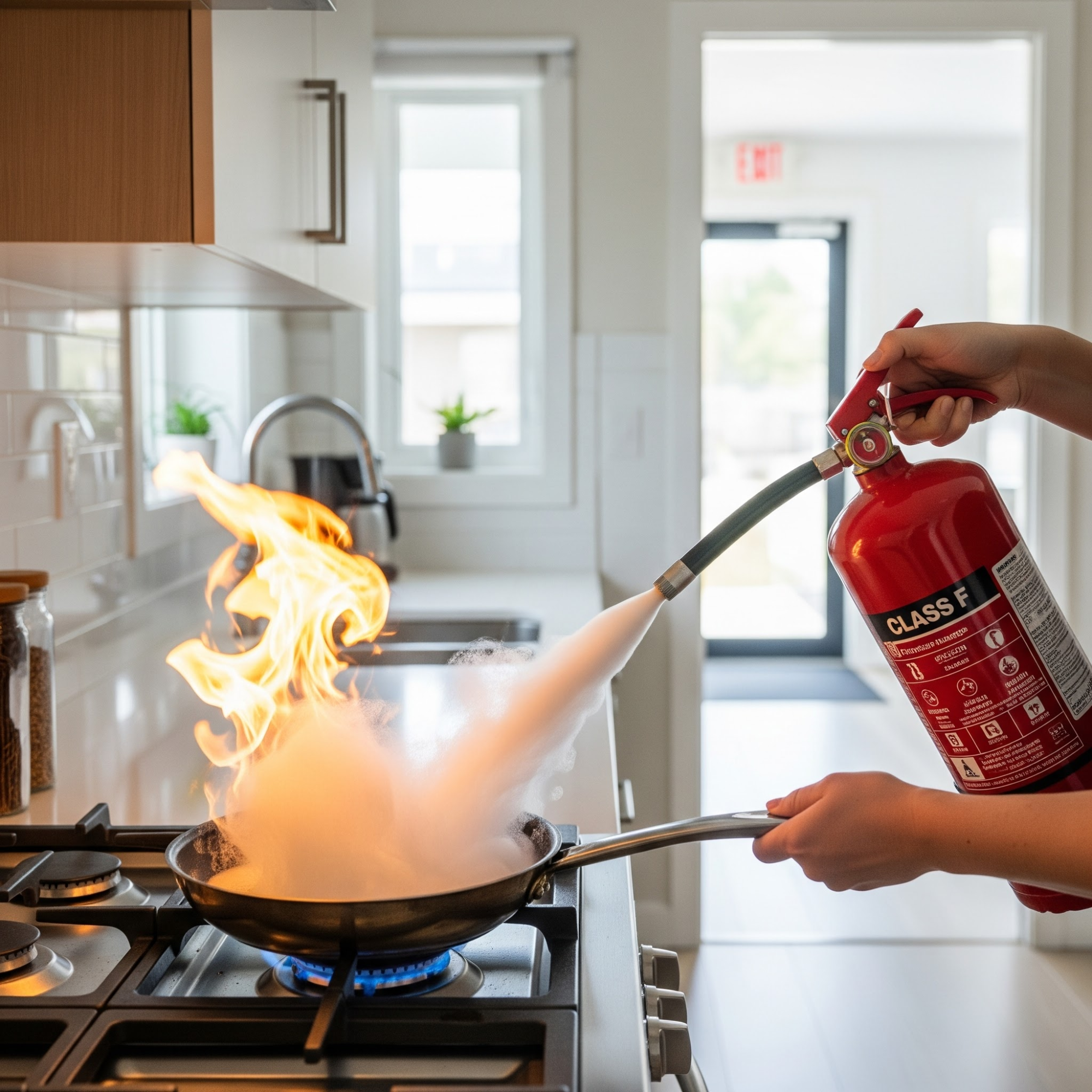
❌ Do you have a Class F fire extinguisher designed for cooking oil fires? Have you been trained to use it? Consider using it, but only if the fire is small and contained to the pan and you have a clear exit route. Class F extinguishers contain a potassium-based solution that reacts with the oil to create a soapy layer, smothering the flames. Never use water, foam, powder or CO2 extinguishers on oil fires. These can spread the fire or cause explosions.
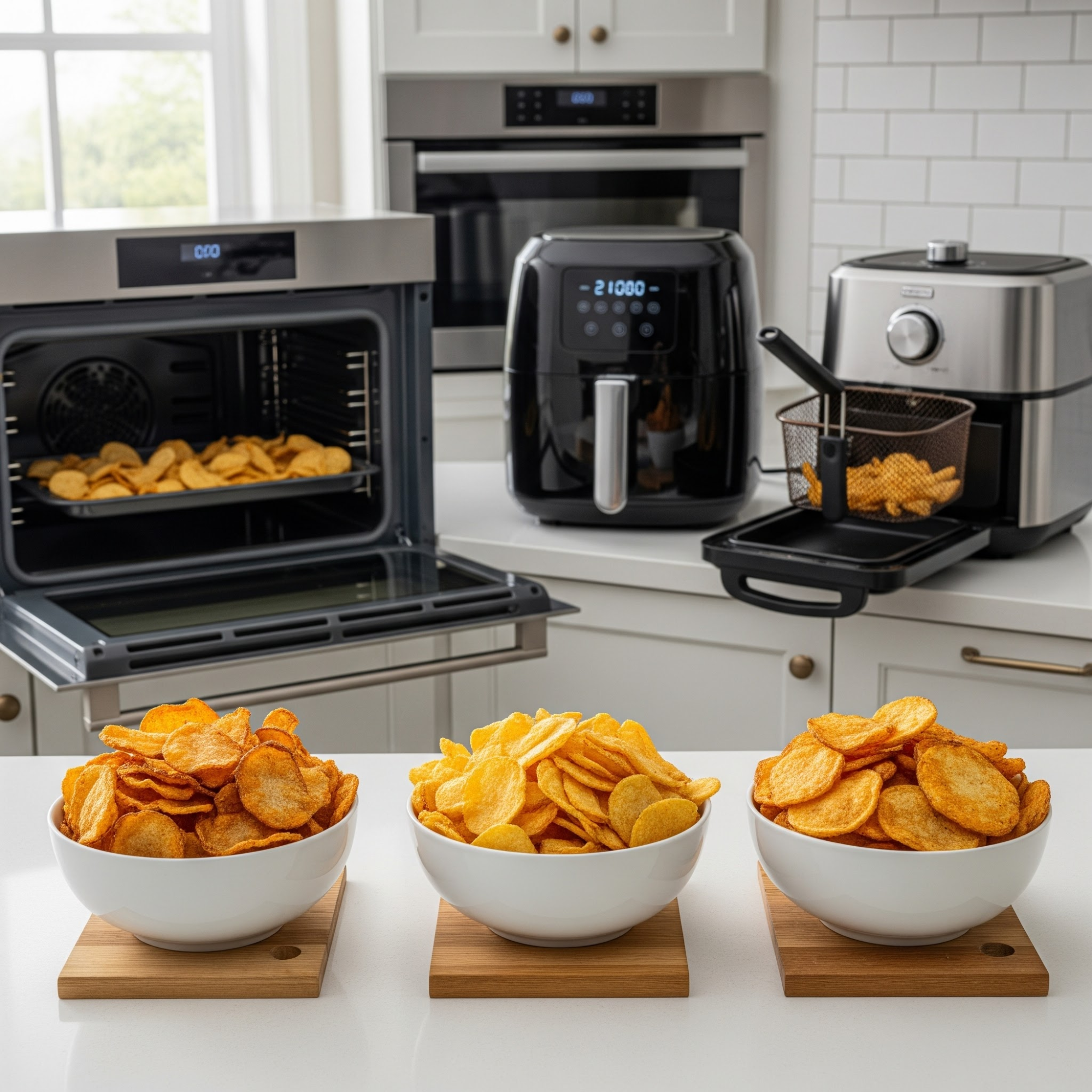
Safer Alternatives to Traditional Chip Pans
Modern cooking technology offers much safer ways to enjoy chips at home.
✓ Oven chips are the simplest solution. Today’s oven chips taste good, cook in about 20 minutes, and pose no fire risk. They’re also healthier, using far less oil than deep-fried alternatives.
✓ Air fryers have become popular for good reason. They circulate hot air to create crispy chips. There’s no vat of hot oil, no risk of overheating and modern air fryers have automatic shut-off features.
✓ Thermostat-controlled electric deep-fat fryers offer a safer middle ground if you want that authentic deep-fried taste. The built-in thermostat prevents the oil from reaching dangerous temperatures. Many models feature cool-touch exteriors, automatic shut-offs and secure lids that contain any oil splatter.
✓ Professional chip shops remain an option. Let the experts handle the hot oil, and you can enjoy chips without any of the home fire risks.
Essential Fire Safety Equipment for Your Kitchen
Beyond avoiding chip pan fires, every UK kitchen needs proper fire safety equipment.
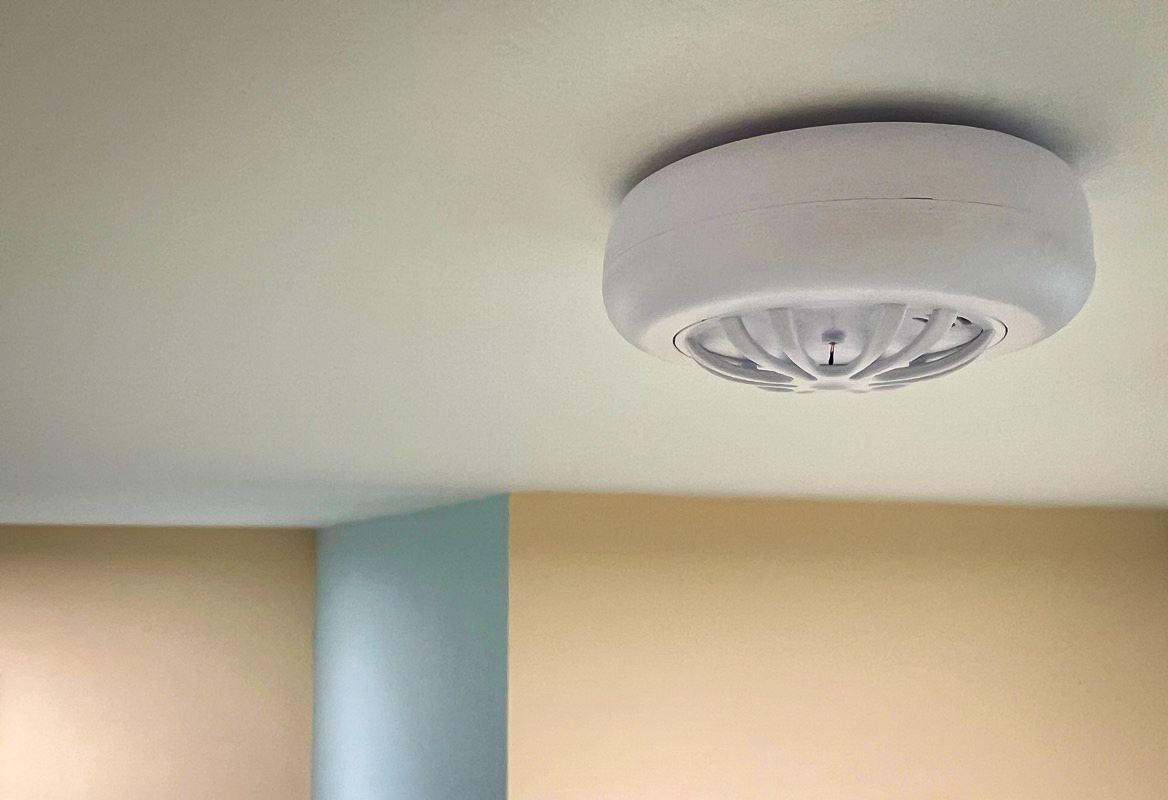
Smoke alarms should be fitted on every level of your home, including near the kitchen (but not in it, as cooking steam causes false alarms). Test your alarms monthly and replace batteries annually. Interconnected alarms throughout your home ensure everyone hears the warning, no matter where the fire starts.
A Class F fire extinguisher is designed for kitchen fires involving cooking oils and fats. If you choose to keep one, make sure everyone in your household knows where it is and how to use it. You can learn more about the proper use of fire extinguishers through our product demonstration videos.
A fire blanket was once recommended for chip pan fires. But fire services now advise against using them on deep-fat fires due to the risk of burns and the blanket slipping off. However, they remain helpful in smothering other small fires and wrapping around someone whose clothes have caught fire.
Regular fire risk assessments ensure your home’s fire safety measures are adequate. Whether you’re a homeowner, landlord or business owner, understanding your specific fire risks helps you put in place appropriate safety measures.
Take Action to Protect Your Home
Chip pan fires remain preventable. The statistics tell a sobering story: thousands of injuries, dozens of deaths and countless homes damaged each year, all from a cooking method that has safer alternatives readily available.
Ready to improve your kitchen fire safety? We offer everything you need, from Class F fire extinguishers designed for cooking oil fires to smoke alarms that provide early warning. Our experts can also conduct a fire risk assessment of your property, identify potential hazards, and recommend appropriate safety measures tailored to your home.
Don’t wait for a close call to take fire safety seriously. Explore our range of kitchen fire safety equipment today, or contact our team for advice on protecting your home and family from chip pan fire risks.
“Easy to use website. I found the ideal produce to replace my smoke alarm sytem quickly and easily. Update to a modern version of my old system. Good price, fast delivery, easy to fit. Fixed to the original interlinked wiring in place. Very tidy, modern looking system. Would shop here again.”
Ian Beevers
“Great business to deal with. Good information about different fire extinguisher types etc. on websites and delivered the next day. Would certainy use again.”
Michael Harding
All information correct at time of posting.