Fire Hose Reels & Cabinets
When fire strikes, having the right equipment can make the difference between containing a minor incident and facing a devastating loss. Fire hose reels represent one of the most critical tools in any fire safety arsenal, providing the high-pressure water delivery needed to tackle flames quickly and effectively. Whether you're protecting a commercial building, industrial facility, or residential property, choosing the right fire hose system ensures you're prepared when every second counts.
Read More
What are the different types of fire hoses available?
Fire hoses come in several configurations, each designed for specific applications and environments. While the fire safety industry offers various types, including lay-flat hoses that compress for space-saving storage, delivery hoses for fire engines, and suction hoses for drawing water from static sources, we specialise in rigid hoses. These maintain their shape and provide consistent water flow, making them ideal for fixed installations where reliability is crucial.
Our rigid fire hose reels are available with either automatic or manual water delivery systems. The automatic option activates water flow when the hose is pulled from the reel, while the manual version requires the operator to turn on the valve, giving you control over water delivery based on your specific safety requirements. They are also available with fixed and hinged carrier arrangements to accommodate your space requirements.
The diameter of your fire hose determines its flow capacity. Smaller diameters (25mm-38mm) are well-suited for initial attack scenarios, while larger diameters (64mm-100mm) provide the necessary volume for major incidents or industrial applications.
How do fire hose reels work in emergencies?
Fire hose reels provide an immediate response system that anyone can operate in the event of an emergency. The hose connects to your building's water supply through a shut-off valve, maintaining constant pressure when needed. On an automatic fire hose reel, when you pull the hose from its reel, water flows automatically as you open the nozzle.
Most reels feature a swivel connection that allows the hose to extend in any direction without tangling. The reel mechanism keeps the hose organised and protected from damage, significantly extending its lifespan. Manual reels require you to rewind the hose by hand, but automatic reels use spring tension to retract the hose after use.
Modern 19mm fixed fire hose reels often feature adjustable spray patterns, allowing you to switch between a concentrated jet for distance and a fine spray for cooling or protection. This versatility makes them effective for different fire types and tactical situations.
What maintenance do fire hoses require?
Regular maintenance keeps your fire hoses ready for action when emergencies arise. Monthly visual inspections check for cuts, abrasions, or coupling damage that could cause failure under pressure. Look for signs of mildew or deterioration, particularly in rubber hoses stored in damp conditions.
Annual pressure testing ensures your hoses can handle their rated working pressure. This test reveals internal damage that isn't visible during routine inspections. Professional testing equipment applies controlled pressure and identifies weak spots before they become dangerous failures.
Proper storage protects your investment and maintains performance. Keep hoses away from sharp objects and extreme temperatures. UV exposure degrades many hose materials, so indoor storage or protective covers are essential for outdoor installations.
Clean your hoses after each use to prevent residue buildup that can damage internal layers. Drain thoroughly before storage to avoid freeze damage in cold climates.
How do you choose the proper fire hose for your building?
Building type and occupancy determine your fire hose requirements. High-rise buildings need hoses that can reach upper floors effectively, requiring specific pressure ratings and coupling types. Industrial facilities may need chemical-resistant hoses that can handle specialised suppression agents.
Consider your water supply capacity when selecting hose diameter. A 64mm hose needs significantly more water flow than a 38mm version. Your building's pump capacity and pipe network must be able to support the hose specification you choose.
Installation location affects material selection. External hose reels need weather-resistant construction, particularly UV-stable materials and corrosion-resistant fittings. Internal installations can use lighter materials that prioritise flexibility and ease of handling.
Think about who will use the equipment. Heavy-duty hoses offer excellent performance but can be challenging for untrained personnel to handle effectively. Lightweight options sacrifice some durability for more straightforward operation.
What regulations apply to fire hose installations?
British Standard BS 5306-1 sets the recommendations for fire hose installations in buildings. This standard covers everything from hose specifications to installation spacing and testing procedures. Compliance ensures your system meets insurance requirements and provides adequate protection.
The standard recommends that hose reels should be positioned so that any part of the building can be reached with a 6-metre jet of water. This typically means spacing reels every 30 metres along escape routes. Each reel needs clear access and appropriate signage for quick identification during emergencies.
Your local fire authority may impose additional requirements based on building use and occupancy. Some authorities require specific hose types or installation methods that exceed minimum standards. Always check with your local fire service during the planning stage.
Building regulations also influence fire hose requirements, particularly in new construction or significant renovations. These regulations often specify minimum water supply capacity and pressure requirements that affect hose selection and installation.
How effective are fire hoses against different fire types?
Fire hoses excel against Class A fires involving ordinary combustibles, such as wood, paper, and textiles. Water cools the burning material, creating steam that helps displace oxygen from the fire area. The penetrating power of a pressurised water stream can reach deep into burning materials that surface treatments might miss.
For Class B fires involving flammable liquids, applying water requires a careful technique. A fine spray can create a cooling effect and help contain vapours, but using water directly on burning liquids can spread the fire. Many modern hose nozzles feature foam injection capabilities, enhancing their effectiveness against liquid fires.
Electrical fires present special challenges for water-based systems. Never use water on live electrical equipment, as it conducts electricity and creates serious shock hazards. However, once the electrical supply is isolated, water becomes effective against the resulting Class A fire in cable insulation and structural materials.
Fire hoses cannot effectively tackle Class D fires involving combustible metals, as water can exacerbate these incidents. Similarly, Class K fires in commercial cooking equipment need specialised suppression systems rather than water-based approaches.
Your fire safety strategy should include multiple suppression methods to handle different types of fires effectively. Fire hoses provide excellent primary protection for most scenarios; however, specific risks may require additional systems, such as foam generators or gas suppression.
Ready to protect your property with professional fire hose equipment? Browse our comprehensive range of fire extinguishers and equipment and accessories, or read our guide on fire safety log books for multiple sites to ensure proper maintenance tracking. Contact our technical team for expert advice on selecting the right system for your specific needs.
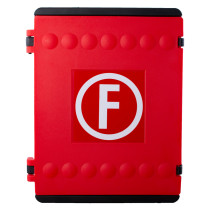
Fire Hose Cabinet
See Description...
- Suitable for lay flat fire hoses, equipment and documents
- Rotationally moulded fire hose storage cabinet
- Durable PVC strapping to hold equipment in place
- 5 year warranty
£207.05 inc VAT
£172.54 ex VAT
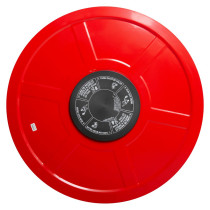
19mm Fixed Fire Hose Reel
See Description...
- Fixed fire hose reel
- Kitemarked (BS EN 671-1: 1995)
- Available with or without 19mm x 30m hose
- Complete with jet spray nozzle
From: £320.24 inc VAT
£266.87 ex VAT
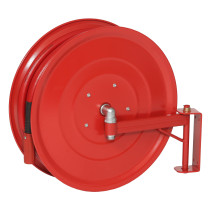
19mm Hinged / Swinging Fire Hose Reel
See Description...
- Hinged / swinging fire hose reel
- Certified by LPCB to EN671-1
- Supplied with 19mm x 30m hose
- Complete with jet spray nozzle
From: £320.48 inc VAT
£267.07 ex VAT
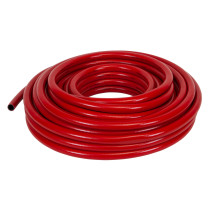
19mm x 30m Fire Hose
See Description...
- Approved to EN 694
- Can be used within a temperature range of -20°C to +60°C
- Supplied in a standard red finish
£88.38 inc VAT
£73.65 ex VAT
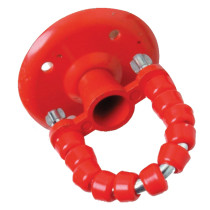
Beaded Hose Guide
See Description...
- Streamline your fire hose management
- Essential for any fixed hose reel
- Aids rapid deployment in an fire emergency
£19.34 inc VAT
£16.12 ex VAT
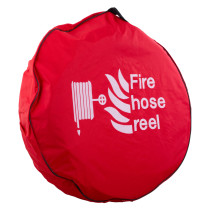
Fire Hose Reel Cover
See Description...
- Suitable for most 19mm and 25mm hose reels
- Elasticated design provides a secure fit
- Quick to remove in an emergency
- Features 'Fire Hose Reel' text for identification
£25.45 inc VAT
£21.21 ex VAT
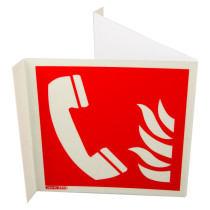
Panoramic Fire Equipment Signs
See Description...
- Larger viewable area
- Rigid PVC signs
- Photoluminescent (glow-in-the-dark)
- Available in multiple versions
From: £12.08 inc VAT
£10.07 ex VAT
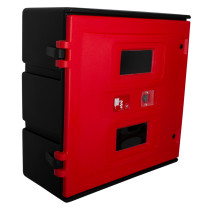
Hose Reel Cabinet
See Description...
- Durable plastic hose reel cabinet
- Maintenance and corrosion free - no metal parts
- Neoprene weather seal to protect content
- Polycarbonate viewing panels in front
- Integral key box and locking device for additional protection
£350.18 inc VAT
£291.82 ex VAT