Fire Door Regulations
Fire doors are a legal requirement in all non-domestic properties, such as businesses, commercial premises, and public buildings. They are also required in blocks of flats and houses of multiple occupancy (HMOs).
Who is responsible for fire doors?
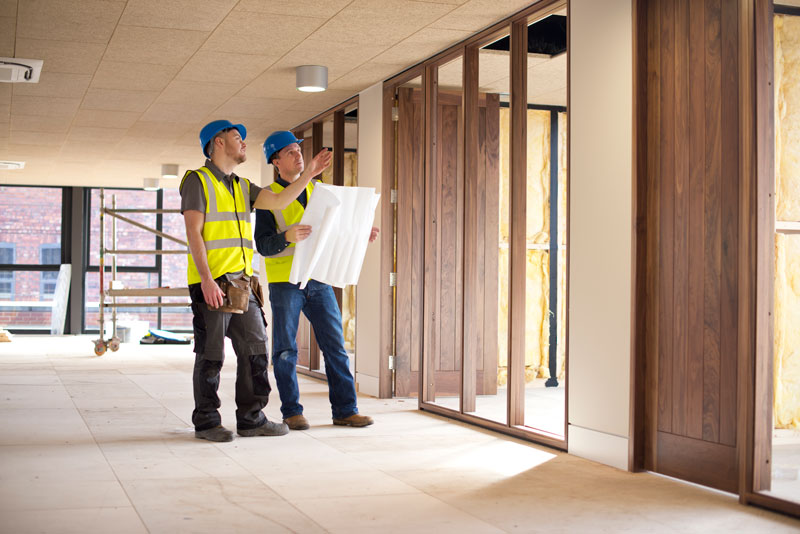
As set out by the Regulatory Reform (Fire Safety) Order 2005, building operators in England and Wales should appoint a ‘Responsible Person’ to manage all fire safety precautions including fire doors. This person might be the employer, the managing agent or owner or another appointed person. Their legal responsibilities include a duty to reduce the risk of fire spreading within the premises. Fire doors play an important part in reducing this risk in many buildings.
What fire doors do I need?
The fire door required in your building will be determined by the fire risk assessment. The ‘Responsible Person’ should ensure an up to date fire risk assessment has been carried out. Fire risk assessments are an in-depth review of the premises. They highlight any fire risks and make recommendations to reduce or eliminate these risks. This includes where fire doors should be used and what rating they should be.
Fire doors are used as part of a building’s passive fire protection system. They are designed to contain fire in one part of the building to limit damage and protect escape routes so everyone can leave the building safely. This is called compartmentation. Fire doors are therefore normally required in all doorways leading to escape routes. They are also usually required for rooms that have a higher risk of a fire starting (for example, IT server rooms, boiler rooms or rooms containing flammable liquids). You should refer to your risk assessment for further guidance.
What are the fire door regulations?
The fire door regulations vary depending on where you are in the UK. They are governed by a different set of regulations depending on whether it is a new building/extension, or an existing building.

Commercial/public buildings
New buildings or change of use
New buildings are governed by standards set out in the Building Regulations Approved Documents. These are designed to ensure that all new buildings in the UK meet minimum standards of construction. Fire doors are necessary in all commercial or public buildings and the requirements are set out in the Approved Documents below:
England and Wales - Approved Document B contains an appendix covering fire doors and states performance requirements giving reference to British and European Standards. Where the building is new or undergoing a change of use the fire doors should conform to BS 476-22:1987 or BS EN1634-1:2014 and the local authority building inspector may request evidence of compliance. Any material change or change of use to a building for which the Regulatory Reform (Fire Safety Order) 2005 already applies, needs to adhere to the Regulation 38 requirement. This states that fire safety information including all details relating to fire doors and their installation should be provided to the Responsible Person for that building.
Scotland – Technical Handbooks
Northern Ireland – Technical Booklets
Existing buildings
In existing buildings, the Regulatory Reform (Fire safety) Order 2005 applies and compliance is mandatory. The Order applies to all properties except inside people's private homes. It'covers public buildings, places of employment, entertainment and leisure as well as vehicles, aircraft, hovercrafts, tents or other moveable structures. Article 17 of the Order places an obligation on the "Responsible Person" to ensure fire doors are "subject to a suitable system of maintenance and are maintained in an efficient state, in efficient working order and in good repair". Given that the employer, building operator, building owner or possibly his agent has a legal duty to maintain fire doors in efficient working order, regular inspection will be necessary.
Does the Fire Safety Order 2005 apply to my building?
The RRFSO 2005 applies to:
- All business premises (even if it is part of a domestic dwelling)
- Premises used for charity or voluntary work
- Public buildings such as schools, hospitals, leisure centres, transport stations, entertainment venues
- Accommodation for paying guests such as self-catering units, camp or caravan sites and B&Bs
- Communal areas of HMOs, blocks of flats and maisonettes.
Residential Buildings
Multi-occupied Residential Buildings (eg Blocks of flats, HMOs)
The implementation of the Fire Safety (England) Regulations 2022 on 23rd January 2023 sets out new fire door responsibilities for Responsible Persons in multi-occupied residential buildings.
The following fire door regulations apply to buildings over 11 metres in height:
- Responsible Persons must check all fire doors in communal areas of the building at least every 3-months.
- Responsible Persons must check every flat entrance door within the building annually.
Record fire door inspections in your building with this free downloadable fire door inspection check sheet
In any residential building with more than 2 dwellings, Responsible Persons should provide all residents with information about the importance of fire doors.
Your block of flats should have had a fire risk assessment carried out as the Regulatory Reform (Fire safety) Order 2005 applies to communal areas in existing HMOs, blocks of flats and maisonettes. The risk assessment will detail which doors are required to be fire doors and what fire rating each door should have.
Building regulations Approved Document B2 sets out the following standards for new buildings and conversions:
- Every flat within a block of flats or HMO should have a fire door fitted at the entrance onto the communal area.
- Flats located on floors 4.5m'above ground level must have a fire rated door fitted between all habitable rooms as well as the front door.
- Ground floor flats do not usually need internal fire doors as long as each room has an accessible way to escape. They do still need a fire door to be fitted at the entrance if the front door opens onto a communal area such as a corridor.
FD30 fire doors (30 minute fire door rating) should be used for flats.
Houses and bungalows
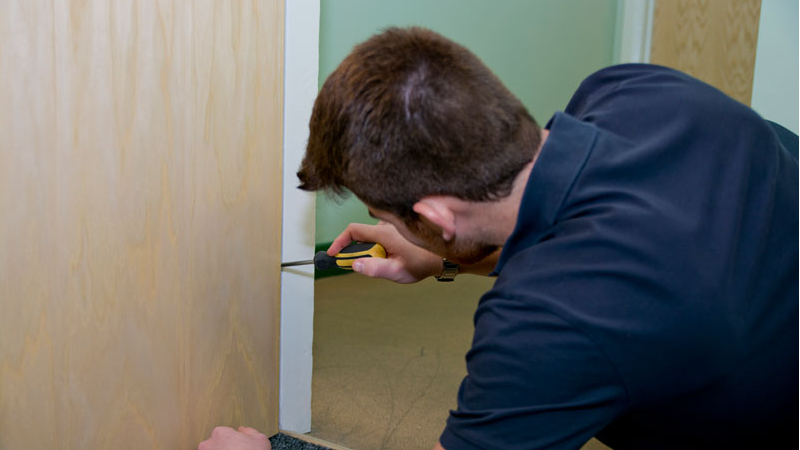
In many homes in the UK fire doors are not a legal requirement, however there are some exceptions. Building regulation details where fire doors should be used:
- Any new build or home renovation that has three or more floors must have fire doors fitted to every habitable room that leads from a stairwell. This applies to loft conversions where an extra floor has been added to a two-storey home.
- Any door leading from your home into an integral garage must be a fire door. In most domestic situations, FD30 (fire doors with a 30 minute fire rating) are sufficient.
Fire door maintenance
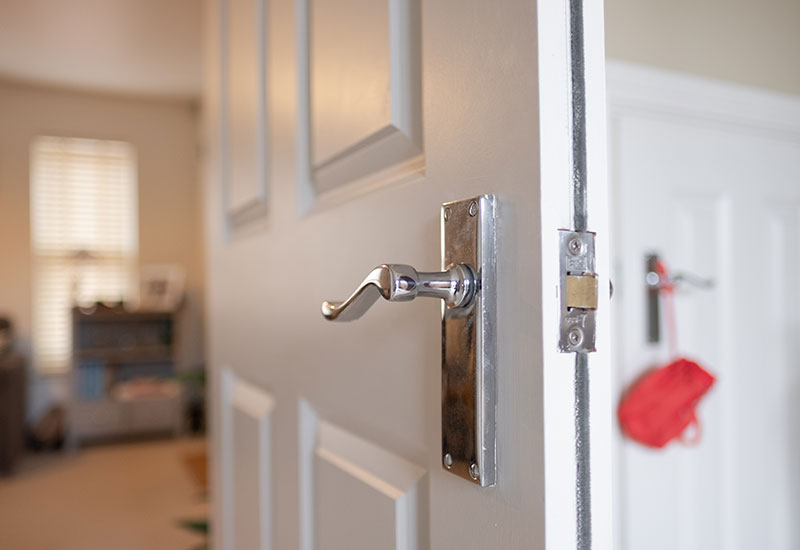
According to the Regulatory Reform (Fire Safety) Order 2005, fire doors must be "subject to a suitable system of maintenance and are maintained in an efficient state, in efficient working order and in good repair". Regularly inspect your fire doors and follow our ‘6-step fire door checker’ to ensure your doors are in good working order and fit for purpose. Check and record your fire door inspections using this free downloadable fire door inspection check sheet.