Greater Confidence in Your AED's Readiness
An AED can remain unused for years while its pads and battery approach their replacement dates. Maintaining your defibrillator could be the difference between life and death, as a quick response is essential when sudden cardiac arrest occurs.
Our trained technicians inspect any make or model of defibrillator across the UK, checking the unit and its consumables, with a report detailing their findings.
What Our Customers Are Saying
We have thousands of happy customers. See what they are saying about our excellent service.
What Does Our Defibrillator Inspection Cover?
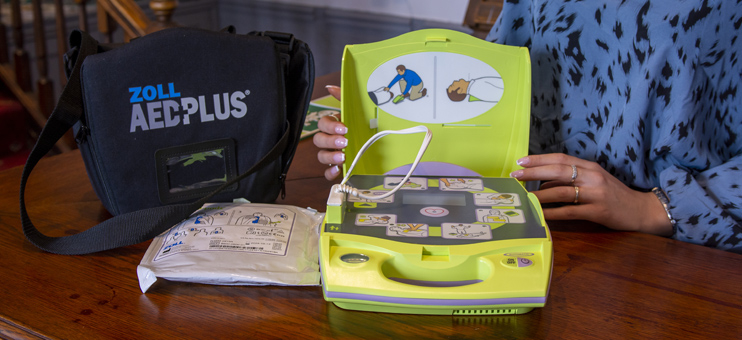
Every inspection is carried out on site by one of our technicians, who will inspect the AED and its cabinet or wall bracket, including visual checks of the pads and battery to ensure your device is protected and rescue ready. Replacement dates are checked against the manufacturer's guidance.
During the visit, your technician will provide:
- A thorough visual inspection of your defibrillator and its status
- Coverage for any AED make or model
- Visual checks of pads and batteries with expiry dates recorded
- Inspection of the cabinet or wall bracket
- A clear written report to document the inspection
Comprehensive Inspection Including Pads and Batteries
An unused AED still needs its consumables checked. Electrode pads have an expiry date, while battery replacement depends on the model, its standby life and how the device has been used. Many AED batteries last between four and seven years in standby, but your manufacturer's guidance determines when yours needs replacing.
During the inspection, your pads and batteries are visually checked. Their expiry dates, and any issues identified, are recorded so you can arrange the necessary action. We can also supply replacement pads and batteries.
Book Your Inspection Now
You can request a quote for your defibrillator inspection using the form below. Once you have submitted the form a member of our servicing team will be in touch with your quote.
Your Details
Company Details
Inspection Details
Customer Reviews (16)
Reviewer
CS
Published on
10th July 2026
Reviewer
GW
Very pleasant and all good thank you for your help
Published on
21st May 2026
Reviewer
DT
VERY PLEASANT, HELPFUL GUY.
Published on
22nd April 2026
Defibrillator Inspection Report For Your Records
After the visit, you'll receive a defibrillator inspection report. This records the checks completed and any issues identified, helping you organise follow-up action if required.
For workplace AEDs, the report supports your maintenance records under PUWER, which requires work equipment to be maintained in efficient working order and good repair. Keep it alongside your routine check records to show how your equipment is being looked after.

AED Checks for Community and Unmanned Locations
A donated defibrillator can become an important community resource, but someone still needs to oversee its condition. This can take more coordination when the device is in a remote location or somewhere without staff on site.
Our nationwide inspection service provides a trained technician's assessment of your AED and its storage equipment. It's useful when taking responsibility for an existing device or reviewing equipment with an unclear maintenance history.
Between professional visits, arrange for a designated person to carry out routine checks in line with the manufacturer's instructions.

Defibrillator Testing and Inspection Explained
If you're comparing defibrillator testing services in the UK, check the scope of each service before booking. Our service is a defibrillator inspection covering the AED and its cabinet or wall bracket, with visual checks of the pads and battery. Any issues that would affect the readiness of the device will be recorded so appropriate action can be taken.
AEDs also run automatic self-tests according to their design. Someone needs to check for warning indicators and follow the manufacturer's instructions if a fault is reported.
We Inspect Any Make or Model of AED
We cover all types of AED with our inspection service, including popular brands like HeartSine, iPAD, ZOLL, Philips, Defibtech, Mediana, and Cardiac Science. Each type of defibrillator operates slightly differently, and our technicians are trained to understand each model.
If you are unsure whether your AED could benefit from an inspection, contact our team on 0800 612 4827 or email servicing@safelincs.co.uk for advice.

Free Defibrillator Maintenance Record - Downloadable PDF
Easily record your defibrillator inspections with our free printable checklist. Make a note of any defects and quickly action any faults you find.
| PDF Download | 131 KB |
|---|

Free Fire Safety Log Book - Downloadable PDF
A free fire safety log book template that contains advice as well as space to record all aspects of your fire safety regime.
| PDF Download | 2 MB |
|---|
Our Industry Memberships & Accreditations
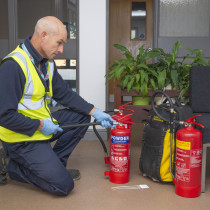
Fire Extinguisher Servicing
Get Your Quote Now

Evac+Chair Servicing
£144.00 inc VAT
£120.00 ex VAT

First Response Training AED and CPR Course
£423.60 inc VAT
£353.00 ex VAT
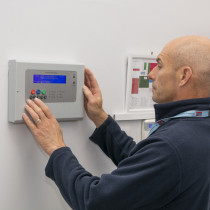
Fire Alarm Servicing & Maintenance
Get Your Quote Now
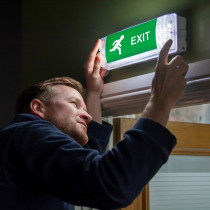
Emergency Lighting Testing
Get Your Quote Now

Safelincs Fire Risk Assessments
Enquire Now

Fire Door Inspection
Enquire Now
FAQs (5)
What are the defibrillator inspection requirements?
Defibrillator inspection requirements depend on the manufacturer’s instructions and where the AED is provided. There’s no single statutory interval for professional AED inspections. For workplace equipment, PUWER requires maintenance to keep it in efficient working order and good repair. Follow the device’s guidance for routine checks and respond promptly to any faults.
How often should an AED be checked?
An AED should be physically checked regularly in line with its manufacturer’s instructions. The British Heart Foundation advises weekly physical checks alongside automatic self-tests. Appoint someone to record these checks and investigate warning indicators promptly. A professional inspection supports this routine care.
Is an inspection the same as testing?
An inspection and a defibrillator testing service may cover different activities, so check what’s included. Our technicians inspect the AED and its cabinet or wall bracket, including visual checks of pads and batteries. AEDs also perform their own self-tests to check that the internal circuits are operational, the battery has adequate capacity to deliver a shock, and the electrode pads are connected (where pre-connected pads are a feature).
Can you inspect any make of AED?
Our trained technicians can inspect any make or model of AED across the UK. They carry relevant identification when visiting your premises. Provide your equipment and location details when booking so our team can arrange the inspection.
What paperwork do I get after an inspection?
You’ll receive a defibrillator inspection report recording the inspection and any issues found. For a workplace AED, this supports your equipment maintenance records under PUWER. Keep the documentation alongside your routine check records and details of any follow-up work.
Thank you for the prompt and friendly service