Which Fire Extinguisher Do You Need? A Practical Guide for Businesses
Choosing the right fire extinguisher for your organisation should focus on selecting the right type based on your risks.
For most offices and other workplaces, the priority is straightforward:
- Class A fires (wood, paper, textiles)
- Fires involving electrical equipment
- Class L fires (lithium-ion batteries)
In many environments such as offices, schools, healthcare settings and commercial premises, these are the primary risks. This means you can often avoid overcomplicating your fire safety setup.
This guide explains how to choose the right extinguisher types, based on real-world use and current UK guidance, while keeping your approach simple, compliant and effective.
Start With Your Fire Risk Assessment
Your fire risk assessment (FRA) should always be the starting point.
It identifies:
- The types of fire risk present
- Where fires are most likely to start
- What equipment is needed to control them
Fire extinguishers are just one part of your overall fire safety strategy. Selecting the wrong type, or too many types, can create confusion in an emergency.
If your FRA does not identify specific risks (such as class B - flammable liquids), you do not need to plan for them.
Understanding Fire Classes
You don’t need to memorise every fire class, just focus on what’s relevant:
- Class A – Solid materials like wood, paper, and textiles
- Electrical fires – Not a formal class, but a key workplace risk
- Class L – Lithium-ion batteries
- Class B – Flammable liquids (only relevant in certain environments)
For most organisations, Class A, Class L and electrical risks are the priority.
The Most Suitable Fire Extinguishers for Most Workplaces
Water Mist Fire Extinguishers (Class A + Electrical Safe)
Water mist extinguishers are increasingly used as a modern, simplified solution. It usually means you can have just one extinguisher at each fire point.
They offer:
- Coverage for Class A fires
- Safe use on electrical equipment (when tested)
- Minimal residue and easy clean-up
- Eco-friendly media
In many workplaces, a water mist extinguisher can replace multiple extinguisher types, simplifying training and reducing confusion for staff.
Foam Fire Extinguishers (Class A + Electrical Safe)
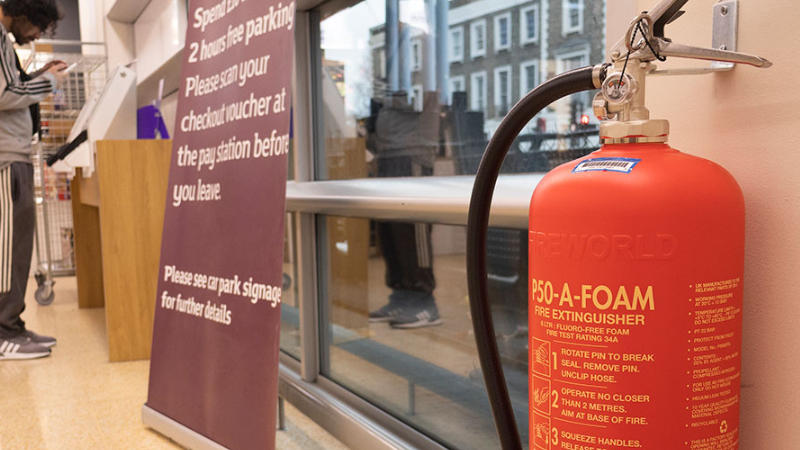
Foam fire extinguishers are a popular choice as they are versatile, covering class A materials, and they are also safe for use on live electrical equipment. Select a modern fluorine-free foam extinguisher to ensure you comply with environmental legislation.
They offer:
- Coverage for Class A fires
- Safe use on electrical equipment (when tested)
Foam extinguishers offer simplified fire safety and usually allow for one extinguisher at each fire point.
Lithium-ion Battery Fire Extinguishers (Class L, Class A + Electrical Safe)
Lithium-ion battery extinguishers should now be considered for class L fire risks that are more prominent than ever in workplaces. With many rechargeable devices such as phones, laptops, walkie-talkies and e-scooters on the premises, risk assessments should include this fire type, and businesses should make provisions for it.
They offer:
- Coverage for Class A fires
- Coverage for Class L fires
- Safe use on electrical equipment (when tested)
Most lithium-ion extinguishers will also cover class A risks and are electrically safe, so you can often just have one of these at a fire point for all risks.
Do You Need to Cover Class B Fires?
Class B fires involve flammable liquids such as petrol, solvents or oils.
You typically only need to cover this risk if your FRA identifies it, for example in:
- Workshops
- Laboratories
- Petrol stations
- Maintenance areas
For many organisations, Class B coverage is not required, and adding it unnecessarily can complicate your fire safety setup.
Choosing the Right Combination
Option 1: Simplified Approach for class A & electrical
Water mist or foam extinguisher covering class A and electrical risks
This approach:
- Reduces the number of extinguishers needed
- Simplifies staff training
- Minimises confusion during an emergency
Option 2: Simplified Approach for class A, class L & electrical
- Lithium-ion extinguisher covering class L, class A and electrical risks
This approach:
- Reduces the number of extinguishers needed
- Simplifies staff training
- Gives comprehensive coverage for all office risks
How Many Fire Extinguishers Do You Need?
The number of extinguishers depends on:
- Floor area
- Building layout
- Travel distance to reach equipment
As a general guide:
- Adequate Class A rating should be provided per floor area
- Extinguishers should be positioned along escape routes and near exits
Your fire risk assessment should confirm exact requirements.
Common Mistakes to Avoid
- Overcomplicating your setup with too many extinguisher types
- Buying based on price alone rather than suitability
- Ignoring your fire risk assessment
- Poor positioning of extinguishers
- Lack of staff familiarity or training
In an emergency, simplicity and clarity are critical.
Summary: Choosing the Right Fire Extinguisher
- Start with your fire risk assessment
- Focus on Class A, Class L and electrical risks
- Avoid unnecessary extinguisher types
- Ensure equipment is easy to use and clearly positioned
Our articles are reviewed regularly. However, any changes made to standards or legislation following the review date will not have been considered. Please note that we provide abridged, easy-to-understand guidance. To make detailed decisions about your fire safety provisions, you might require further advice or need to consult the full standards and legislation.
Doc: 456 | Last Updated at: 2026-04-22 07:36:01