What is Intumescent Material & What it is Used For?
Intumescent materials are a core component of passive fire protection, and can be categorised as substances that swell when exposed to heat. This reaction is used to great effect in order to seal penetrations in otherwise fire resistant walls, floors and ceilings.
The expansion of intumescent materials in the event of a fire ensures that smoke and flames are contained, and helps maintain the compartmentalisation of a building.
Every service that is installed in a building, such as water pipes, electrical sockets, cable trunking and lighting units can compromise the fire resistance of a room by creating openings in its walls, floor or ceiling. The role of intumescent products is to seal the gaps these penetrations create should the worst happen and fire break out.
All products designed to fulfil this criteria are fire rated, i.e. certified to resist fire for a specified length of time, which can be anything from 30 minutes to 4 hours. When selecting intumescent products, take care to ensure that they have been certified to the relevant standards, and meet your specific fire resistance needs.
There are a variety of compounds that can be used in intumescent products, and different scenarios require different approaches. In basic terms intumescent materials can be divided into those with high and those with low expansion pressure.
An intumescent material with high expansion pressure would be capable of crushing a plastic pipe passing through a wall. This type of intumescent material is generally used in products such as pipe collars. A material with low expansion pressure is more suited to filling larger gaps, and would be more commonly found in products such as fire pillows.
Although technically not intumescent, as that term specifically refers to items that swell when exposed to heat, products such as fire resistant batt are often grouped with intumescent products. Fire resistant batt is manufactured with a mineral fibre core, and coated on both sides with fire resistant mastic. Rather than expanding, this product transforms into a highly fire resistant ceramic when exposed to heat, and is specifically designed to seal service penetrations which tend to be of a larger size than penetrations covered by classic intumescent products.
The images below show classic examples of the likely usage of fire resistant batt and pipe collars.
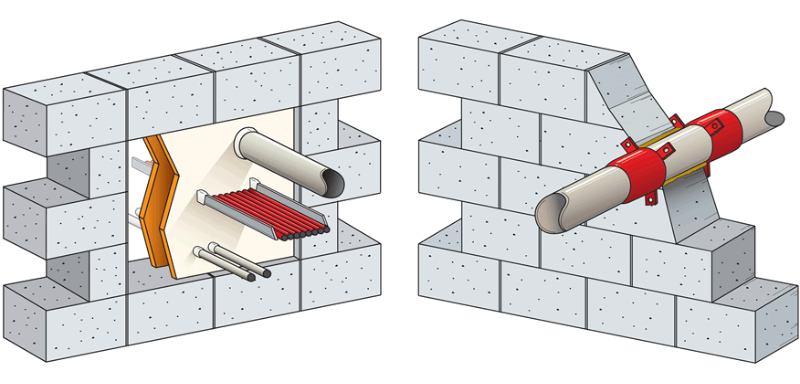
These diagrams show examples of a standard installation of passive fire protection.
Used to maintain fire protection in areas where larger penetrations in compartment wall are necessary, fireproof batt is commonly installed in areas that remain out of sight.