How do Optical Smoke Alarms Work
An optical smoke alarm (also called photo-electric smoke alarm) works using the light scatter principle. The alarm contains a pulsed infrared LED which pulses a beam of light into the sensor chamber every 10 seconds to check for smoke particles.
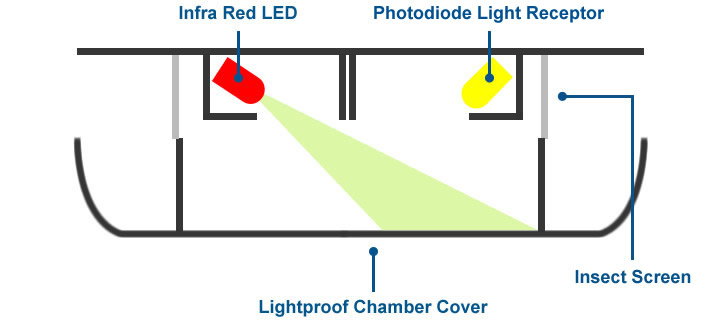
Step 1 - Smoke Enters the Optical Chamber
When a fire breaks out smoke will enter the optical chamber through the opening vents. Smoke alarms from quality manufacturers have the chamber protected with insect screens to stop bugs entering and causing false alarms.
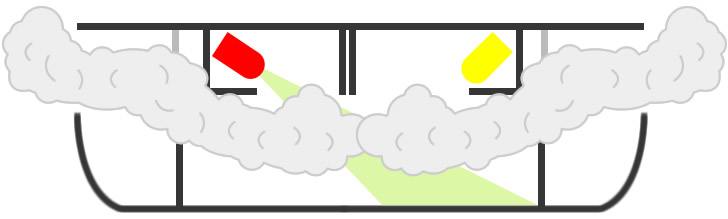
Step 2 - Infrared Light is Scattered
As the smoke enters the optical chamber, its particles cause the infrared light to be scattered onto the photodiode light receptor.
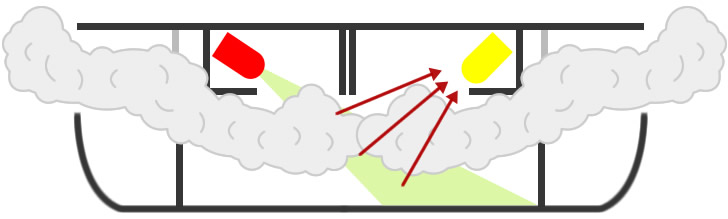
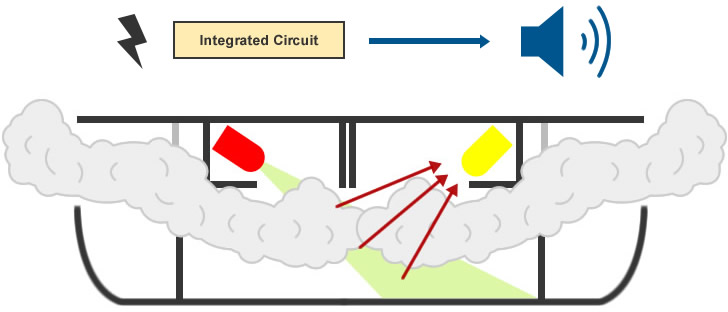
Step 3 - The Alarm Sounds
Once the scattered light hits the photodiode light receptor, a signal is sent to the integrated circuit which causes the alarm to sound alerting the occupants to the fire.
Where Optical Smoke Alarms can be Situated
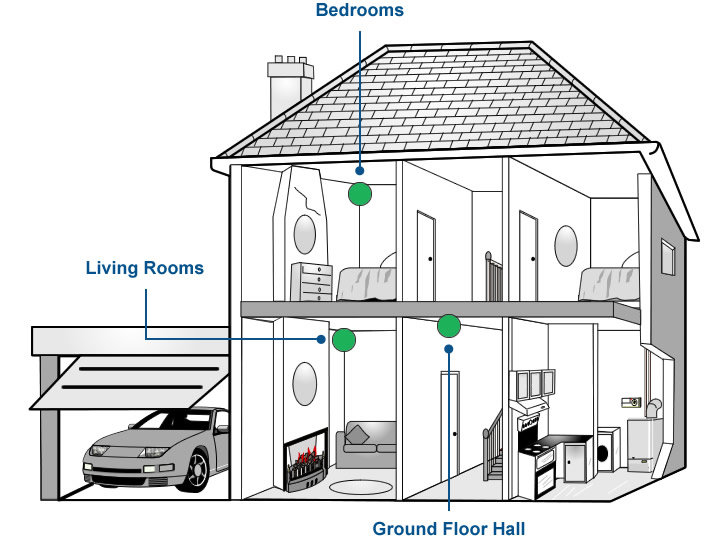
Optical smoke alarms can be situated in bedrooms and living rooms and in the ground floor hallway. The optical technology makes the alarms less prone to false alarms from cooking fumes.
How Other Types of Smoke & Heat Alarms Work
View our other guides to find out how different types of smoke and heat alarms work.