Heat Alarms
Temperature-based detection provides reliable fire protection where smoke alarms struggle. Heat alarms respond to rising temperatures rather than airborne particles, making them perfect for areas where dust, steam or cooking fumes would trigger false alarms.
Read more about heat alarms...
Temperature Detection Technology
Fixed temperature sensors activate when ambient temperature reaches a predetermined threshold, typically around 58°C. This reliable trigger point indicates genuine fire conditions and avoids false alarms from normal temperature variations.
Rate-of-rise detection responds to rapid temperature increases that signal developing fires. These sensors activate when temperature climbs faster than normal environmental conditions would explain, providing early fire warning.
Combination sensors incorporate both fixed temperature and rate-of-rise detection for enhanced reliability. This dual approach ensures activation under various fire development scenarios and maintains false alarm resistance.
Thermal detection remains unaffected by airborne contaminants that can compromise smoke sensors. Dust, cooking vapours, and chemical fumes don't interfere with heat alarm operation, ensuring consistent protection.
Ideal Installation Locations
Kitchen environments benefit enormously from heat detection. Cooking produces smoke and steam that would constantly trigger smoke alarms, making heat detectors the preferred choice for reliable fire protection.
Garage spaces often contain dust, vehicle exhaust, and chemical vapours that interfere with smoke detection. Heat alarms provide dependable protection without nuisance activations from these environmental factors.
Utility rooms housing boilers, water heaters, and laundry equipment generate steam and humidity that can affect smoke sensors. Heat detection offers reliable protection in these challenging environments.
Loft spaces accumulate dust and experience temperature variations that can cause false alarms with smoke detectors. Heat sensors provide appropriate fire protection for these storage areas.
Professional Applications
Commercial kitchens require heat detection to meet fire safety regulations while avoiding disruption from normal cooking operations. These environments demand reliable protection that won't interfere with business activities.
Industrial facilities use heat detection in areas where smoke sensors would be impractical. Manufacturing processes often generate particles or vapours that would cause constant false alarms with alternative detection methods.
Car parks and loading bays benefit from heat detection that remains reliable despite vehicle exhaust and environmental contaminants. These areas require protection that functions consistently in challenging conditions.
Product Options
The UltraFire UBH1 operates on two AA batteries and provides reliable heat detection with our exclusive 5-year warranty. This economical solution offers dependable protection for domestic applications.
Sealed battery heat alarms reduce ongoing maintenance requirements. The UltraFire ULLH10 features a 10-year lithium battery that never needs replacement throughout the alarm's operational life.
Mains-powered heat detectors suit permanent installations requiring maximum reliability. These units incorporate battery backup to maintain protection during power outages and provide consistent operation.
Radio-interlinked heat alarms connect wirelessly with smoke detectors to create comprehensive protection networks. The UltraFire ULLH10RF combines heat detection with wireless connectivity for enhanced safety coverage.
Our complete heat alarm range includes solutions for domestic applications. Professional guidance ensures you select appropriate detection methods for specific environmental challenges.
For comprehensive fire protection strategies, explore our complete alarm systems that combine smoke and heat detection for optimal safety coverage.
Choose temperature-based protection where traditional smoke detection falls short. Browse our heat detector selection and secure reliable fire protection for challenging environments.
Frequently Asked Questions (FAQs)
What is the difference between a heat detector and smoke alarm?
A heat detector responds to temperature increases rather than smoke particles, making it ideal for kitchens and dusty areas where smoke alarms would produce false activations.
At what temperature do heat alarms activate?
Heat alarms typically activate at around 58°C fixed temperature or when temperature rises rapidly, indicating fire conditions rather than normal environmental temperature changes.
Can heat detectors be used instead of smoke alarms everywhere?
Heat detectors cannot replace smoke alarms in bedrooms and living areas because they respond more slowly to fires, potentially providing insufficient warning time for safe evacuation.
Do heat alarms work in cold environments?
Heat alarms function reliably in cold environments and are actually less affected by low temperature extremes than some smoke detection technologies, maintaining consistent protection capabilities.
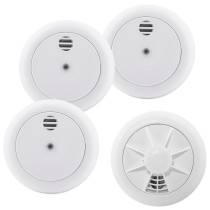
10 Year Sealed Battery 3 Smoke Alarms & 1 Heat Alarm Kit - UltraFire ULL10
See Description...
- FREE delivery
- Battery: 10 year sealed lithium battery
- Warranty: 10 year manufacturer's warranty
- Large combined test and silence button
- 3 x optical smoke alarms and 1 x heat alarm included
- Suitable for BS 5839-6: 2019 Grade F1 installations
This product is currently unavailable
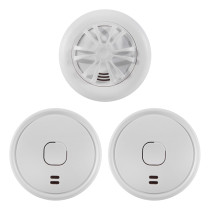
Battery Smoke Alarms and Heat Alarm Home Essentials Kit - UltraFire UFUB1KIT
See Description...
- FREE delivery
- Battery: Alkaline batteries (included)
- Warranty: 10 year warranty
- Large test and hush button
- 2 x optical smoke alarms and 1 x heat alarm included
- Suitable for BS 5839-6: 2019 Grade F2 installations
- CE marked
End of Line
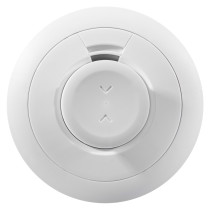
10 Year Longlife Battery Radio-Interlinked Heat Alarm - Aico Ei603RF
See Description...
- Battery: Built-in, lasts the lifetime of your alarm
- Warranty: 5 year warranty
- Radio-interlinked heat alarm
- Built-in RadioLINK+ repeater function
- Self-tests every 16 seconds
- Twist-on base design for simple installation
- Suitable for BS 5839-6: 2019 Grade F1
- Kitemarked to BS 5446-2: 2003
- Also suitable for the 2022 Scottish legislation
Discontinued