Fire Extinguishers for Live Electrical Equipment
Electrical fires involve materials around live equipment, not the electricity itself. Cable jackets, plastic casings, insulation, and electronic boards are what ignite. The right extinguisher choice depends on the environment, the type of electrical equipment present, and the competency of people expected to operate extinguishers.
- The environment the equipment is in
- The type of electrical equipment present
- The people in the area and their firefighting competency

Electrical equipment and appliances in office spaces
Offices are filled with laptops, printers, phones, and adaptors that run for long periods. Faults or overheating can quickly trigger fires, so choosing the right extinguisher is essential.
- Use: Water-based extinguishers that have been Di-electrically tested (foam or water mist) or CO2 extinguishers.
- Avoid: Standard water or foam units without di-electric certification.

Fire extinguishers for server rooms & cabinets.
Server rooms house valuable equipment and critical data. Protecting them demands early detection and automatic suppression to avoid costly disruption or loss.
- Use: Clean agents or water mist extinguishers with di-electric certification.
- Avoid: Standard water or powder extinguishers due to potential equipment damage and contamination.
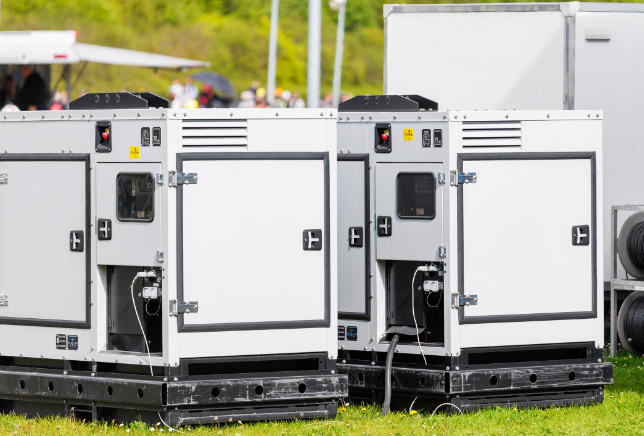
Industrial fires with live high voltage electricity.
High-voltage equipment and backup generators with fuel storage create complex hazards. These require powerful extinguishers with non-conductive agents to ensure safe protection.
- Use: Powder extinguishers or specialist non-conductive fire fighting agents appropriate to the size of the risk.
- Note: Ensure ratings and compatibility with on-site voltages and hazards.

Electrical risks in commercial & industrial kitchens.
Commercial kitchens rely on heavy-duty appliances in hot, greasy environments. Electrical faults here pose added risks, making safe and contamination-free extinguishers essential.
- Use: Wet chemical extinguishers for cooking oil fires, supported by CO2 or water mist extinguishers for electrical risks.
- Avoid: Foam or powder extinguishers, as these can cause contamination.
Can water-based extinguishers be used on live electrical equipment
Traditional wisdom says water and electricity do not mix. Whilst this is true in some situations, it does not apply to water-based extinguishers that have passed a di-electric test.
Any water-based extinguisher that has passed a di-electric test is suitable for use on live electricity up to 1000 V at a safety distance of at least 1 m. BS EN 3-7 is the internationally recognised product standard that confirms this. The di-electric test uses 35,000 volts at a distance of 1 m and measures any current flow back to the extinguisher. As an added precaution, certified extinguishers are limited to use on up to 1000 V at a 1 m safety distance. Extinguishers that meet this requirement display the electrical safety symbol.
Water mist extinguishers are particularly safe because they use de-ionised water, which cannot conduct electricity.
Independant Reports
WE have commissioned reports by two leading industry experts on the use of water-based extinguishers on live electrical equipment. The expert opinions confirm that water mist extinguishers and any other water-based portable extinguishers that have been di-electrically tested are safe for use on mains fed electrical equipment of up to 1000 V from a distance of 1 m or more.
Key takeaways from the reports:
- Any portable fire extinguisher including water mist that has passed a di-electric test with 35,000 volts is suitable for use on live electrical equipment up to 1000 volts at a 1m safety distance.
- The use of de-ionised water makes water mist fire extinguishers particularly safe, as de-ionised water cannot conduct electricity.
Report evidence from Stewart Kidd.
Stewart Kidd has worked in fire safety since 1974 across the UK and overseas, including training firefighters and delivering professional qualifications. His report confirms that water mist and other water-based portable extinguishers that have been di-electrically tested are suitable for use on live electrical equipment up to 1000 V AC at a safety distance of 1 m. Expert Advisory in respect of the use of portable fire extinguishers in areas where there may be live electrical apparatus by Stewart Kidd.
“In my opinion and based on the research I have undertaken there is no real-world evidence of the discharge of a di-electrically tested water-based extinguisher used at a safety distance of 1 m on live electrical equipment up to 1000 V AC creating a material risk to persons.”
Report evidence from Michael Jones.
Michael Jones is Managing Director of Michael Jones Chartered Forensic Fire Electrical Ltd. He is a Chartered Engineer and a Chartered Forensic Practitioner with over 30 years of experience. His report states that any extinguisher that passes the di-electrical test in Annex C of BS EN 3-7 (including water mist) is safe for use on low-voltage mains fed electrical equipment. Expert Advisory Report by Michael Jones.
“My view is that any extinguisher that passes the test in Annex C of BS EN 3-7 is safe for use on low-voltage (less than 1000 V AC) mains fed electrical apparatus. I do not consider there to be any danger of electric shock to a person using an extinguisher which complies with Annex C.”
These findings are in line with BS EN 3-7, which states that water-based extinguishers are suitable for live electrical equipment as long as they have been di-electrically tested and used at a minimum distance of 1 m.