A Guide to British Standards for Smoke Alarms
British Standards play a vital role in ensuring smoke alarms are correctly selected, installed, and maintained to provide effective fire protection in the home. One of the most important standards for domestic properties is BS 5839-6:2019+A1:2020.
This standard sets out best-practice guidance for the planning, design, installation, commissioning, and ongoing maintenance of fire detection and fire alarm systems in domestic premises. It applies to homes designed to accommodate a single person or family, as well as sheltered housing, helping to ensure a consistent and reliable approach to fire safety across different types of residential buildings.
BS 5839-6 focuses on life safety, outlining how smoke and heat alarms should be positioned, interconnected, and powered to provide early warning in the event of a fire. By following this standard, homeowners, landlords, and installers can reduce the risk of fire-related injury or loss of life and ensure their fire alarm systems meet recognised UK safety expectations.
GRADE D1
A Grade D1 system is defined as a system with one or more mains powered devices containing a tamper-proof standby power supply (Battery).
GRADE D2
A Grade D2 system comprises of one or more mains-powered detectors, each with an integral standby power supply consisting of a user-replaceable battery or batteries.
GRADE F1
A system of one or more battery powered detectors powered by a tamper proof primary battery or batteries.
GRADE F2
A system of one or more battery powered detectors powered by user replaceable primary battery or batteries.
What areas of the home do you need to protect?
The standard states that the level of protection to the occupants needs to be directly related to the fire risk. However it does list three categories of system to describe the level of protection the systems provide. Where and how many alarms are installed will affect how quickly a fire is detected.
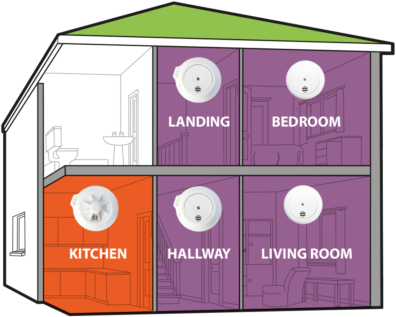
LD1 - High Protection
All areas where a fire could start:
- Hallways
- Landings
- Living Room
- Kitchen
- Bedrooms
- Airing Cupboards
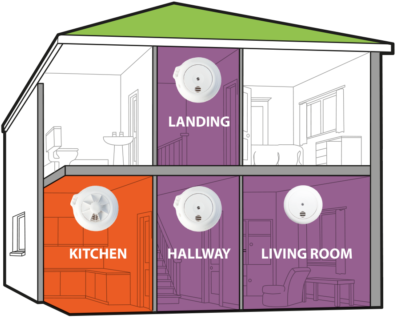
LD2 - Medium Protection
Escape routes and high risk areas, such as:
- Hallways
- Landings
- Living Room
- Kitchen
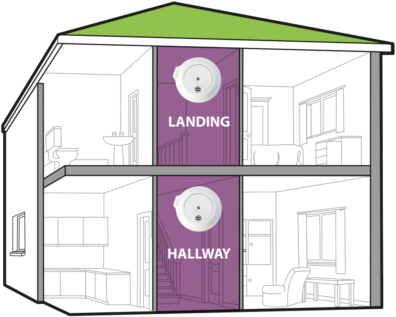
LD3 - Minimum Protection
Escape routes, such as:
- Hallways
- Landings
Our articles are reviewed regularly. However, any changes made to standards or legislation following the review date will not have been considered. Please note that we provide abridged, easy-to-understand guidance. To make detailed decisions about your fire safety provisions, you might require further advice or need to consult the full standards and legislation.
Doc: 391 | Last Updated at: 2026-09-10 09:16:02